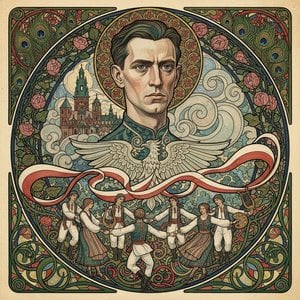
Maria Konopnicka: Una Voce per l'Anima della Polonia
Maria Konopnicka (1842-1910) si staglia come una delle figure più indelebili della letteratura e della coscienza culturale polacca: una poetessa la cui incrollabile dedizione alla giustizia sociale, unita a una profonda empatia per il popolo, le ha assicurato un posto tra le luminari dell'era del Positivismo. Nata a Sworniczka, in Polonia, i primi anni di vita di Konopnicka furono segnati da privazioni e povertà, esperienze che hanno plasmato profondamente la sua visione del mondo e alimentato il suo impulso artistico. Questi anni formativi le hanno trasmesso una comprensione profonda delle lotte affrontate dai contadini polacchi sotto il dominio zarista, una prospettiva che avrebbe difeso instancabilmente durante tutta la sua prolifica carriera.
L'educazione di Konopnicka ha favorito una acuta consapevolezza delle disuguaglianze sociali e ha acceso una passione per l'istruzione, in particolare per le donne. Suo padre, egli stesso un insegnante, le trasmise l'importanza della ricerca intellettuale e la incoraggiò a coltivare i suoi talenti letterari. Tuttavia, riconoscendo i limiti imposti alle scrittrici del suo tempo, Konopnicka adottò pseudonimi come Jan Sawa, permettendole di esprimersi liberamente pur navigando tra le aspettative sociali. Questa mossa strategica esemplifica la sua determinazione nel sfidare le convenzioni e nell'affermare la propria voce all'interno di un panorama patriarcale.
Un Arazzo di Poesia e Nostalgia Visiva
La produzione poetica di Konopnicka abbracciò generi diversi, dalle ballate liriche che esploravano i temi dell'amore e della perdita alle narrazioni drammatiche che affrontavano le ingiustizie sociali. Il suo capolavoro, “Psalm”, pubblicato nel 1895, rimane una pietra miliare del Romanticismo polacco, catturando lo spirito della Polonia rurale con dettagli mozzafiato e risonanza emotiva. Oltre alla parola scritta, la sua eredità artistica è spesso intrecciata con l'essenza visiva dell'epoca che ha documentato.
I suoi contributi alla narrazione visiva della vita polacca si ritrovano in opere che evocano un senso di atemporalità:
- Illustrazioni di Libri Antichi: Le sue illustrazioni in bianco e nero del 1892 presentano dettagliate scene rurali e ritratti di famiglia, utilizzando uno stile vintage che sprigiona un profondo fascino nostalgico.
- Catturare l'Innocenza dell'Infanzia: Le sue illustrazioni fatte a mano del 1895 catturano lo spirito del Natale polacco, mostrando la ricchezza della vita rurale attraverso dettagli intricati e nostalgici.
L'opera "Maria Konopnicka-untitled-DD23F2" illustra magnificamente questo periodo, mostrando la sua tecnica magistrale nelle illustrazioni a mano che evocano nostalgia per tempi più semplici. È una testimonianza della sua capacità di distillare emozioni complesse in immagini visivamente accattivanti, una dote che le ha permesso di colmare il divario tra l'alta letteratura e le esperienze vissute dai contadini.
L'Eredità dell'Attivismo e dell'Indipendenza
Il significato storico di Maria Konopnicka si estende ben oltre la pagina stampata. Fu una figura cruciale del periodo Positivista, nota non solo per la sua letteratura per l'infanzia, ma anche come accanita sostenitrice dei diritti delle donne e dell'indipendenza nazionale. La sua opera servì da specchio per l'anima polacca, riflettendo sia la sofferenza degli oppressi che la speranza incrollabile di una nazione in cerca della propria identità.
Attraverso la sua maestria nel realismo e la capacità di intrecciare temi patriottici nella trama della vita quotidiana, divenne un simbolo di resistenza. Oggi, la sua eredità rimane un pilastro dell'identità polacca, ricordandoci il potere dell'arte di fungere sia da testimone della storia che da catalizzatore per il cambiamento sociale.