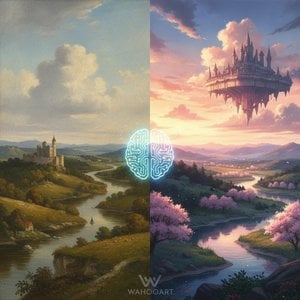
Museums on APS: Meiji Jingu Forest Festival of Art
Born: 1975, Kanagawa, Giappone
A Bridge Between Tradition and Innovation: Exploring the Art of mami kosemura
mami kosemura’s artistic journey began in Kanagawa, Japan, where she was born in 1975. From a young age, her fascination with visual storytelling propelled her into both photography and animation—disciplines that wouldn't simply coexist but actively intertwine, creating artworks that transcend conventional boundaries. Her formative years were marked by an immersion in classical European motifs alongside the rich tapestry of Japanese painting traditions. This dual influence is palpable throughout her oeuvre, demonstrating a deliberate effort to honor heritage while simultaneously forging new paths forward.
Early Photography: Kosemura’s initial photographic explorations focused on capturing ethereal landscapes and portraits—subjects often imbued with symbolic resonance reminiscent of Romanticism and Impressionism. She skillfully employs light and shadow, mirroring techniques found in Japanese ink wash paintings (sumi-e), to convey mood and emotion. Her images resonate with the contemplative spirit of Zen Buddhism, reflecting a profound understanding of how visual elements can communicate intangible concepts.
Animation as Conceptual Framework: Recognizing the power of movement and narrative, Kosemura transitioned into animation, utilizing it not merely as a medium but as a conceptual tool. Her animations delve into themes of memory, perception, and the relationship between observer and observed—concepts explored extensively in Zen Buddhism and Japanese aesthetics. This approach distinguishes her work from many contemporary artists, elevating animation beyond mere entertainment to become a vehicle for philosophical inquiry. She seeks to capture fleeting moments of experience and transform them into evocative visual narratives that invite contemplation.
International Recognition & Artistic Development: Kosemura’s artistic reputation grew steadily through exhibitions at prestigious institutions such as the Hara Museum in Tokyo and Dillon + Lee Gallery in New York. These venues provided invaluable exposure to a global audience, validating her commitment to pushing creative boundaries and experimenting with innovative techniques. Her dedication to fostering dialogue within the art world culminated in the founding of AhmadyArts and the establishment of Asia Contemporary Art Week (ACAW) since 2006—initiatives that champion emerging artists from across the Asian continent.
Key Achievements:
Critical Acclaim for Originality: Kosemura’s work has garnered considerable praise from critics who recognize its distinctive blend of photographic realism and animated abstraction, challenging viewers to reconsider established artistic conventions.
Global Presence & Exhibitions: Her exhibitions in internationally renowned galleries have solidified her position as a respected voice within contemporary art discourse, demonstrating the universality of her artistic vision.
Promoting Emerging Talent: Through ACAW and AhmadyArts, she actively supports young artists from Asia, fostering cultural exchange and broadening perspectives on artistic expression—a testament to her belief in nurturing creativity across borders.
Historical Significance:
Kosemura’s artistic practice represents a compelling synthesis of Eastern and Western artistic traditions—a deliberate rejection of stylistic homogenization. By referencing classical imagery while simultaneously embracing the dynamism of animation, she speaks to anxieties about cultural identity in an increasingly interconnected world. Her work serves as a reminder that true creativity lies not in imitation but in reimagining established forms with fresh eyes, ensuring that artistic legacies endure and inspire future generations. She embodies the spirit of artistic exploration—a willingness to engage with diverse influences and traditions while maintaining a steadfast commitment to personal vision.
A cura del team editoriale di WahooArt.com
Quiz d'arte
Per ogni domanda è presente una sola risposta corretta.
Explore the profound evolution of contemporary photography through a connoisseur's lens. From monochrome mastery to digital innovation, discover how modern photographic works shape fine art collections and define our cultural legacy.
Scopri l'innovazione di WahooArt: trasforma le tue foto in epici capolavori in stile Anime grazie all'AI e alla maestria della pittura a olio fatta a mano. Un ponte unico tra tecnologia moderna e tradizione classica per creare un'eredità artistica senza tempo nella tua casa.
Explore the profound artistry of black and white photography. From historical mastery to the interplay of light and shadow, discover how monochrome captures timeless emotion and form through a sophisticated lens of art history.