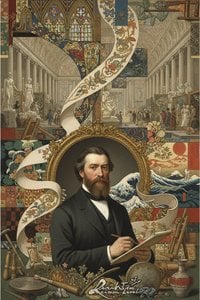
The Enigmatic World of Maison Dieulafait: Embroidered Visions of the Belle Époque
Maison Dieulafait remains a captivating, yet elusive figure in the landscape of 19th-century French decorative arts. Though shrouded in mystery – details regarding their personal life remain scarce – their artistic legacy endures through the breathtaking beauty and intricate detail of works like the iconic “Mantle,” created in 1885. This single masterpiece offers a compelling glimpse into the aesthetic sensibilities of the Art Nouveau movement, revealing a dedication to natural forms, flowing lines, and exquisite craftsmanship. The very name, "Dieulafait" (meaning "God made it"), hints at an artistic philosophy rooted in reverence for nature’s artistry, suggesting a collaborative spirit between creator and creation.
A Flourishing House: Context and Origins
Research indicates that Maison Dieulafait was not simply the name of an artist, but rather a Parisian *house* or atelier operating from 1851 to 1898. This distinction is crucial; it suggests a collaborative workshop environment where skilled artisans brought a shared vision to life. The House specialized in high-end embroidery and decorative objects, catering to a discerning clientele during the Second Empire and the early years of the Belle Époque. While individual contributions within the atelier remain largely unknown, the consistent quality and distinctive style point towards a strong central artistic direction. The focus wasn’t on mass production but on creating unique pieces that embodied luxury and refined taste.
The “Mantle” as Emblematic Art Nouveau
The “Mantle,” undoubtedly Dieulafait's most celebrated work, exemplifies the core tenets of Art Nouveau. It is a stunning example of embroidery elevated to the level of fine art. The design features a profusion of natural motifs – flowers, leaves, and insects – rendered with remarkable realism and an almost obsessive attention to detail. The composition isn’t static; it flows organically, mimicking the growth patterns found in nature. This dynamic quality is achieved through the masterful use of color, texture, and shading. The piece transcends mere decoration; it evokes a sense of lush abundance and ethereal beauty. It's not simply *representing* nature but attempting to capture its very essence – its vitality, its fragility, and its inherent harmony. The choice of embroidery as a medium itself is significant, lending a tactile quality that further enhances the work’s immersive effect.
Influences and Artistic Development
Pinpointing specific influences on Maison Dieulafait proves challenging due to limited biographical information. However, it's reasonable to assume exposure to the broader artistic currents of the time played a significant role in their development. The Japonisme craze sweeping Europe during the late 19th century likely informed their embrace of flowing lines and asymmetrical compositions. The Pre-Raphaelite movement’s emphasis on detailed naturalism may also have resonated with Dieulafait's aesthetic sensibilities. Furthermore, the growing interest in historical styles – particularly medieval tapestries and Renaissance embroidery – could have contributed to their technical expertise and appreciation for intricate craftsmanship. The House of Dieulafait wasn’t operating in a vacuum; they were part of a vibrant artistic ecosystem that fostered innovation and cross-pollination of ideas.
Historical Significance and Enduring Legacy
Though Maison Dieulafait faded from prominence after 1898, their work continues to captivate audiences today. The “Mantle” stands as a testament to the artistry and craftsmanship of the Art Nouveau period, offering a valuable insight into the decorative tastes of the Belle Époque elite. It represents a shift away from rigid academic traditions towards a more organic and expressive aesthetic. The enduring appeal of Dieulafait’s work lies in its timeless beauty and its ability to transport viewers to a world of lush elegance and refined artistry. As interest in decorative arts continues to grow, Maison Dieulafait is rightfully being recognized as a significant contributor to the rich tapestry of 19th-century French art. The mystery surrounding their identity only adds to the allure, inviting us to contemplate the creative forces behind these exquisite embroidered visions.