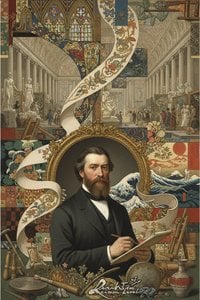
Luigi Natale Capuana: A Pioneer of Sicilian Realism
Luigi Natale Capuana (1839 – 1915) stands as a pivotal figure in the burgeoning Italian realist movement, profoundly impacting literary circles and shaping the artistic landscape of his time. Born into a wealthy Sicilian family in Mineo, he embarked on a scholarly path studying law before dedicating himself to journalism and literature—a commitment that would ultimately define his legacy. His connection with Giovanni Verga, arguably Italy’s most celebrated novelist, cemented Capuana's position as a champion of authenticity and observation within the literary sphere.
Early Life & Education: The Seeds of Observation
Capuana’s upbringing instilled in him a meticulous attention to detail and an appreciation for social nuance—qualities that would serve him well throughout his writing career. His legal studies provided him with analytical skills crucial for dissecting societal issues and crafting compelling narratives. This intellectual rigor wouldn't merely inform his scholarly pursuits but would become the bedrock of his artistic sensibility, shaping his unwavering dedication to portraying reality without embellishment.
Literary Debut & Influences: Embracing Naturalism’s Challenge
Capuana began publishing essays and articles in Catania’s newspapers, establishing himself as a vocal advocate for journalistic integrity and stylistic innovation. Notably, he absorbed the influence of Émile Zola's naturalism, recognizing its power to depict life with unflinching honesty and confronting uncomfortable truths. Zola’s uncompromising gaze at social ills served as an inspiration, urging Capuana to abandon romantic idealism in favor of a more truthful representation of human experience—a stylistic shift that would characterize his subsequent literary endeavors.
Sicilian Literary Voice: Capturing the Soul of Sicily
Capuana possessed an unwavering devotion to his homeland, Sicily, which became a central theme in his literary output. He meticulously documented Sicilian rural life—its traditions, dialects, and social dynamics—capturing the spirit of the region with remarkable accuracy. His works explored themes of poverty, injustice, and human resilience, reflecting the realities faced by ordinary Sicilians. Through vivid prose and painstaking observation, Capuana succeeded in conveying not just facts but also the emotional core of Sicilian society—a feat that distinguishes him from many of his contemporaries.
Notable Works: Verga’s Companion & Dramatic Vision
Capuana’s prolific output encompassed novels like “Il Marchese di Roccaverdina,” which garnered critical acclaim for its realistic portrayal of aristocratic society and its exploration of psychological complexities. He also penned plays—particularly “In morte della Contessa Lara”—that tackled pressing social issues with dramatic force, demonstrating his versatility as a playwright. These works exemplify Capuana’s commitment to confronting uncomfortable truths and portraying human characters with depth and nuance—a stylistic hallmark that aligns closely with Verga's own artistic vision.
Legacy & Significance: An Enduring Influence
Capuana’s influence extended beyond Verga's work; he mentored younger writers who embraced realism and championed the importance of portraying life truthfully. He is considered one of the earliest Italian authors to champion naturalism, marking him as an innovator in literary technique and a crucial contributor to the development of Italian realism—a movement that continues to resonate with contemporary audiences. His unwavering dedication to authenticity solidified his place as a cornerstone of Sicilian literature and a lasting testament to the power of observation in artistic expression.