CONSULENZA D'ARTE GRATUITA

x

ludwig johann passini

1832 - 1903

Brevi note biografiche

  • Top 3 works:
    • Monks Buying Fish before the Portal of the Madonna della Misericordia
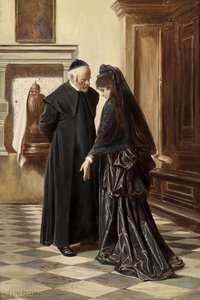
    • A serious conversation
    • Römischer Park
  • Nationality: Austria
  • Copyright status: Public domain
  • Art period: XIX Secolo
  • Lifespan: 71 years
  • Died: 1903

Quiz d'arte

Per ogni domanda è presente una sola risposta corretta.

Domanda 1:
Dove è nato Ludwig Passini?
Domanda 2:
Chi ha insegnnato arte inizialmente a Ludwig Passini?
Domanda 3:
Con chi Passini studiò a Lipsia?
Domanda 4:
In quale città Passini stabilì il suo studio per trent’anni?

Ludwig Johann Passini: A Venetian Master of Genre Painting

Ludwig Johann Passini (1832–1903) stands as a pivotal figure in 19th-century Austrian and Italian art, celebrated primarily for his exquisitely rendered genre scenes and captivating watercolors depicting Venetian life. Born in Vienna on July 9, 1832, Passini’s artistic journey began under the tutelage of his father, Johann Nepomuk Passini, a distinguished engraver who instilled in him a foundational understanding of visual craftsmanship. Moving to Trieste in 1850, the Passini family embraced a cosmopolitan existence, shaping Passini's exposure to diverse cultural influences—a formative experience that would profoundly impact his artistic sensibilities. His formal artistic education culminated at the Vienna Academy of Art, where he honed his skills alongside luminaries like Joseph von Führich and Leopold Kupelwieser. This period solidified his stylistic core: realism—a commitment to faithfully portraying observable reality—and established him as a student deeply rooted in classical tradition. Führich recognized Passini’s exceptional talent and encouraged him to pursue studies in Leipzig, furthering his artistic development and exposing him to the burgeoning artistic currents of Northern Germany. Notably, he collaborated closely with Anton Romako at Werner's studio, immersing himself in Venice and Rome during the 1850s and 60s—a crucible of artistic innovation where he encountered influential figures like Henry Woods and August von Pettenkofen. Passini’s Venetian residency proved transformative. He joined a vibrant studio led by Carl van Haanen and Wolkoff, Palazzo Vendramin Calergi, fostering intellectual exchange and collaborative experimentation with fellow artists—including Luigi Mion—who debated artistic vision and technique with fervor. This environment nurtured Passini's distinctive style, characterized by meticulous observation and an empathetic portrayal of human emotion. His watercolors captured the essence of Venetian daily life: bustling marketplaces overflowing with produce, intimate domestic interiors illuminated by candlelight, and portraits imbued with psychological depth—a stylistic hallmark that distinguishes him from many of his contemporaries. Passini’s oeuvre is marked by a remarkable sensitivity to the nuances of human experience and an unwavering dedication to capturing the beauty of ordinary moments. His paintings exemplify the spirit of Realism, prioritizing accuracy and detail while simultaneously conveying profound emotional resonance. Among his most iconic works are “A Shared Confidence” (1870), depicting scholarly figures engaged in animated discussion—a testament to Passini’s fascination with intellectual pursuits—and “Roman Children at Play,” portraying the carefree joy of childhood amidst the grandeur of Rome's monuments, demonstrating his ability to convey emotion through visual storytelling. Furthermore, Passini’s portraits—such as those of Katherine Bronson and Sir Henry Layard—stand out for their psychological realism and masterful rendering of character—a skill that cemented his reputation as one of Austria’s foremost portrait painters. Passini's legacy extends beyond individual artworks; he represents a crucial link between Romantic idealism and Impressionistic experimentation, embodying the enduring influence of classical principles within a rapidly evolving artistic landscape. His contribution to Venetian watercolor artistry remains particularly noteworthy, securing his place among the most celebrated artists of his time—a testament to the power of observation and empathy in translating visual experience into compelling narratives.