Gli anni della formazione e la ricerca parigina
Nelle tranquille campagne di Verdun, dove gli echi della storia sembrano spesso persistere, Louis Hector Leroux intraprese un viaggio che lo avrebbe infine trasportato nel cuore pulsante dell'antichità classica. Nato nel 1829, la sua giovinezza era ben lontana dalle sale dorate dei salotti parigini; infatti, trascorse gli anni della formazione padroneggiando l'arte delicata e pratica del parrucchiere. Eppure, sotto questo umile apprendistato, celava una passione nascente per il tratto e il pennello, nutrita da un rigoroso insegnamento presso l'accademia d'arte di Verdun, dove eccelse costantemente. Questi primi riconoscimenti gli permisero di ottenere una borsa di studio cruciale per inseguire la sua vera vocazione a Parigi, proiettandolo nella prestigiosa École nationale supérieure des Beaux-Arts nel 1849. Sotto la trasformativa tutela di François-Édouard Picot, Leroux affinò una tecnica definita dalla precisione e da una devozione quasi archeologica al dettaglio. Trascorse anni a padroneggiare l'arte di replicare i capolavori, lavorando come litografo e illustratore per sostenere i suoi studi, un periodo di intensa disciplina che gettò le basi per il suo futuro come cronista del passato.La residenza romana e lo spirito dei Néo-Grecs
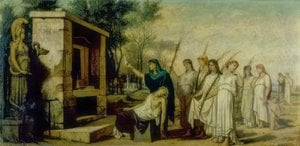
La traiettoria della carriera di Leroux raggiunse un vertice mozzafiato con il riconoscimento ottenuto nel concorso del Prix de Rome. Conquistato il secondo premio nel 1857, intraprese una residenza trasformativa a Roma che sarebbe durata fino al 1874, un periodo che rimodellò fondamentalmente la sua anima artistica. Immerso nella grandezza della Città Eterna, Leroux divenne una figura di spicco del movimento Néo-Grecs, un'era estetica caratterizzata da una profonda riverenza per l'antichità greca e romana. Le sue tele divennero finestre su un'epoca scomparsa, concentrandosi specificamente sulle vite enigmatiche delle Vestali e sulla maestosità architettonica dell'antica Roma. Non si trattava di mera illustrazione storica; era una rinascita atmosferica e profondamente documentata della vita classica. Il suo lavoro durante questo periodo fu segnato da diverse conquiste fondamentali:- Precisione archeologica: Una meticolosa dedizione alla ricerca sui soggetti classici, assicurando che ogni piega di drappeggio e ogni colonna di marmo risuonassero con verità storica.
- <Ricreazioni magistrali: L'impegno in ambiziose commissioni per lo Stato francese, tra cui una copia pittorica dell'Amore sacro e profano di Tiziano.
- <Versatilità artistica: La collaborazione con la prestigiosa manifattura dei Gobelins per infondere vita in monumentali arazzi che catturavano l'essenza dell'antichità.
Un'eredità scritta nell'antichità
Oltre i confini dell'Italia, il desiderio di esplorazione spinse Leroux attraverso il Mediterraneo, tra la Grecia, l'Asia Minore, la Turchia e persino nei paesaggi inondati dal sole dell'Egitto. Ogni spedizione servì ad arricchire la sua tavolozza e ad approfondire la sua comprensione della vasta e interconnessa portata del mondo classico. Egli si guadagnò l'evocativo titolo di Pittore dei mondi perduti, un nome che cattura la sua capacità unica di evocare i fantasmi di civiltà ormai scomparse attraverso il gioco di luci e ombre. La sua influenza si estese alla generazione successiva attraverso sua figlia, Laura Leroux-Revault, che scelse anch'essa il cammino della pittura. Sebbene sia trascorso molto tempo dalla sua morte nel 1900, la bellezza meticolosa delle sue composizioni rimane una testimonianza di un'epoca in cui l'arte cercava di colmare il divario tra il presente fugace e l'eterna gloria degli antichi.Domande e risposte
Di dove è Louis Hector Leroux?
Louis Hector Leroux è nato/a in Francia.
Dove posso vedere le opere di Louis Hector Leroux in ordine cronologico?
La pagina Cronologia delle opere dell'artista presenta le opere di Louis Hector Leroux in ordine cronologico, anno dopo anno.
In quale città e in quale paese è nato/a Louis Hector Leroux?
Louis Hector Leroux è nato a Verdun, in Francia.