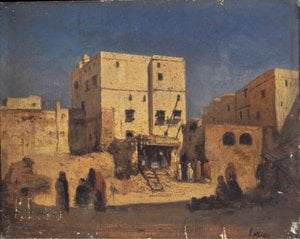
Louis Lottier: A Painter of the Eastern Dream
Born in 1815 and passing away in 1892, Louis Lottier remains a captivating figure within 19th-century French art. More than just a landscape painter, Lottier possessed an extraordinary ability to transport viewers to distant lands – from the sun-drenched shores of Algeria and Greece to the bustling streets of Cairo and the dramatic coastlines of Turkey. His work isn’t merely representation; it's imbued with a romantic sensibility, a fascination with exotic locales, and a keen eye for capturing fleeting moments of light and atmosphere.
Lottier’s early life offered little indication of his future artistic pursuits. He received a basic education before entering the service of the French army, an experience that profoundly shaped his worldview. It was during this period, particularly in Algeria, that he developed a deep appreciation for the landscapes and cultures of North Africa – a fascination that would dominate much of his later work. The vibrant colors, dramatic light, and intricate details of these regions became central to his artistic vision.
The Influence of Barbizon and Beyond
While often associated with the Barbizon School—a movement emphasizing direct observation of nature and rejecting academic painting conventions—Lottier’s style evolved beyond simple imitation. He absorbed the Barbizon's focus on capturing atmospheric effects, particularly the use of broken color and loose brushwork, but he infused it with a distinctly personal vision. Unlike many Barbizon artists who primarily focused on French landscapes, Lottier sought inspiration in the East, drawing upon his military experiences to create scenes that felt both familiar and utterly foreign.
His travels throughout Greece, Egypt, and Turkey provided him with an unparalleled wealth of subject matter. He meticulously documented these places – from the imposing Pyramids of Giza to the bustling markets of Cairo, the serene harbors of Beirut, and the dramatic coastlines of Turkey—often employing a combination of watercolor and oil paints to achieve his desired effects. His work demonstrates a remarkable sensitivity to light, color, and texture, capturing not just the physical appearance of these locations but also their atmosphere and spirit.
A Palette of Exoticism
Lottier’s palette is arguably one of his most distinctive features. He skillfully employed a range of colors—often vibrant blues, greens, and ochres—to evoke the warmth of the sun-drenched landscapes he depicted. His use of light is particularly noteworthy; he frequently utilized *chiaroscuro* – the dramatic contrast between light and shadow – to create a sense of depth and drama in his paintings. He wasn’t simply painting what he saw, but rather constructing an idealized vision of these exotic locales, filtered through his own artistic sensibility.
His subjects often included scenes of daily life—market vendors, fishermen, travelers, and local dignitaries—adding a layer of social commentary to his work. These figures are typically rendered with a degree of realism, yet they’re always presented within the context of their extraordinary surroundings, creating a sense of both familiarity and otherness.
Key Works and Legacy
Among Lottier's most celebrated works are “Maison Blanche (Alger)” – a captivating depiction of an Algerian villa bathed in sunlight; “Vue de l’ancien Cherbourg” – a serene landscape capturing the beauty of the French port city; and "Crépuscule environs d’Alger" - a stunning oil painting of an Algerian coastal scene. These paintings, along with numerous others, demonstrate his mastery of watercolor and oil techniques, as well as his remarkable ability to capture the essence of distant lands.
Louis Lottier's legacy extends beyond his individual works. He played a crucial role in popularizing the depiction of the East in French art, challenging conventional notions of beauty and inspiring generations of artists to explore new horizons. His paintings continue to captivate viewers with their exoticism, atmospheric effects, and evocative sense of place. He remains an important figure in understanding the development of landscape painting during the 19th century, a testament to his unique vision and artistic talent.