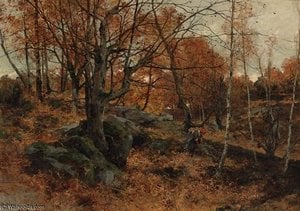
Leon Germain Pelouse: Un Visionario della Bretagna
Leon Germain Pelouse (1838 – 1891) emerse dalla quieta campagna francese, precisamente da Pierrefort, nel Val-d'Oise, come un artista autodidatta capace di sfidare le convenzioni e incantare il pubblico con le sue evocative rappresentazioni dei paesaggi della Bretagna. A differenza di molti artisti della sua epoca, impegnati in grandi narrazioni o soggetti storici, Pelouse si dedicò a catturare la bellezza sottile della regione bretone: il serpeggiare della Senna a Poses, i tranquilli villaggi fluviali immersi nel crepuscolo, trasformandoli in tele vibranti di profondità atmosferica e ricchezza materica.- Primi anni e inizi artistici: Nato nel 1838, il percorso artistico di Pelouse ebbe un inizio inaspettato. Impiegato inizialmente come venditore ambulante, affinò le sue capacità osservative prima di scoprire la pittura all'età di sedici anni. Il servizio militare durante la guerra franco-prussiana gli fornì esperienze formative che senza dubbio modellarono la sua visione del mondo e alimentarono la sua passione per la rappresentazione del mondo naturale.
- Il debutto al Salon e l'accoglienza critica: Le ambizioni artistiche di Pelouse si consolidarono quando iniziò a dipingere professionalmente a ventisette anni, segnando il suo debutto al Salon de Paris nel 1865. Nonostante dovette affrontare notevoli critiche riguardo al suo stile — caratterizzato da una pennellata libera e una tavolozza dai toni smorzati — egli perseverò, guidato da una fede incrollabile nella propria visione.
- Ispirazione bretone e pittura di paesaggio: Trasferendosi in Bretagna intorno al 1870, Pelouse trovò un terreno fertile per l'espressione artistica. La costa drammatica della regione, le colline ondulate e le valli nebbiose furono una fonte costante di ispirazione, dando vita a una produzione prolificante di paesaggi che ottennero rapidamente riconoscimento. La sua meticolosa attenzione al dettaglio — in particolare all'interazione tra luce e ombra — lo affermò come una figura prominente all'interno del movimento della Scuola di Barbizon.
- Riconoscimento e mecenatismo: La dedizione di Pelouse fu ricompensata con l'ammirazione di colleghi artisti e critici, culminando nel prestigioso premio assegnatogli per "Vallée de Cernay" nel 1873. Notevolmente, il governo francese riconobbe il suo talento acquistando numerose tele — oggi conservate in istituzioni come il Musée d'Orsay, il Musée Malraux e il Musée des Beaux-Arts di Nantes — consolidando la sua eredità come uno dei pittori più celebrati della Bretagna.
- Eredità e influenza: L'opera di Pelouse incarna un profondo legame con la natura e riflette l'influenza impressionista sull'arte francese. I suoi paesaggi continuano a ispirare ammirazione per la loro bellezza serena e la tecnica magistrale, dimostrando il potere duraturo dell'osservazione e della sensibilità artistica. Egli rimane un artista fondamentale nella storia dell'arte bretone.
Opere Notevoli e Stile Artistico
L'opera di Pelouse include capolavori quali “La Seine à Poses”, “Riverside Village At Dusk” e “Landscape With Storm Clouds”. Il suo stile distintivo privilegiava la cattura di momenti fugaci di luce e atmosfera, utilizzando pennellate fluide e sottili armonie cromatiche per trasmettere l'essenza dei suoi soggetti. Egli impiegava con maestria superfici materiche — spesso ottenute attraverso l'impasto — per infondere alle sue tele una fisicità palpabile e una risonanza emotiva. La resa meticolosa degli elementi naturali da parte dell'artista — in particolare nuvole e fogliame — dimostra una profonda comprensione dei principi artistici radicati nell'osservazione e nella sensibilità.Connessioni e Influenze
La sensibilità artistica di Pelouse fu indubbiamente plasmata dalla Scuola di Barbizon, che sosteneva la pittura en plein air e enfatizzava il realismo come mezzo per trasmettere la grandezza della campagna francese. Inoltre, beneficiò delle collaborazioni con colleghi artisti come Albert Gabriel Rigolot, che lo guidò e favorì il suo sviluppo artistico. Il suo lavoro riflette un interesse per i temi orientalisti — in particolare paesaggi ispirati al Marocco — dimostrando le più ampie correnti artistiche che circolavano in tutta Europa durante la fine del XIX secolo.Collezioni Museali
I dipinti di Pelouse sono esposti con orgoglio in diversi importanti musei francesi, tra cui il Musée d'Orsay e il Musée Malraux, mostrando il suo contributo al patrimonio artistico della nazione. Queste istituzioni offrono ai visitatori la possibilità di sperimentare direttamente la bellezza e la profondità emotiva dei paesaggi di Pelouse, una testimonianza della sua influenza duratura sull'arte bretone e sulla pittura impressionista.Domande e risposte
Posso sfogliare le opere di Leon Germain Pelouse in base alla palette di colori?
Le opere di Leon Germain Pelouse possono essere esplorate per palette cromatica nella pagina Per palette di colori dell'artista.
In quale città e in quale paese è nato/a Leon Germain Pelouse?
Leon Germain Pelouse è nato a Pierrefort, in Francia.
Quali opere di Leon Germain Pelouse sono le più visualizzate?
La pagina Statistiche di Leon Germain Pelouse presenta statistiche calcolate a partire dalle opere dell'artista elencate su questo sito web.