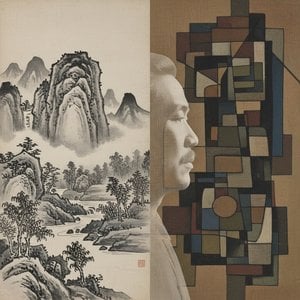
Il Tessitore di Mito e Memoria
Lee Yun-gi (1947–2010) ha occupato uno spazio raro nel panorama culturale coreano, agendo come un ponte tra le profonde profondità dell'antica mitologia e le realtà viscerali dell'esistenza moderna. Nato a Gunwi-si, in Corea del Sud, la sua giovinezza è stata plasmata dalle complesse tensioni di una nazione che cercava di navigare la propria identità nel dopoguerra. Sebbene la storia lo ricordi spesso come un titano della letteratura—romanziere pluripremiato e traduttore prolifico che ha portato i labirinti intricati di Umberto Eco ai lettori coreani—la sua anima artistica cercava espressione attraverso un mezzo più tattile. Per Lee, i confini tra la parola scritta e la tela dipinta erano fluidi; entrambi fungevano da vasi per esplorare le ripercussioni psicologiche del conflitto, dello spostamento e del potere duraturo della connessione umana.
Il suo viaggio creativo è stato profondamente segnato dalle sue osservazioni durante la guerra del Vietnam, un'esperienza che ha dato vita al suo debutto letterario del 1977, Hayan Hellikop. Questo primo incontro con le ombre della guerra ha acceso una preoccupazione vitale per i temi del trauma e della sopravvivenza. Con la maturità, i suoi orizzonti intellettuali si sono ampliati attraverso studi formali presso la Michigan State University, dove si è immerso nella letteratura comparata e negli studi religiosi. Questo rigore accademico gli ha permesso di padroneggiare l'arte della traduzione, pubblicando infine oltre 150 opere che includevano il peso simbolico e solenne dei miti greci e romani. Questa profonda immersione negli archetipi classici ha fornito il vocabolario fondamentale per la sua arte visiva, permettendogli di infondere nei suoi dipinti un senso di atemporalità e verità universale.
Texture, Simbolismo e Narrativa Visiva
Nella sua transizione dalla precisione della traduzione alla libertà espressiva della pittura, Lee Yun-gi ha sviluppato un approccio stilistico che riguardava tanto la sensazione fisica quanto la rappresentazione visiva. La sua opera è caratterizzata da un uso straordinario della texture, dove strati di pigmento vengono costruiti sulla tela per creare una profondità palpabile e scultorea. Questa tecnica non si limita a ritrarre un soggetto; invita lo spettatore a percepire il peso della storia e la grana della memoria. In opere celebri come Blue-eyed Owl, Lee utilizza il simbolismo aviario—un motivo ricorrente nella sua produzione—per evocare un senso di saggezza vigile e la connessione eterea tra il terreno e il divino.
La capacità dell'artista di fondere elementi disparati è forse il suo più grande traguardo. I suoi dipinti spesso rispecchiano la struttura della sua prosa, utilizzando sottili variazioni di colore e un impasto pesante per far avanzare una narrazione senza la necessità di una rappresentazione esplicita. In serie come la Migrant Bird Series, egli esplora i temi struggenti dello spostamento e della ricerca di una casa, riflettendo i mutamenti socio-politici della penisola coreana. Attraverso l'uso di luce e ombra, Lee crea paesaggi che appaiono allo stesso tempo intimamente personali e miticamente vasti, trasformando la tela in uno spazio in cui la lotta individuale incontra l'esperienza umana collettiva.
Un'Eredità di Dialogo Interculturale
Il significato storico di Lee Yun-gi risiede nel suo ruolo di mediatore culturale. Traducendo le complessità del pensiero occidentale nella lingua coreana, e successivamente traducendo quegli stessi archetipi in un linguaggio visivo, egli ha favorito un unico dialogo interculturale. La sua opera ha resistito alle facili comodità della semplice descrizione, optando invece per un uso dinamico del dialogo—sia letterale nei suoi libri che metaforico nei suoi dipinti—per sfidare e coinvolgere il suo pubblico. Ha affrontato la vita con un caratteristico senso di ottimismo e arguzia, rifiutandosi di soccombere alla disperazione della crudeltà umana, scegliendo invece di concentrarsi sulla risoluzione del conflitto attraverso la creatività.
In definitiva, l'eredità di Lee Yun-gi è una profonda sintesi. Egli rimane una figura significativa nell'arte coreana contemporanea perché è riuscito a fondere con successo la precisione analitica dello studioso con il potere emotivo dello scrittore. L'opera della sua vita si erge come testimonianza dell'idea che, sia attraverso la meticolosa traduzione di un testo che attraverso l'applicazione densa di pittura su una tela, l'obiettivo ultimo dell'artista sia quello di scoprire le verità universali che ci legano tutti insieme, attraverso il tempo e la geografia.
Domande e risposte
Dove posso vedere tutte le opere di Lee Yun-Gi?
Tutte le opere di Lee Yun-Gi presenti su questo sito web sono consultabili nella pagina Tutte le opere dell'artista.
Posso ordinare le opere di Lee Yun-Gi per colore?
La pagina Indice dei colori organizza le opere di Lee Yun-Gi per colore.
Dove si possono trovare le opere di Lee Yun-Gi raggruppate per parole chiave?
Le opere di Lee Yun-Gi possono essere esplorate tramite parole chiave nella pagina Per parole chiave dell'artista. Ogni parola chiave raggruppa le opere correlate.