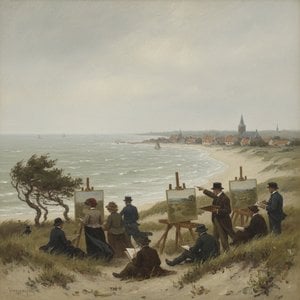
Una vita immersa nella luce: l'arte di Kristen “Kraesten” Iversen
Kristen “Kræsten” Iversen, nato nella tranquilla parrocchia danese di Holsted nel 1886, fu un artista la cui esistenza si intrecciò indissolubilmente con l'esplorazione e la manipolazione della luce. Non era un semplice pittore; era un tessitore di atmosfere, un maestro sia della tela che del vetro che ha lasciato un segno indelebile nel panorama artistico della Danimarca. Il suo percorso ebbe inizio con una formazione formale presso il Copenhagen Technical College tra il 1904 e il 1905, gettando le basi per una carriera che lo avrebbe visto abbracciare medium diversissimi: oli, affreschi, acquerelli, mosaici e, in modo ancora più emblematico, le vetrate artistiche. Le prime esposizioni presso l'Artists’ Autumn Exhibition tra il 1910 e il 1918 mostrarono un talento in divenire, ma fu il suo primo incontro con l'isola di Bornholm nel 1920 a infiammare veramente la sua visione artistica.L'influenza di Bornholm e le commissioni reali
Bornholm, con i suoi colori naturali unici e una qualità della luce distintiva, si rivelò trasformativa per Iversen. I paesaggi dell'isola non erano semplici soggetti da ritrarre; erano fonti di ispirazione, una tavolello cromatica da cui attinse una comprensione sempre più vibrante e sfumata del colore e della forma. Questa nuova direzione estetica lo spinse verso un periodo di grande riconoscimento. Nel 1923, gli fu conferita la prestigiosa Medaglia Eckersberg, a testimonianza della sua crescente maestria. Tuttavia, fu la commissione per la grande decorazione pittorica del soffitto nella sala reale di Christiansborg Palace, tra il 1927 e il 1931, a consolidare la sua posizione di artista leader del suo tempo. Questa impresa monumentale richiese non solo abilità tecnica, ma anche la capacità di tradurre grandezza e storia in forma visiva: sfide che Iversen affrontò con straordinario successo, stabilendo uno stile caratterizzato sia da una precisione classica che da una sensibilità decisamente moderna.Oltre la tela: un pioniere della vetrata artistica
Sebbene celebrato per i suoi dipinti, l'eredità di Kristen Iversen si estende ben oltre la tradizionale tela. Egli divenne un vero pioniere nell'arte della vetrata, trasformando questo medium spesso trascurato in una potente forma di espressione artistica. Il suo primo approccio al lavoro sul vetro avvenne con le finestre della chiesa di Risskov, ma furono i suoi successivi progetti – tra cui quelli per la Cappella Nord della chiesa di Fårevejello e la chiesa danese a Buenos Aires – a mostrare davvero il suo approccio innovativo. Iversen non si limitava a riempire gli spazi con vetro colorato; creava narrazioni luminose, utilizzando la luce stessa come elemento primario del design. Comprendeva come manipolare colore, consistenza e forma per creare vetrate che non fossero meramente decorative, ma profondamente evocative, intrise di risonanza spirituale e profondità artistica. Il suo lavoro in chiese come la Sankt Nicolai a Svendborg dimostrò ulteriormente la sua capacità di integrare armoniosamente l'arte negli spazi architettonici, creando ambienti tanto belli quanto profondamente emozionanti.Un professore e direttore: plasmare una generazione di artisti
L'influenza di Iversen non si limitò alle sue creazioni personali; egli si dedicò con passione anche alla cura della prossima generazione di artisti. Nel 1930, accettò una cattedra presso la Royal Danish Academy of Fine Arts, posizione che mantenne fino alla sua morte nel 1955. Successivamente servì come direttore dell'accademia dal 1949 al 1952, guidando innumerevoli studenti e plasmando la direzione dell'arte danese per i decenni a venire. La sua filosofia d'insegnamento enfatizzava probabilmente l'importanza dell'osservazione, della sperimentazione e di una profonda comprensione sia delle tradizioni storiche che delle tendenze contemporanee. Fu insignito dell'Ordine di Dannebrog nel 1932, una testimonianza dei suoi significativi contributi alla cultura danese.Un'eredità duratura: il potere eterno della luce
La morte di Kristen “Kræsten” Iversen a Copenaghen nel 1955 segnò la fine di un viaggio artistico straordinario. Lasciò dietro di sé un corpus di opere tanto diversificato quanto affascinante, comprendente dipinti, affreschi, mosaici e splendide vetrate artistiche. La sua produzione fu eccezionalmente poliedrica, spaziando tra oli, affreschi, acquerelli, mosaici e pittura su vetro. I suoi paesaggi, intrisi della luce di Bornholm, continuano a incantare gli spettatori con i loro colori vibranti e la loro profondità atmosferica. Ma forse è il suo lavoro pionieristico nelle vetrate che definisce veramente la sua eredità: una prova della sua capacità di trasformare un medium tradizionale in una forma potente di espressione artistica. L'arte di Iversen rimane un potente promemoria del potere duraturo della luce, del colore e dell'immaginazione, continuando a ispirare artisti e pubblico allo stesso modo.Domande e risposte
In quali periodi è suddivisa la carriera di Kristen Iversen?
La carriera di Kristen Iversen si svela periodo dopo periodo nella pagina Cronologia artistica: una linea temporale orizzontale delle opere, raggruppate in capitoli relativi ai vari periodi della sua carriera.
A quali movimenti appartiene l'opera di Kristen Iversen?
I movimenti di Kristen Iversen sono consultabili nella pagina Tutti i movimenti, che raggruppa le opere per movimento.
Come posso trovare tutte le opere di Kristen Iversen suddivise per tecnica?
Per trovare tutte le opere di Kristen Iversen suddivise per tecnica, consulta la pagina Per tecnica dell'artista.