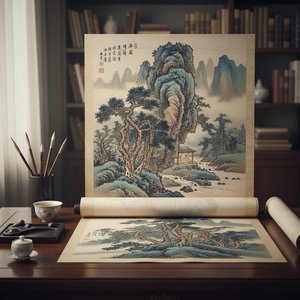
Katō Bunrei: The Poet Painter of Edo Japan
Katō Bunrei (1706-1782) stands as a singular figure in the annals of Edo period Japanese art, particularly celebrated for his distinctive style within buncho tani – a genre emphasizing atmospheric landscapes imbued with poetic contemplation. Born Yasuto in Tokyo, he adopted the artistic moniker Bunrei, signifying “pine spirit,” reflecting both his personal philosophy and the recurring motif dominating his oeuvre.
Bunrei’s formative years were dedicated to mastering Sumi-e techniques under the guidance of Sessai Hiroaki, a revered Sumi-e master who instilled within him an unwavering appreciation for conveying profound emotions through subtle brushstrokes and nuanced tonal variations. This mentorship profoundly shaped Bunrei's artistic vision and would permeate his entire oeuvre.
The cornerstone of Bunrei’s artistic legacy resides in his groundbreaking exploration of buncho tani – “pine grove” landscapes. Rejecting the meticulous realism prevalent in many contemporary paintings, Bunrei prioritized conveying mood and spiritual resonance through layered washes of ink. These ethereal vistas weren't merely representations of scenery; they were invitations to introspection, capturing fleeting moments of tranquility and fostering a contemplative gaze upon the natural world.
Among Bunrei’s most iconic works is ‘Misty Landscape with Rainbow,’ an undeniable masterpiece demonstrating his unparalleled command of tonal harmony. The painting captures the nascent beauty of dawn with breathtaking subtlety, utilizing delicate brushstrokes to evoke feelings of serenity and wonder. Similarly, ‘Hotei and Chinese Children’ exemplifies Bunrei's ability to imbue landscapes with symbolic depth, referencing Buddhist principles of compassion and enlightenment—a testament to his artistic sensitivity and intellectual curiosity.
Bunrei’s technique was characterized by a meticulous layering process – often employing multiple shades of ink – resulting in remarkable visual depth and luminosity. He skillfully manipulated the brushstroke itself, utilizing delicate flicks and subtle gradations to convey texture and movement without resorting to excessive detail. This understated approach distinguished him from many of his contemporaries and solidified his reputation as an innovator within Edo art history.
Bunrei’s influence extended beyond his stylistic innovations; he championed a humanist aesthetic that prioritized emotional resonance over mere visual accuracy, establishing buncho tani as a cornerstone of Edo literati art—a movement dedicated to capturing the sublime beauty of nature and fostering inner contemplation. His enduring legacy continues to inspire artists today, cementing Katō Bunrei’s place as one of Japan's most influential landscape painters and securing his position within the canon of Japanese artistic achievement.