Judy Fiskin: Minimalism's Quiet Observer of American Landscape
Judy Fiskin’s artistic journey began in Los Angeles, nurtured by a formative education alongside fellow artists Chris Burden and James Turrell – figures who would themselves become towering beacons of contemporary art. This shared intellectual curiosity at Pomona College established the bedrock for her distinctive vision, shaping her understanding of art history and its role in interpreting the world around us. Her academic pursuits extended beyond the liberal arts, culminating in a master’s degree in Art History from UCLA where she honed her analytical skills and contributed to the scholarly journals of Richard Neutra, demonstrating an unwavering dedication to intellectual rigor. Notably, she played a crucial role as co-director of WomanSpace Gallery during the vibrant 1970s counterculture movement—a period marked by experimentation and challenging conventions—immersing herself in the burgeoning landscape of avant-garde artistic expression.
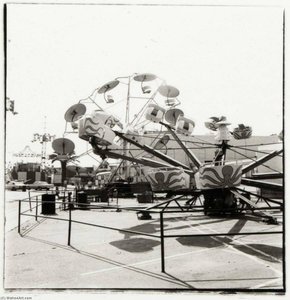
It was in 1976 that Fiskin’s artistic career truly blossomed with her debut exhibition at Castelli Graphics in New York City, marking the genesis of a photographic style instantly recognizable for its simplicity and precision: small, square black-and-white prints on letter-sized paper – a deliberate aesthetic choice that would become synonymous with her oeuvre. Initially captivated by the unassuming beauty of vernacular architecture in Los Angeles—particularly 1950s apartment buildings—Fiskin swiftly gained acclaim for her groundbreaking “Dingbat” series. These photographs, taken from across the street with unwavering focus and devoid of embellishment, capture the essence of everyday life with remarkable subtlety and understated elegance. Fiskin’s meticulous documentation embodies a core principle of minimalist art: conveying profound meaning through minimal visual elements—a testament to her belief in the transformative power of restraint.
Her subsequent explorations of the American desert landscape yielded equally compelling results, producing images that simultaneously convey grandeur and solitude. These photographs aren't merely depictions of scenery; they are meditations on scale, perspective, and the human experience within vast natural environments. Alongside architectural subjects and meticulously reproduced period furniture—objects imbued with historical significance—Fiskin’s artistic vision embraced military installations and nostalgic Americana—themes she revisited throughout her career—reflecting a broader interest in capturing moments of American cultural heritage. The critical acclaim surrounding her 1992 retrospective at MOCA Los Angeles underscored the profound impact of her work, praising its intellectual depth, wry humor, and extraordinary stylistic coherence. Critics lauded Fiskin’s ability to distill complex ideas into deceptively simple visual forms—a skill that solidified her reputation as a visionary artist who championed quiet contemplation and understated beauty.
Throughout her prolific career, Judy Fiskin consistently prioritized meticulous observation and careful composition. Her signature style—small black-and-white photographs printed on letter-sized paper—served as a deliberate aesthetic choice, reflecting her conviction that simplicity could communicate profound emotional resonance. Exhibitions spanning from the Pompidou Center in Paris to MOCA Los Angeles and the Getty Museum Art cemented her position as one of America’s foremost landscape photographers—artists who strive to capture the essence of their subjects with unwavering honesty and artistic sensitivity. Her work continues to inspire audiences today, offering a poignant reflection on American culture and history—a testament to Fiskin's enduring legacy as an artist who championed quiet contemplation and understated beauty.
- Notable Achievements: Extensive solo exhibitions at prestigious institutions including MOCA Los Angeles, Getty Museum Art, Pompidou Center
- Influences: Chris Burden, James Turrell; Emphasis on Minimalist Aesthetic
- Signature Style: Small Black-and-White Photographs Printed on Letter-Sized Paper
Source Material: MOCA Los Angeles Retrospective Catalog; Getty Museum Exhibition Materials; Artist Interviews; Critical Reviews of Her Work.