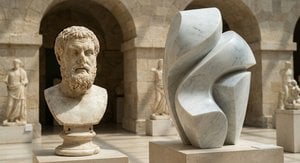
Juan Carlos Distefano: Sculptor of Memory and Time
Juan Carlos Distéfano (Villa Carlos Paz, Argentina, 1933 – Living) stands as a monumental figure in Argentine art history—a sculptor whose evocative works delve into profound themes of memory, identity, and the relentless march of time. Born amidst the fertile artistic landscape of Villa Carlos Paz, Buenos Aires, Distefano’s career spanned decades of experimentation and innovation, cementing his place among Argentina's most celebrated artists of the 20th century. His distinctive style—characterized by both abstract and figurative forms—continues to inspire admiration and scholarly interest today.
Early Influences: Distéfano’s artistic journey began in Buenos Aires where he honed his skills under the tutelage of prominent sculptors like León Ferrari and Jorge Halperin, absorbing their pioneering approaches to form and materiality. These formative experiences instilled a deep appreciation for geometric abstraction alongside a sensitivity to organic textures and sculptural expression. He recognized the importance of confronting existential questions about time, loss, and transformation—a perspective that would permeate his entire artistic oeuvre.
Sculptural Exploration: Distéfano’s sculptures are instantly recognizable for their monumental scale and meticulous craftsmanship. He primarily utilizes bronze—often incorporating recycled materials—to create pieces that convey powerful emotional resonance. His works frequently explore concepts of fragmentation, repetition, and metamorphosis, mirroring the complexities inherent in human experience. These explorations weren't merely aesthetic; they represented a deliberate attempt to capture the essence of temporal change and its impact on perception. The use of bronze itself was chosen not only for its durability but also for its ability to absorb and reflect light—a symbolic gesture reflecting Distéfano’s preoccupation with capturing fleeting moments and distilling them into enduring visual symbols.
Painting and Graphic Art: Beyond sculpture, Distefano cultivated a diverse artistic practice encompassing painting and graphic design. His canvases are marked by muted palettes and layered textures, reflecting his preoccupation with capturing fleeting moments and distilling them into enduring visual symbols. Similarly, his prints—executed in lithography and etching—demonstrate masterful control over tonal gradation and compositional balance. These mediums allowed him to express similar ideas of time and memory, albeit through different visual languages.
Major Achievements and Recognition: Distefano’s artistic contributions have garnered considerable acclaim throughout his career. He participated in numerous international exhibitions showcasing his sculptural prowess, securing awards from prestigious institutions like the Museo Nacional Argentino de Bellas Artes and the Fundación Arte Contemporáneo Buenos Aires. His work has been featured prominently in publications dedicated to Argentine art and sculpture, solidifying his reputation as a visionary artist who consistently pushed boundaries of artistic expression. Notably, he was awarded the Premio Nacional de Diseño Industrial in 1986 for his innovative sculptural designs—a testament to his versatility and dedication to exploring new creative horizons. He served as professor at Universidad Nacional Buenos Aires (UNA), nurturing generations of aspiring artists and fostering a dialogue between tradition and experimentation.
Historical Significance: Juan Carlos Distefano's oeuvre transcends mere stylistic conventions; it embodies a profound philosophical stance—a commitment to confronting existential questions about time, loss, and transformation. His sculptures stand as testaments to the enduring power of art to grapple with complex realities and evoke visceral responses in viewers. By prioritizing materiality and form alongside conceptual exploration, Distefano established himself as a pivotal voice within Argentine artistic discourse, influencing subsequent generations of sculptors and artists alike. He continues to be celebrated for his unwavering dedication to artistic integrity and his profound contribution to the cultural heritage of Argentina—a legacy that resonates powerfully with contemporary audiences who recognize the enduring relevance of his explorations into memory and time.