Josephine Marien Crawford: A Pioneer of Modernism in Louisiana
Josephine Marien Crawford (1878-1952) stands as a singular figure in the artistic landscape of New Orleans, recognized for her pivotal role in introducing modernist principles to a region largely steeped in Impressionistic traditions. Born December 31st, 1878, in New Orleans’s historic Creole district—a lineage tracing back to French colonial settlers—Crawford possessed an upbringing profoundly shaped by linguistic duality and exposure to diverse cultural influences. Her family's wealth and social standing afforded her access to privileged education, fostering a keen appreciation for art and intellectual pursuits from a young age.
Early Life & Education: Crawford’s formative years were spent navigating the complexities of Creole society, marked by both French and English spoken within her household. She attended Cenas Institute for Young Ladies and McDonogh High School No. 3, demonstrating an early commitment to academic excellence. Notably, she briefly enrolled at Newcomb College, where she honed her artistic sensibilities amidst a burgeoning cohort of aspiring artists. Her family’s Creole heritage—rooted in the Bienvenu lineage who established their presence in Louisiana centuries ago—provided her with a unique perspective on cultural identity and artistic expression. The stately Royal Street townhouse inherited by her grandfather François Mélicourt Bienvenu—a testament to Louisiana's aristocratic past—served as a constant reminder of her family’s history and profoundly influenced her artistic vision.
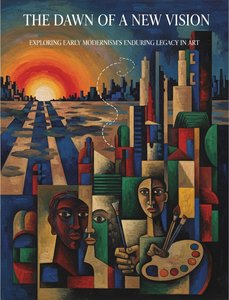
Influences & Artistic Style: Crawford’s artistic trajectory was decisively shaped by the avant-garde currents sweeping across Europe during the 1920s—particularly Cubism, championed by André Lhote. This influence translated into her distinctive oeuvre, characterized by flattened forms, simplified geometries, and a muted color palette that eschewed the vibrancy of Impressionistic hues. Her paintings weren’t mere representations of reality; they were explorations of perception and materiality—a deliberate departure from traditional artistic conventions. She meticulously studied with renowned artists in Paris and Vienna before returning to New Orleans, immersing herself in the intellectual ferment of the era and absorbing the stylistic innovations of her time.
Louisiana Roots & Artistic Collaborations: Crawford’s connection to Louisiana extended beyond her familial heritage. She spent considerable time in Biloxi, Mississippi, capturing the atmosphere and visual elements of the Gulf Coast—a region she revisited throughout her life—into her artwork. Her childhood home at 612 Royal Street—a symbol of Creole grandeur—provided an ideal setting for artistic contemplation and fueled her creative imagination. Crawford collaborated closely with fellow New Orleans artists Paul Ninas and Will Henry Stevens, fostering a spirit of experimentation that challenged the prevailing Impressionistic dominance within the local art scene. Together, they championed a bolder aesthetic approach, advocating for a move away from conventional representation.
Notable Achievements & Legacy: Crawford’s artistic accomplishments culminated in several prestigious awards and exhibitions. Her victory at the Arts and Crafts Club’s Blanche Benjamin Prize in 1934—recognized for *Rue Kerlerec*, an evocative portrait of a Creole widow—established her reputation as a visionary artist and solidified her place within Louisiana art history. Furthermore, her inclusion in New York, Philadelphia, and Central America exhibitions underscored the breadth of her artistic influence and demonstrated her ability to transcend regional boundaries. Her brother bequeathed a substantial collection of Crawford’s artworks—alongside sketches, personal papers, and poetry—to The Historic New Orleans Collection, ensuring that her legacy would continue to inspire future generations of artists. Josephine Marien Crawford remains an enduring symbol of artistic integrity, intellectual curiosity, and the transformative power of embracing modernity amidst tradition.