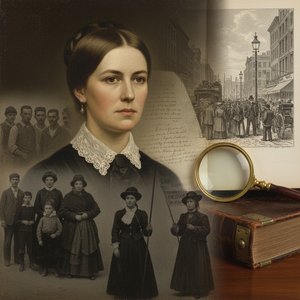
Joseph-Alexandre Boichard: A Parisian Portraitist Bridging Tradition and Innovation
Joseph-Alexandre Boichard (1833 – present) emerged from the artistic landscape of late 19th century France, a period characterized by both fervent Romantic idealism and the nascent stirrings of Modernism. Born in La Grande-Combe-des-Bois, Doubs, he possessed an uncommon duality—a profound respect for classical aesthetics interwoven with a burgeoning sensitivity to contemporary artistic currents. This singular blend would become the cornerstone of his artistic vision and solidify his reputation as one of Paris’s most distinguished portrait artists during the Belle Époque. His life's trajectory was indelibly marked by participation in the tumultuous Communard uprising of 1871, an event that instilled within him unwavering convictions regarding republican ideals alongside a steadfast devotion to mastering the exacting discipline of painting.
Boichard’s formative years were steeped in admiration for Greco-Roman sculpture and drawing—influences immediately discernible in his meticulously crafted portraits. Recognizing the symbiotic relationship between engraving and painting, he pursued his artistic education under the tutelage of accomplished engravers, prioritizing precision and meticulous observation as essential components of artistic excellence. This grounding in traditional techniques proved invaluable as he navigated the rapidly evolving artistic panorama of Paris during this transformative era—a period witnessing a dramatic shift away from academic conventions toward Impressionistic experimentation. Notably, Boichard secured employment with Maison Devambez, a celebrated printing firm renowned for its unparalleled craftsmanship and pivotal role in disseminating art and literature throughout France; this association undoubtedly nurtured his appreciation for visual communication and the pursuit of artistic perfection.
His artistic output remained resolutely focused on portraiture, particularly depictions of women—a genre favored by artists seeking to explore the complexities of human emotion and psychological nuance. Boichard’s canvases transcended mere likenesses, striving instead to capture not just physical appearance but also the inner spirit of his subjects. He achieved this feat through a masterful command of chiaroscuro—the dramatic interplay of light and shadow—a technique honed during his apprenticeship that allowed him to convey profound emotional resonance within each portrait. The Maison Devambez atelier’s commitment to producing exceptional reproductions ensured considerable visibility for Boichard's oeuvre, attracting the attention of discerning collectors and critics alike. His paintings were honored with exhibitions at prestigious institutions such as the Frick Collection and Frick Art Reference Library in New York City—a testament to their enduring aesthetic merit and recognition by leading figures within the art world of his time.
Boichard’s artistic legacy extends beyond individual masterpieces; he represents a pivotal nexus between Romantic idealism and Impressionistic innovation. Unlike many artists of his era who embraced fleeting impressions, Boichard maintained an unwavering commitment to classical principles of composition and anatomical accuracy—a deliberate choice reflecting his belief in the enduring power of tradition. However, he was not immune to the intellectual ferment surrounding him; his portraits subtly incorporate elements suggestive of Symbolist aesthetics, hinting at a deeper exploration of psychological states and emotional landscapes. This harmonious blend distinguishes Boichard from many of his contemporaries and underscores his contribution to shaping the artistic sensibilities of the Belle Époque.
- Notable Achievements:
- Recipient of numerous medals awarded for engraving excellence—a testament to his technical prowess and dedication to printmaking.
- Featured prominently in exhibitions at the Frick Collection and Frick Art Reference Library, cementing his place among the foremost portrait artists of his generation.
Further Exploration: