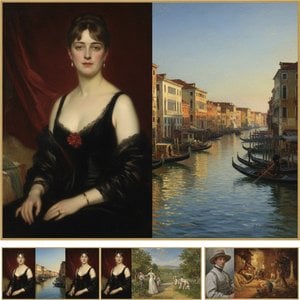
Un'eredità di Splendore Reale: La Vita e l'Arte di John Partridge
Nel grandioso e vasto arazzo dell'era vittoriana, pochi artisti sono riusciti a catturare l'essenza dignitosa di quell'epoca come John Partridge. Nato a Glasgow nel 1789, Partridge emerse da una famiglia profondamente immersa in ambizioni intellettuali e creative, portando con sé una stirpe che avrebbe visto suo fratello raggiungere la prominenza nelle scienze mediche e suo nipote conquistare la fama nelle arti teatrali. Il suo viaggio nel cuore del mondo artistico britannico non iniziò come un semplice osservatore, ma come un dedito studente dell'arte, affinando la propria visione sotto la guida del stimato ritrattista Thomas Phillips. Già nel 1815, con il debutto di ‘Miss Foote nella veste di Lucilla’ alla Royal Academy, Partridge iniziò a segnalare l'arrivo di un maestro capace di fondere la meticolosa precisione del realismo accademico con una profonda e spirituale intensità.
L'evoluzione della maestria di Partridge fu profondamente plasmata dagli anni trasformativi trascorsi vagando tra i paesaggi inondati di sole e le gallerie leggendarie dell'Italia. Tra il 1823 e il 1827, l'artista si immerse nei tesori culturali di Firenze, Venezia e Roma, un'esperienza che agì come una vera e propria rinascita spirituale e tecnica. Fu proprio in questo periodo che egli andò oltre la mera replica dei tratti somatici per confrontarsi profondamente con i fantasmi del Rinascimento. Schizzando paesaggi e creando copie meticolose di opere di Correggio, Raffaello, Rubens, Tintoretto e Tiziano, Partridge assorbì il drammatico intreccio tra luce e ombra — il chiaroscuro — che sarebbe diventato il marchio distintivo del suo stile maturo. Questa solida base classica gli permise di infondere nei suoi ritratti un peso atmosferico, rendendo ogni soggetto non solo una persona, ma una figura di permanenza storica.
L'Architetto dell'Identità Vittoriana
Al suo ritorno a Londra, la carriera di Partridge ascendette ai più alti vertici della società. Il suo strategico trasferimento in prestigiosa Brook Street, vicino al cuore dell'aristocrazia, lo collocò proprio nell'orbita dei suoi futuri soggetti. L'artista possedeva una rara capacità di navigare l'equilibrio delicato tra la precisione fisica del volto e la proiezione dell'autorità sociale del personaggio. Questa abilità gli valse l'extraordinaria distinzione di essere nominato ‘ritrattista straordinario’ della Regina Vittoria nel 1843. Le sue tele di questo periodo, incluse quelle della Regina stessa e del Principe Alberto, fungono da vitali finestre storiche, documentando la compostezza regale e le opulente trame della vita reale della metà del XIX secolo.
Al di là della corte reale, il portfolio di Partridge era un vero e proprio elenco dei protagonisti dell'influenza vittoriana. Il suo pennello catturò la gravità di titani politici come Henry III Visconte Palmerston e il peso intellettuale di figure come Sir John Forbes. Ogni ritratto era una lezione magistrale di dettaglio narrativo:
- L'uso della luce: l'impiego di un'illuminazione drammatica per guidare l'occhio dello spettatore verso il centro psicologico del soggetto.
- Realismo materico: una profonda capacità di rendere la pesantezza delle sete, l'intricatezza dei pizzi e la lucentezza dei metalli degli abiti aristocratici.
- Risonanza emotiva: il superamento delle pose statiche per catturare un senso di carattere, dignità e persino la silenziosa vulnerabilità dei suoi soggetti.
Guardando indietro alla vita di John Partridge, vediamo molto più di un semplice ritrattista di successo; vediamo un artista che ha agito come cronista di un impero. Attraverso la sua maestria nelle tecniche ispirate al Rinascimento e il suo incrollabile impegno verso la dignità dei suoi soggetti, egli ha garantito che i volti dell'era vittoriana rimanessero vibranti e pulsanti di vita molto tempo dopo che l'epoca stessa era tramontata nella storia. La sua opera rimane una testimonianza di un tempo in cui l'arte era il principale veicolo per catturare l'anima di una nazione.
Domande e risposte
Posso ordinare le opere di John Partridge per colore?
La pagina Indice dei colori organizza le opere di John Partridge per colore.
Dove si possono trovare le opere di John Partridge raggruppate per parole chiave?
Per trovare le opere di John Partridge relative a un tema specifico, consulta la pagina Per parole chiave dell'artista, che raggruppa le opere per parola chiave.
Dove si possono trovare le opere di John Partridge raggruppate per movimento artistico?
Le opere di John Partridge possono essere consultate per movimento nella pagina Tutti i movimenti dell'artista.