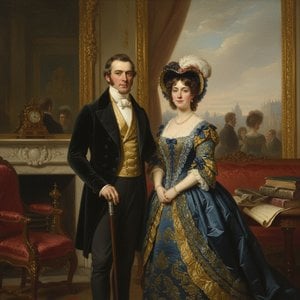
John Irvine (1805 – 1888): A Scottish Visionary of Domestic Life and Landscape
John Irvine was a Scottish artist who achieved considerable renown during the Victorian era, primarily for his captivating depictions of family life and serene landscapes. Born in Edinburgh in 1805, Irvine’s artistic journey unfolded against the backdrop of Scotland's burgeoning industrial revolution, yet he steadfastly pursued a path rooted in observation and emotional resonance—a hallmark of Romanticism subtly blended with Realist sensibilities.
- Early Life & Education: Irvine received his initial artistic training from his father, William Irvine, who was himself a portrait painter. This familial connection instilled within him a deep appreciation for meticulous craftsmanship and the portrayal of human character. He honed his skills further at the Royal Scottish Academy in Edinburgh, immersing himself in the prevailing artistic currents of the time.
- Style & Technique: Irvine’s distinctive style characterized by soft brushstrokes and luminous color palettes—particularly favored when depicting interiors—established him as a leading figure in Scottish portraiture. He meticulously rendered fabrics, textures, and facial expressions with remarkable accuracy, capturing not merely likeness but also the essence of his subjects' personalities. Simultaneously, he excelled at landscape painting, favoring atmospheric vistas bathed in muted hues that conveyed tranquility and grandeur.
Irvine’s artistic output spanned several decades, producing a substantial body of work encompassing portraits of prominent Scottish families—the Fergusons, Simpsons, and Gordons among others—and expansive landscapes showcasing the beauty of Highland Scotland. His canvases frequently featured scenes of domestic interiors populated by idealized figures engaged in everyday activities, reflecting a humanist concern for portraying the dignity and complexity of human experience. Notably, he collaborated closely with his brother James Irvine, who served as an assistant and contributed to several collaborative projects, furthering their artistic legacy.
- Notable Works: Among Irvine’s most celebrated paintings are “The Simpsons Family” (1864), a masterful portrayal of the Simpson family in their Highland estate, demonstrating his mastery of tonal gradation and compositional balance. Similarly, "A Highland Landscape" exemplifies his ability to evoke mood and atmosphere through subtle color harmonies and expressive brushwork. These works remain treasured examples of Victorian art.
- Influences & Legacy: Irvine’s artistic vision drew inspiration from Romantic painters like Turner and Constable, whose emphasis on capturing the sublime beauty of nature profoundly impacted his approach to landscape painting. However, he also embraced Realist principles championed by artists such as Millet and Daubigny, grounding his depictions in meticulous observation of human behavior and environment. Irvine's enduring legacy resides not only in his impressive artistic achievements but also in his contribution to establishing Scottish portraiture as a respected genre during the Victorian period.
Irvine’s paintings continue to resonate with audiences today, offering glimpses into a bygone era while simultaneously conveying timeless themes of family, domesticity, and connection to the natural world. His meticulous technique and emotive portrayal of human subjects solidify his position as one of Scotland's most significant artists of the 19th century—a testament to the power of art to transcend time and capture the spirit of its age.