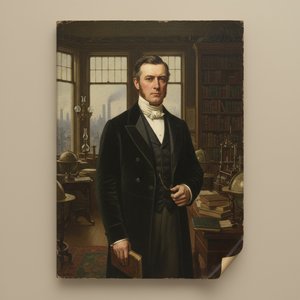
John Augustus Thelwall: Dignity in Detail
John Augustus Thelwall (1878 – 1961) was a Welsh painter who achieved considerable renown during the Victorian era, primarily for his meticulous portraits capturing the solemn dignity of prominent figures—particularly mayors and clergymen. His distinctive style blended Impressionistic brushwork with a deliberate focus on linear precision, resulting in canvases imbued with both vibrancy and understated elegance. Born in Llanelly, Wales, Thelwall’s artistic journey began at Slade School of Fine Art in London where he honed his draughtsmanship skills before embarking on a prolific career as a painter and illustrator.
- Early Life & Education:
Thelwall’s formative years were marked by a passion for drawing from an early age, nurtured by his father who encouraged artistic pursuits.
- Slade School Influence:
His studies at Slade instilled in him a rigorous approach to technique and observation, shaping his later artistic vision. He excelled in capturing likenesses with remarkable accuracy—a hallmark of his oeuvre.
- Notable Commissions & Subjects:
- He gained recognition for portraits commissioned by wealthy patrons and civic organizations, often depicting mayors and clergymen with profound respect.
- His subjects included luminaries of Welsh society, demonstrating a keen interest in documenting the faces of his time.
Stylistic Characteristics & Technique
Thelwall’s artistic style is characterized by a harmonious blend of Impressionistic brushstrokes and meticulous linear detailing. While he embraced the expressive qualities of Impressionism—capturing fleeting moments of light and color—he simultaneously employed precise lines to delineate form and texture, creating canvases that possessed both visual richness and structural integrity. He favored oil paints on canvas, applying them with confident strokes while meticulously blending hues to achieve subtle tonal gradations. His use of glazing techniques further enhanced the luminosity and depth of his paintings.
- Impressionistic Brushwork:
Thelwall skillfully utilized Impressionistic brushstrokes to convey atmosphere and emotion, capturing the nuances of light and shadow.
- Linear Precision:
However, he maintained a steadfast commitment to linear precision, ensuring that anatomical forms were rendered accurately—a testament to his draughtsmanship prowess.
- Glazing Techniques:
He employed glazing techniques to build up layers of color and create luminous surfaces, elevating the visual impact of his artworks.
Major Achievements & Legacy
John Augustus Thelwall produced a substantial body of work encompassing portraits, landscapes, and decorative panels. Among his most celebrated achievements are depictions of prominent Welsh figures—including Lord Rhys—and numerous mayoral portraits reflecting the civic pride of Victorian Wales. His meticulous attention to detail and stylistic innovation cemented his place as one of the foremost portrait artists of his era. Thelwall’s legacy continues to inspire admiration for his ability to convey dignity and solemnity through masterful artistic execution.
Influence & Artistic Context
Thelwall's work aligns with broader trends in Victorian art—particularly the rise of Impressionism alongside a continuing appreciation for traditional portraiture conventions. He drew inspiration from artists such as Frederic Leighton and Joseph Hooker, absorbing their stylistic sensibilities while forging his own distinctive artistic voice. His commitment to capturing psychological depth within formal portraits reflects a humanist ethos prevalent during the period—emphasizing empathy and understanding of human character.
Further Exploration
For more information about John Augustus Thelwall’s life and art, consult resources such as: