Jean Poyer: A Master of Subtle Renaissance Style
Jean Poyer, born around 1445 in the Netherlands, stands as a singular figure within the artistic landscape of the late medieval and early Renaissance periods—a painter whose meticulous craftsmanship and distinctive vision secured him a place among the most celebrated illuminators of his time. Unlike many contemporaries who embraced bold stylistic gestures, Poyer cultivated an approach characterized by refined perspective, luminous color palettes, and remarkably realistic human representations, subtly blending Gothic traditions with emerging Italian influences.- Early Life & Training: Precise biographical details remain scarce, yet evidence suggests that Poyer honed his skills in Bruges, a thriving artistic hub during the Burgundian Renaissance. His formative years coincided with the flourishing of Flemish painting and sculpture, exposing him to groundbreaking techniques and aesthetic ideals that would profoundly shape his subsequent oeuvre.
- Influences & Artistic Style: Poyer’s style wasn't born in isolation; it responded directly to the artistic currents sweeping across Europe. He traveled extensively to northern Italy—particularly Milan and Venice—where he encountered the monumental frescoes of Andrea Mantegna and Giovanni Bellini, absorbing their mastery of spatial illusion and expressive colorism. Furthermore, the presence of Jean Fouquet in Tours served as a catalyst for introducing Italian stylistic principles into Flanders.
- Technique & Innovation: Poyer’s hallmark was his unparalleled ability to achieve remarkable subtlety and nuance—a characteristic that distinguishes him from many other artists of his era. His meticulous brushwork, combined with an astute understanding of light and shadow, resulted in images imbued with a palpable sense of atmosphere. Notably, he employed a technique known as *sfumato*, pioneered by Leonardo da Vinci, which blurred outlines and softened transitions to create an ethereal quality.
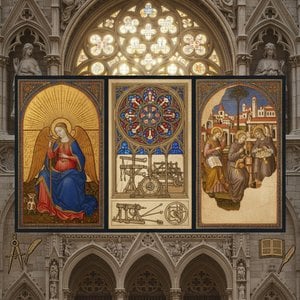
- Notable Works & Legacy: Poyer’s artistic legacy rests primarily on his illuminated manuscripts—particularly the Prayer Book of Anne de Bretagne and the Briçonnet Hours. These masterpieces exemplify his distinctive style, showcasing exquisite detail, luminous color palettes, and a masterful command of perspective. The intricate miniatures depict biblical scenes with breathtaking realism and emotional depth, reflecting Poyer's profound engagement with humanist ideals.
- Workshop & Collaboration: Poyer operated within a complex workshop system—a common practice during the Renaissance—where he oversaw the production of numerous illuminated manuscripts alongside a cadre of skilled assistants. While identifying individual contributors remains challenging due to stylistic convergence, scholars believe that Poyer’s workshop comprised only a handful of artisans, each capable of emulating his subtle artistic vision.
Sources: Haber's Art Reviews; Morgan Library & Museum Catalogues