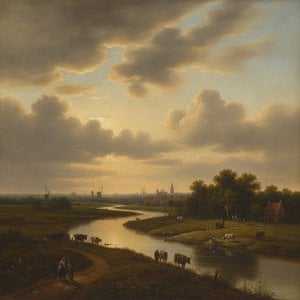
Lo Specchio della Tranquillità: La Vita e l'Eredità di Jan van de Cappelle
Jan van de Cappelle si staglia come una figura singolare e luminosa nel pantheon dell'Età dell'Oro olandese, un artista la cui presenza nel canone della storia dell'arte è definita da una profonda, meditativa quiete. A differenza di molti dei suoi contemporanei che produssero vaste quantità di opere, l'opera di Cappelle rimane straordinariamente contenuta, eppure ogni singolo pezzo rivendica una distinzione eccezionale. Non era soltanto un pittore di mare; era un uomo di notevole statura mondana, un titano dell'industria indissolubilmente legato al cuore pulsante dell'economia di Amsterdam. Come figura di successo nell'industria tessile e collezionista di grande gusto, la sua vita fu una duplice e unica sintesi di abilità commerciale e sensibilità artistica. Questa intersezione tra ricchezza e visione gli permise di coltivare uno stile che non si limita a ritrarre il mondo marittimo, ma ne cattura l'essenza stessa: una staticità che riflette sia la superficie dell'acqua che l'infinito dei cieli sovrastanti.
Nato ad Amsterdam nel 1624, Jan van de Cappelle seguì un percorso non convenzionale verso la maestria artistica. Mentre molti maestri della sua epoca venivano forgiati dal rigore delle gilde e delle accademie formali, Cappelle fu in gran parte autodidatta, un fatto che forse contribuì alla qualità singolare e libera della sua visione. La sua educazione era intrisa delle complessità tecniche dell'industria; suo padre, Franchoy van de Cappelle, gestiva una sostanziale tintoria specializzata nella produzione di colorante cremisi. Questo ambiente, che esigeva precisione e un'intima comprensione del colore e della chimica, fornì probabilmente a Jan una base inestimabile per le sue successive esplorazioni della luce e dell'atmosfera. Sebbene possa aver risentito delle sensibilità stilistiche di Simon de Vlieger, le cui composizioni condividono una certa affinità strutturale con le sue, l'opera di Cappelle riuscì infine a trascendere la mera influenza per raggiungere uno stato di pura grazia atmosferica.
La Maestria della Luce e della Prospettiva Atmosferica
Il vero genio di Jan van de Cappelle risiede nella sua capacità di manipolare gli elementi dell'aria e dell'acqua per creare un senso di profonda intensità emotiva. È spesso celebrato come il più straordinario pittore marino dell'Olanda del XVII secolo, un titolo guadagnato attraverso una maestria senza pari della prospettiva atmosferica. La sua tecnica si manifesta con maggior forza nel modo in cui specchia le formazioni celesti su superfici acquatiche calme e vitree. In opere come Navi all'Ancora in un Mare Calmo, lo spettatore non sta semplicemente osservando una scena marittima, ma viene invitato in un momento di animazione sospesa. Le sottili gradazioni di luce e la meticolosa resa delle nuvole creano un senso di spazio immenso, dove il confine tra mare e cielo si dissolve in una bellezza sfumata.
Il suo linguaggio artistico trae ispirazione dal realismo di Willem van de Velde il Vecchio, pur possedendo una morbidezza che è unicamente sua. Laddove altri avrebbero potuto concentrarsi sull'energia caotica del combattimento navale o sulla ferocia della tempesta, Cappelle cercava la quiete che si trova nel dopo o nell'attesa del movimento. Le sue composizioni presentano spesso:
- L'interazione tra luce e ombra: catturando i momenti fugaci in cui la luce del sole squarcia la coltre nuvolosa per illuminare un singolo vascello.
- Superfici riflettenti: utilizzando l'acqua come uno specchio per duplicare la maestosità del cielo olandese, creando un senso di simmetria e pace.
- Sfumature atmosferiche: una gestione delicata di nebbia, foschia e limpidezza che conferisce ai suoi paesaggi un senso palpabile di temperatura e umidità.
Significato Storico e Impatto Duraturo
Il significato storico di Jan van de Cappelle va oltre la bellezza estetica delle sue tele. Egli rappresenta l'apice della capacità dell'Età dell'Oro olandese di trovare l'straordinario nell'ordinario. Attraverso le sue rappresentazioni di barche a vela, scene fluviali e paesaggi invernali, ha documentato l'identità marittima di una nazione che era allora il centro del commercio globale. Persino nelle sue opere più dinamiche, come La Barca di Stato Salutata dalla Flotta Nazionale, rimane un senso sottostante di ordine e dignità che riflette la prosperità strutturata della sua epoca.
Sebbene la sua vita si sia conclusa nel 1679, lasciando dietro di sé una collezione limitata di capolavori, il suo impatto sul genere della pittura marina è incommensurabile. Ha insegnato alle generazioni successive come dipingere non solo ciò che viene visto, ma ciò che viene percepito: il peso dell'aria, la quiete della marea e la silenziosa maestosità dell'orizzonte. Oggi, le sue opere rimangono punti di riferimento essenziali per chiunque cerchi di comprendere l'equilibrio delicato tra uomo, natura e la luce che li unisce. La sua eredità è fatta di serenità, una testimonianza duratura di un artista che ha saputo trovare l'infinito nel tranquillo.
Domande e risposte
Come posso trovare tutte le opere di Jan Van De Cappelle per un determinato medium?
Le opere di Jan Van De Cappelle possono essere consultate per tecnica nella pagina Tutti i media dell'artista.
In quale città e in quale paese è nato/a Jan Van De Cappelle?
Jan Van De Cappelle è nato a Amsterdam, in Paesi Bassi.
Dove posso vedere le opere di Jan Van De Cappelle in ordine cronologico?
La pagina Cronologia opere dell'artista presenta le opere di Jan Van De Cappelle ordinate per data, anno dopo anno.