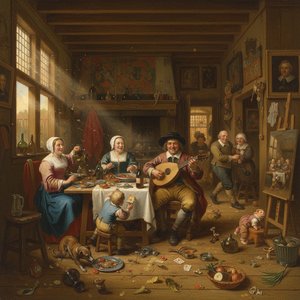
Jan Hendrik Maschaupt: A Portraitist of Amsterdam’s Golden Age
Jan Hendrik Maschaupt (1826 – 1903) remains a quietly influential figure within the artistic panorama of Amsterdam during its zenith—the Dutch Golden Age. Born into a family deeply rooted in artistic traditions, Maschaupt honed his craft amidst the vibrant intellectual currents of the Victorian era, ultimately establishing himself as a respected portrait painter whose canvases breathed life into his subjects with remarkable sensitivity and precision. Though overshadowed by luminaries like Rembrandt Harmensz van Rijn or Johannes Vermeer, Maschaupt’s enduring legacy resides in his steadfast devotion to realism—a stylistic choice that firmly anchored him within the Hague School movement and ensured its lasting impact on subsequent generations of artists.
Early Life & Artistic Training
Maschaupt's formative years unfolded in Amsterdam, where he benefited from a privileged artistic upbringing—a circumstance afforded by his family’s involvement in the decorative arts. Precise details concerning his formal education remain somewhat elusive, suggesting that much of his skill blossomed through independent study and meticulous observation alongside fellow artists. However, it is understood that he received instruction under Jan Hendrik Weissenbruch, arguably Amsterdam's most celebrated landscape painter—a mentorship that profoundly shaped Maschaupt’s artistic worldview. Weissenbruch instilled in him a profound appreciation for capturing the ethereal beauty of Dutch landscapes through masterful manipulation of light and color, techniques that would permeate Maschaupt’s own oeuvre.
Notable Commissions & Portraits
Maschaupt's reputation ascended steadily throughout his career thanks to a succession of discerning commissions—primarily focused on portraiture. Among his most enduring achievements is the depiction of Jonkheer Archibald Jan van de Poll (1800-70), a prominent figure in Velzen’s civic administration—a painting that exemplifies Maschaupt's unwavering commitment to meticulous detail and his ability to convey nuanced psychological portraits. These commissions weren’t merely exercises in likeness; they aimed to encapsulate the character and spirit of their subjects, reflecting the social mores and aspirations prevalent during his time—a testament to Maschaupt’s artistic skill as a communicator of human experience.
The Influence of Jan Hendrik Weissenbruch
As previously noted, Maschaupt's artistic trajectory was inextricably intertwined with that of Jan Hendrik Weissenbruch. The Hague School—a movement distinguished by its uncompromising pursuit of realism and prioritizing atmospheric illumination—was largely spearheaded by Weissenbruch. Maschaupt wholeheartedly embraced Weissenbruch’s philosophical underpinning, mirroring his palette and compositional style—particularly in landscapes—to convey the serene grandeur of the Dutch countryside. This stylistic convergence underscores the significance of artistic collaboration and shared intellectual convictions within the broader context of 19th-century art history, demonstrating how influences can shape an artist's creative vision.
Technique & Style: Mastering Light and Texture
Maschaupt’s artistic prowess stemmed from a profound understanding of technique—a cornerstone of his distinctive style. Like Weissenbruch, he skillfully employed oil paints—the medium favored by the Hague School—to achieve luminous effects and convincingly render textures. He undertook painstaking studies of natural light conditions, meticulously recreating its subtleties on canvas to evoke an immersive sense of place and emotion. This dedication to realism transcended mere visual accuracy; it represented a deliberate effort to convey an experience—a feeling—that resonated with viewers long after encountering the artwork. His meticulous brushwork and masterful blending created surfaces imbued with palpable depth and luminosity, cementing his reputation as a master of textural representation.
Legacy & Historical Significance
Though Maschaupt’s name may not command the same level of prominence as some of his contemporaries—particularly Rembrandt or Vermeer—his contribution to Dutch art history remains undeniable. He stands as an emblem of unwavering realism—a stylistic choice that secured his place within the Hague School and ensured that his paintings continue to captivate audiences today. His portraits offer invaluable insights into the social customs and psychological complexities of Amsterdam during its Golden Age, providing historians and art enthusiasts alike with a compelling glimpse into a bygone era. Maschaupt’s enduring legacy resides not in grand pronouncements or flamboyant gestures but in the quiet beauty and unwavering integrity of his artistic vision—a vision that continues to inspire admiration and scholarly contemplation.