Jacques Majorelle (March 7, 1886 – October 14, 1962) was a French painter and Orientalist whose legacy extends far beyond his captivating canvases. Born into the artistic lineage of Louis Majorelle, a celebrated Art Nouveau furniture designer, Jacques’ formative years were steeped in craftsmanship and aesthetic innovation—a foundation that profoundly shaped his distinctive artistic vision. He pursued formal training at École des Beaux-Arts Nancy and Académie Julian Paris, honing his skills under influential mentors like Schommer and Royer, establishing himself as a respected figure within the Parisian avant-garde.
Majorelle’s artistic journey began with an early fascination for Orientalism—a genre that sought to depict exotic locales and cultures through European eyes. However, he swiftly transcended mere imitation, developing a revolutionary approach to color and light that would become his signature style. This wasn't simply about capturing the visual splendor of Morocco; it was about conveying its emotional essence – the warmth of the sun, the vibrancy of the marketplace, the serenity of hidden gardens. His travels throughout Morocco captivated him, inspiring countless paintings depicting bustling souks, serene landscapes, and portraits of local inhabitants. These works weren’t merely representations; they were imbued with an emotional resonance born from firsthand experience—a palpable connection to the vibrant energy of North Africa.
Early Influences: Louis Majorelle's influence instilled in Jacques a dedication to meticulous craftsmanship and an appreciation for decorative arts, shaping his artistic sensibilities. Like his father, he possessed an innate understanding of form and texture, translating this skill into canvases that pulsed with life and movement. This formative experience would prove invaluable as he navigated the complexities of the Parisian art world.
Formal Training: École des Beaux-Arts Nancy and Académie Julian Paris provided Jacques with invaluable technical skills and exposure to the broader artistic landscape of his time. He studied under masters who championed classical ideals while simultaneously encouraging experimentation—a balanced approach that fostered his intellectual curiosity and honed his artistic technique. Schommer and Royer instilled in him a disciplined eye for composition and perspective, equipping him with the tools necessary to realize his ambitious visions.
Orientalist Vision: Majorelle’s exploration of Moroccan culture fueled his distinctive style, characterized by bold color palettes and masterful manipulation of light—a technique that foreshadowed developments in Modernism. He meticulously observed the interplay between sunlight and shadow, capturing fleeting moments of beauty with an expressive brushstroke. This fascination extended beyond mere visual observation; it encompassed a deep empathy for the people and traditions of Morocco – qualities that shone through in his portraits and landscapes alike.
His magnum opus remains undeniably Les Jardins Majorelle – a breathtaking oasis nestled within Marrakech's Medina. Constructed in 1924, this garden is more than just a collection of plants; it’s an embodiment of Majorelle’s artistic philosophy. The walls are adorned with the iconic Majorelle Blue—a shade he painstakingly developed himself after observing its presence in Moroccan tiles and architectural details—creating an immersive environment bathed in ethereal light. This singular achievement cemented his place as one of the most innovative artists of his era, influencing generations of painters and designers. He envisioned a space where color and form harmoniously intertwined, mirroring the beauty and complexity of the natural world.
Majorelle’s artistic output includes numerous paintings capturing the essence of Moroccan life: “Jour de fête,” depicting a lively street scene; “Jeune Fille dans le jardin de Majorelle,” portraying a young woman amidst lush greenery; and “Fougères géantes dans la forêt de Tonkui,” showcasing the grandeur of Moroccan flora. These works exemplify his Impressionistic style and masterful use of color—a deliberate departure from academic conventions that championed spontaneity and emotional expression. He sought to convey not just what he saw, but how he felt – a testament to his artistic integrity and unwavering commitment to capturing the spirit of Morocco.
Majorelle’s influence extended beyond his own paintings; he became a passionate advocate for preserving Moroccan heritage and promoting tourism through striking posters that celebrated the country's vibrant culture and landscapes. Yves Saint Laurent famously incorporated Majorelle Blue into his designs—a gesture of admiration for the artist’s visionary aesthetic and enduring legacy. Jacques Majorelle died in 1962, leaving behind a body of work that continues to captivate audiences worldwide – a testament to an artistic spirit that dared to challenge conventions and embrace beauty with unwavering conviction.
A cura del team editoriale di WahooArt.com
Quiz d'arte
Per ogni domanda è presente una sola risposta corretta.
Domanda 1:
Qual è stata l'attività principale di Jacques Majorelle?
Domanda 2:
Majorelle studiò presso quale prestigiosa scuola d'arte?
Domanda 3:
Quale movimento artistico influenzò fortemente lo stile di Majorelle?
Domanda 4:
Dove Majorelle trovò ispirazione per i suoi dipinti, soprattutto durante i suoi viaggi?
Domanda 5:
Qual è lo splendido colore utilizzato dalla Majorelle nei suoi dipinti e nel Giardino Majorelle?
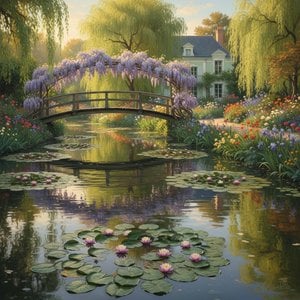
Embark on a visual journey through Claude Monet's Giverny. Discover the enchanting light, vibrant colors, and breathtaking landscapes of his legendary gardens through an expert exploration of Impressionist mastery and timeless beauty.
Discover the enchanting world of Art Nouveau. Explore the flowing lines of Alphonse Mucha and learn how to integrate these timeless, organic masterpieces into your collection with expert guidance on fine art appreciation and preservation.
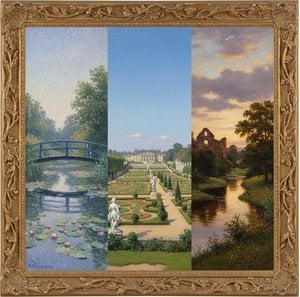
Embark on a visual journey through the serene beauty of gardens and parks in fine art. Discover how master artists capture nature's tranquility through impressionistic blooms and classical landscapes to bring timeless elegance into your home collection.