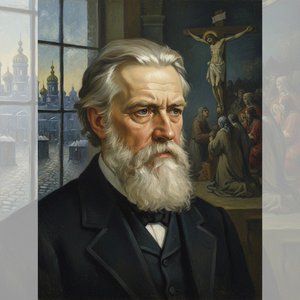
Jacob Pieter Mercier (1839 – 1900): The Quiet Master of Detail
Jacob Pieter Mercier, born in Batavia (Jakarta), Indonesia, in 1839, was a Dutch artist who quietly established himself as one of the most respected engravers of his era. Though he didn’t achieve widespread fame during his lifetime—often referred to affectionately as ‘le petit nanteuil,’ after the celebrated Parisian printmaker Pierre Louis van Schuppen—Mercier's meticulous craftsmanship and profound understanding of artistic principles secured him a lasting legacy within the realm of fine art reproduction. His work focused primarily on portraiture and historical prints, demonstrating an exceptional ability to capture subtle nuances of expression and form.
Early Life and Training
Born into a family with roots in colonial Indonesia, Mercier’s formative years were spent amidst the burgeoning artistic landscape of Batavia. He received his initial training at the Académie royale de peinture et de sculpture in Brussels in 1663, immersing himself in the traditions of Flemish art and mastering techniques honed by masters like Pieter Bruegel the Elder. This exposure instilled a deep appreciation for genre scenes, landscape compositions imbued with symbolic meaning, and a commitment to conveying complex narratives through visual storytelling—influences that would permeate his subsequent artistic endeavors. The influence of Bruegel’s masterful depiction of peasant life and moral allegory undoubtedly shaped Mercier's sensibility towards representing the human condition with both accuracy and depth.
Notable Engravings: Precision and Observation
Mercier’s artistic output consisted of approximately 119 prints, predominantly portraits of prominent figures from the Victorian period. Among these were depictions of Cardinal Rinaldo d'Este, Mazarin, and King Louis XIV of France—works characterized by an unparalleled level of detail and accuracy. Notably, several engravings bore his own designs, including a portrait of Cardinal Rinaldo d’Este, showcasing his mastery of artistic conception alongside technical prowess. Mercier skillfully employed the engraved line to achieve remarkable textural effects, capturing the most delicate contours of facial features with astonishing precision. This dedication to observation and meticulous execution earned him the moniker ‘le petit nanteuil,’ reflecting Schuppen's own exceptional skill in portraying human likeness. He achieved this feat by painstakingly analyzing the original painting—often employing techniques like X-ray radiography—to discern underlying structures and tonal variations that would inform his engraving process.
Reproducing Masterpieces: A Legacy of Collaboration
Mercier’s contribution extended beyond his original creations; he excelled in reproducing paintings by other artists, notably Anthony van Dyck’s “St Sebastian.” This practice demonstrated not only technical competence but also a deep understanding of artistic conventions and the ability to distill the essence of a celebrated artwork into a faithful print. Mercier's reproductions were particularly noteworthy for their stylistic elegance and faithfulness to the original composition—a testament to his discerning eye and unwavering commitment to upholding artistic standards. Collaborations with renowned engravers like Schuppen ensured that these reproductions maintained the highest levels of quality, cementing Mercier’s reputation as a champion of artistic excellence.
Concluding Thoughts: An Artist Defined by Quiet Excellence
Jacob Pieter Mercier’s artistic legacy resides not in grand gestures or flamboyant exhibitions but rather in the enduring beauty and accuracy of his engravings. He represents a cornerstone of 19th-century printmaking, embodying the virtues of quiet diligence and profound artistic sensitivity. His work continues to inspire admiration for its technical brilliance and its ability to convey the spirit of an era—a testament to the power of understated artistry and the lasting impact of meticulous craftsmanship. Mercier’s legacy endures as a symbol of dedication to craftmanship and a reminder that true artistic achievement often resides in subtle refinements rather than ostentatious displays.