Insane Park: Decoding the Echoes of Media Culture
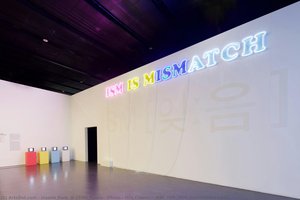
Insane Park (b. 1980, Seoul, South Korea) stands as a compelling figure in contemporary Korean art, recognized primarily for his immersive installations and thought-provoking video works that delve into the intricate relationship between visual culture and psychological perception. His artistic practice isn’t merely about representation; it's an active interrogation of how images – relentlessly disseminated across television screens, internet platforms, and countless other sources – shape our understanding of reality and influence societal ideologies. Park’s methodology begins with a profound fascination for Nam June paik’s pioneering explorations of video art and experimental filmmaking, establishing a foundational influence on his stylistic choices. Paik's unwavering commitment to pushing boundaries and questioning established artistic conventions resonated deeply with Park’s own desire to disrupt traditional visual hierarchies and explore unconventional mediums. This connection underscores the artist’s broader engagement with conceptual art and its core principle: challenging viewers’ assumptions about art’s role in society—a stance that mirrors the rebellious spirit of Dadaist artists like Marcel Duchamp. The genesis of Insane Park's artistic vision lies in a meticulous process of image gathering. He painstakingly collects vast quantities of visual material from diverse media channels, transforming them into raw data for his artistic investigations. This accumulation isn’t haphazard; it reflects a deliberate effort to capture the pervasive presence of images within daily life—a phenomenon he eloquently termed “ISM,” referencing the repetitive mantra of mass media. ISM serves as the conceptual bedrock upon which Park builds his artworks, prompting him to confront the unsettling notion that our perceptions are fundamentally shaped by external stimuli. Through editing and manipulation, Park transforms these collected images into artworks that challenge conventional notions of perception and invite viewers to confront unsettling truths about how we interpret the world around us—a technique reminiscent of Surrealist artists’ use of dreamlike imagery and illogical juxtapositions. The Etró Art Prize awarded in 2013 marked a pivotal moment in Park’s artistic trajectory, propelling him into the spotlight and affording him opportunities to showcase his work internationally. Exhibitions at institutions such as ARARIO GALLERY SEOUL and Arario Museum Dongmun Motel II have presented his installations—often unsettling juxtapositions of fragmented images and text—to discerning audiences worldwide. His work consistently seeks to expose the subconscious forces that govern our perceptions, mirroring themes explored by Surrealist artists such as René Magritte and Salvador Dalí. Like these masters, Park utilizes visual paradoxes and unexpected combinations to destabilize viewers’ expectations and provoke contemplation on the nature of reality itself. His artistic journey continues with explorations into performance art and digital media, furthering his commitment to disrupting traditional artistic conventions. Recent projects like *Post Vandalism*, featuring fictitious documentaries created with digital technology and motion graphics—a deliberate nod to social media trends—demonstrate Park’s ongoing engagement with contemporary culture and its influence on artistic expression. Through these endeavors, Insane Park reaffirms his belief that art possesses the capacity to provoke dialogue and challenge established ideologies—a conviction rooted in the legacy of Dadaist artists who questioned the very definition of art itself.- Notable Exhibitions: ARARIO GALLERY SEOUL (Seoul, Korea), Arario Museum Dongmun Motel II (Jeju, Korea), M17 (Paju, Korea), Art Project CZ (Shanghai, China), Youngeun Museum of Contemporary Art (Gwangju, Gyeonggi-do, Korea)
- Awards: Grand Prize of The 2nd ETRO Art Prize
- Residencies: Baan Noorg Collaborative Arts and Culture (Ratchaburi, Thailand), Studio M17 (Paju, Korea), Akiyoshidai International Art Village (Yamaguchi, Japan)