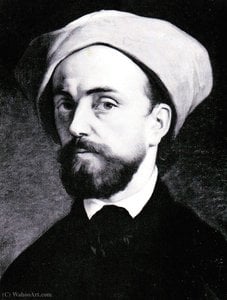
Una Voce Ungherese tra le Correnti del Realismo
Henrik Weber, nato a Pest il 24 maggio 1818, emerse come una figura cardine dell'arte ungherese del XIX secolo: un pittore capace di navigare con maestria tra le delicate sensibilità del periodo Biedermeier e la forza nascente del Realismo. La sua storia è un racconto di dedizione artistica, un viaggio attraverso mutevoli correnti estetiche che ha contribuito in modo significativo alla definizione di un'identità nazionale ungherese attraverso le sue opere. Inizialmente indirizzato verso una carriera scientifica dal padre mercante, Mihaly Wéber, la passione innata del giovane Henrik per il disegno si rivelò irresistibile. I suoi taccuini, colmi di figure imaginative, svelavano un talento che non poteva essere represso, spingendo il padre ad organizzargli lezioni con János Tóbiante Kärgling, un artista locale che seppe riconoscere e coltivare il potenziale del ragazzo.
La formazione artistica formale di Weber ebbe inizio nel 1835 presso l'Accademia di Belle Arti di Vienna. Lì, si trovò sotto l'influenza di Johann Ender e Leopold Kupelwieser, maestri che lo guidarono sottilmente lontano dalle rigide convenzioni accademiche verso una rappresentazione più veritiera del mondo, un primo, timido abbraccio al Realismo. Per sostenere i propri studi, Weber integrò il proprio reddito attraverso l'insegnamento del disegno e il lavoro come litografo, dimostrando un precoce spirito imprenditoriale accanto alle sue aspirazioni artistiche. Il suo talento ottenne rapidamente riconoscimento, affermandolo come un ricercato ritrattista a Vienna verso la fine degli anni 1830. Tuttavia, questo successo non sarebbe stato destinato a definire l'intera sua carriera.
Dai Ritratti alle Narrazioni Storiche
Con il calare della domanda di ritratti a Vienna intorno al 1840, Weber prese la strategica decisione di trasferirsi a Monaco di Baviera. Questo spostamento segnò un punto di svolta nel suo focus artistico. Affrontando le continue sfide nel consolidare la propria posizione, iniziò a esplorare temi storici, in particolare scene tratte dalla storia ungherese. La morte di John Hunyadi, una di queste opere, ottenne un successo straordinario e consolidò la reputazione di Weber come figura prominente nella pittura storica ungherese. Questo cambiamento non fu solo una variazione del soggetto; fu un'affermazione di orgoglio nazionale e di identità artistica in un'epoca in cui l'Ungheria stava vivendo un crescente sentimento nazionalista.
Tra il 1845 e il 1847, Weber intraprese un viaggio attraverso l'Italia, immergendosi nei paesaggi e osservando la vita quotidiana. Questo periodo diede vita a opere di genere che ritraevano la vita contadina accanto a paesaggi evocativi, rivelando un artista profondamente sintonizzato con la bellezza del mondo naturale e la dignità delle persone comuni. Eppure, nonostante l'ispirazione offerta dall'arte e dai panorami italiani, Weber avvertì una crescente nostalgia di casa. Tornò a Pest nel 1847, riprendendo la ritrattistica pur continuando a esplorare la pittura paesaggistica e storica.
Un'Eredità Forgiata dalla Perseveranza
Il ritorno in Ungheria non fu privo di difficoltà. Nonostante il suo innegabile talento, le commissioni costanti rimasero elusive. Weber si sostenne attraverso la litografia per riviste locali — una prova della sua versatilità — e continuò a offrire lezioni d'arte. Questo periodo mette in luce l'esistenza precaria di molti artisti del XIX secolo, dipendenti da un mercato fluttuante e spesso costretti a diversificare le proprie abilità per sopravvivere. Egli continuò a lavorare con dedizione a Pest fino alla sua morte, avvenuta il 14 maggio 1866.
Lo stile artistico di Weber è caratterizzato da una fusione tra la precisione del Biedermeier e i nuovi principi del Realismo. Egli diede priorità alla rappresentazione accurata e all'attenzione per la vita quotidiana, influenzato significativamente da Ender e Kupelwieser a Vienna, nonché da Michelangelo Grigoletti durante il suo soggiorno italiano. La sua influenza si estese oltre le sue creazioni personali; fu mentore di artisti più giovani, tra cui spicca Károly Lotz, plasmando così la generazione successiva di pittori ungheresi.
Pionieri di una Voce Artistica Nazionale
L'importanza storica di Henrik Weber risiede nel suo ruolo pionieristico nell'instaurare il Realismo come forza trainante nell'arte ungherese. I suoi dipinti non erano semplici rappresentazioni di eventi; erano potenti dichiarazioni che contribuirono allo sviluppo dell'identità artistica nazionale durante un periodo di intensi mutamenti politici e culturali. La Galleria Nazionale Ungherese conserva numerosi esempi della sua opera, riconoscendolo come un maestro della pittura Biedermeier e una figura essenziale dell'arte ungherese del XIX secolo. Inoltre, le sue litografie che documentano eventi storici per “Az Ország Tükre” (“Lo Specchio del Paese”) rimangono di inestimabile valore storico, offrendo registri visivi di un'epoca cruciale.
L'eredità di Weber è fatta di integrità artistica e dedizione nel ritrarre il mondo così come lo vedeva: un mondo intriso di bellezza e verità. Egli rimane una testimonianza del potere dell'arte di riflettere e plasmare l'identità nazionale, lasciando un segno indelebile nel panorama culturale dell'Ungheria.
Domande e risposte
Quanto sono popolari le opere di Henrik Weber?
La pagina Statistiche di Henrik Weber presenta statistiche calcolate a partire dalle opere dell'artista elencate su questo sito.
Come posso trovare le opere di Henrik Weber in una specifica palette cromatica?
Le opere di Henrik Weber possono essere consultate per palette cromatica nella pagina Per palette dell'artista.
Dove si trovano le opere di Henrik Weber raggruppate per movimento artistico?
I movimenti in cui ha lavorato Henrik Weber sono consultabili nella pagina Tutti i movimenti dell'artista, che raggruppa le opere per movimento.