Program for The Weavers (Les Tisserands) from The Beraldi Album of Theatre Programs
Salon des Cent
Program for Down with Progress (A bas le progrès ), Miss Julie (Mademoiselle Julie) and The Brazilian Household (Le Ménage Brésile) from The Beraldi Album of Theatre Programs
Died: 1936
Works on APS: 9
Altro…
Nationality: Francia
Art period: XIX secolo
Copyright status: Public domain
Born: 1867, Parigi, Francia
Henri Gabriel Ibels: A Parisian Visionary
Henri Gabriel Ibels (1867–1936) stands as a pivotal figure in the Nabis movement, a collective of French artists who challenged academic conventions and embraced expressive abstraction alongside meticulous observation. Born in Paris, Ibels’ artistic journey began amidst the vibrant intellectual ferment of Belle Époque France—a period defined by rapid industrialization, social upheaval, and burgeoning avant-garde sensibilities. His formative years were spent studying at the Académie Julian with Pierre Bonnard and Édouard Vuillard, absorbing the stylistic precepts that would shape his distinctive visual language.Vuillard’s influence is particularly evident in Ibels' muted palettes and subtle tonal gradations, reflecting a shared commitment to capturing fleeting moments of everyday life—a preoccupation that would permeate his entire oeuvre.
Early Influences: Ibels’ artistic sensibilities were profoundly impacted by Honoré Daumier, whose unflinching realism and satirical commentary served as an inspiration for Ibels’ own graphic explorations. Daumier's uncompromising gaze at social injustices instilled in Ibels a desire to confront uncomfortable truths through his art—a conviction that fueled his engagement with political discourse and solidified his position as a champion of artistic integrity. Furthermore, he drew considerable inspiration from Japanese woodcuts—a stylistic trend that championed flattened perspectives and bold compositional arrangements.These elements would become hallmarks of his oeuvre, particularly in his lithographs and posters, demonstrating Ibels’ mastery of innovative techniques and his willingness to experiment with unconventional visual vocabularies.
The Nabi Brotherhood: Ibels joined Les Nabis in 1889 alongside artists like Gauguin, Toulouse-Lautrec, Vallotton, and Bernard—a group united by a desire to forge an independent artistic path away from the constraints of Parisian Salon culture.Their exhibitions at Le Barc de Boutteville gallery became crucial platforms for disseminating their innovative ideas, establishing Ibels as a central voice within the movement and securing his place amongst the luminaries of French modernism. The Nabis’ collective spirit fostered experimentation and collaboration—a dynamic that propelled Ibels' artistic development and ensured the enduring legacy of his groundbreaking contributions to art history.
Subject Matter & Technique: Ibels’ artistic focus centered on capturing scenes of Parisian life—cafés, circuses, boxing rings—often depicted with gritty realism and psychological depth. He skillfully employed lithography techniques, utilizing etching plates to achieve remarkable tonal precision and textural nuance. His compositions prioritized simplified forms and expressive lines, mirroring the stylistic ethos of Daumier and prioritizing emotional resonance over photographic accuracy. Ibels’ meticulous attention to detail—particularly in his depictions of urban landscapes—served as a testament to his unwavering dedication to observation and his ability to distill complex realities into evocative visual representations. He sought to convey not merely what he saw but also how he felt—a characteristic that distinguishes his work from more purely descriptive styles.
Collaboration & Legacy: Ibels’ partnership with Toulouse Lautrec proved particularly fruitful, resulting in collaborative artworks that cemented both artists' reputations as champions of modern artistic expression. Their shared fascination for the dynamism of Parisian nightlife fueled their creative endeavors and produced images that continue to captivate audiences today—a testament to the power of artistic synergy and the enduring influence of Belle Époque aesthetics. Ibels’ contribution to theatrical productions further solidified his role as a multidisciplinary innovator, demonstrating his versatility and commitment to pushing creative boundaries. His prints remain treasured artifacts of an era defined by intellectual curiosity and artistic daring—a Parisian visionary who bravely embraced abstraction while retaining an unwavering dedication to portraying the complexities of everyday experience.
A cura del team editoriale di WahooArt.com
Quiz d'arte
Per ogni domanda è presente una sola risposta corretta.
Domanda 1:
Qual è il movimento artistico a cui apparteneva Henri Gabriel Ibels?
Domanda 2:
Ibels collaborò strettamente con chi, creando immagini iconiche della vita notturna parigina?
Domanda 3:
Quali influenze artistiche ebbe Ibels nel suo stile grafico?
Domanda 4:
Ibels si concentrava spesso su soggetti come:
Domanda 5:
In quale anno Ibels espose il suo lavoro al Salon des indépendants?
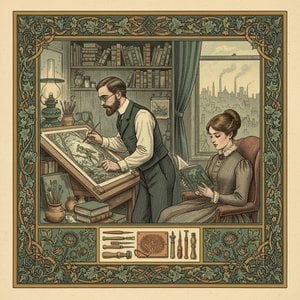
Explore the captivating world of Victorian illustration! Discover Pre-Raphaelite influences, key artists like Rossetti & Stephens, and the era's rich narrative detail. A deep dive for art enthusiasts.
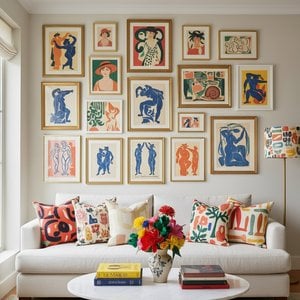
Esplora i 25 capolavori di Henri Matisse, il maestro del fauvismo e dei colori vivaci. Scopri la storia, lo stile unico e l'impatto culturale di ogni dipinto. Trova riproduzioni arte di alta qualità per decorare casa tua su WahooArt.com.
Explore the captivating world of Angelo Chiacchio, a master of mid-century American illustration. Discover his evolution, signature style, and lasting impact on commercial art & design. Learn about his legacy at the Museum of American Illustration.