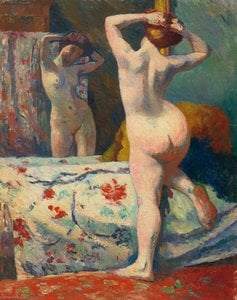
Lo Spirito Radioso di Henri Charles Manguin
Nella luce dorata dell'inizio del XX secolo, pochi artisti hanno catturato la joie de vivre della Riviera francese con la stessa vivacità di Henri Charles Manguin. Nato a Parigi nel 1874 in una famiglia dove la scultura e la tradizione visiva affondavano radici profonde, Manguin era destinato a una vita definita dal colore e dalla forma. Il suo viaggio nel cuore dell'avanguardia ebbe inizio presso il prestigioso École des Beaux-Arts, dove studiò sotto la guida del leggendario Gustave Moreau. Fu all'interno di questo fertile ambiente accademico che Manguin strinse legamenti indissolubili con altri visionari come Henri Matisse e Charles Camoin. Queste amicizie furono molto più di semplici connessioni sociali; furono il crogiolo in cui si forgiò un nuovo, ribelle modo di vedere. Insieme, questi giovani artisti trascorrevano ore al Louvre, riproducendo meticolosamente i capolavori del Rinascimento, un esercizio che instillò in Manguin un profondo rispetto per la composizione classica, proprio mentre si preparava a infrangere i confini tradizionali.
Mentre il XIX secolo lasciava il passo al XX, il pennello di Manguin iniziò a danzare con la luce dell'Impressionismo. Trasse profonda ispirazione dalle tavolozze luminose di Monet e Renoir, eppure cercava qualcosa di più viscerale e soggettivo. Questa evoluzione lo condusse direttamente nel cuore del Fauvismo, un movimento celebre per il suo uso "selvaggio" del colore. Quando il critico Louis Vauxcelles definì famosamente questo gruppo di artisti Les Fauves — le belve — in seguito al Salon d'Automne del 1905, Manguin si trovò in prima linea in questa rivoluzione cromatica. La sua opera si allontanò dalle delicate e fugaci osservazioni dei suoi predecessori verso un'applicazione del pigmento più audace ed emotiva. Utilizzava gialli brillanti, rossi ardenti e pastelli morbidi per evocare non solo la vista di un paesaggio, ma il calore stesso e l'atmosfera del sole mediterraneo.
Una Musa Mediterranea e l'Arte dell'Intimità
La traiettoria della carriera di Manguin fu irrevocabilmente alterata dalla scoperta di Saint-Tropez. Invitato nel villaggio costiero dal maestro puntillista Paul Signac nel 1904, Manguin rimase incantato dalle acque cristalline e dalla scintillante luce del Mediterraneo. Questo paesaggio divenne il suo santuario e il suo soggetto più duraturo. Sebbene non adottò il rigido puntinismo di Signac, abbracciò la luminosa chiarezza della costa, dipingendo scene di bagnanti inondati dal sole e tranquilli panorami marittimi che sembravano pulsare di vita. Fu questa maestria della luce e dell'atmosfera a valergli l'evocativo titolo di "il pittore voluptuoso" da parte del critico Guillaume Apollinaire, una testimonianza della qualità sensuale e tattile delle sue tele.
Oltre i vasti paesaggi, l'opera di Manguin possedeva una dimensione profondamente personale e intima. Il suo matrimonio nel 1899 con Jeanne Carette portò un profondo senso di continuità e tenerezza alla sua opera. Jeanne divenne la sua modella più frequente e amata, apparendo in numerosi ritratti che catturavano la quieta bellezza domestica della loro vita condivisa. Attraverso questi dipinti, Manguin colmò il divario tra i grandi gesti sperimentali del Fauvismo e le profonde sfumature emotive della ritrattistica. La sua capacità di intrecciare la scala monumentale del paesaggio francese con le delicate sfumature della connessione umana rimane uno dei suoi più significativi traguardi artistici.
L'Eredità di un Colorista
L'importanza storica di Henri Charles Manguin risiede nel suo ruolo di ponte tra epoche. Egli navigò con successo la transizione dalle strutture tradizionali delle Beaux-Arts alla libertà espressiva del modernismo. La sua carriera fu segnata da un notevole riconoscimento; il leggendario impresario Ambroise Vollard acquistò famosamente oltre cento delle sue tele, segnalando l'importanza di Manguin per il mercato dell'arte contemporanea del suo tempo. Anche mentre attraversava i decenni, stabilendosi infine a Saint-Tropez, rimase fedele alla visione vibrante ed emotiva che aveva coltivato nella sua giovinezza.
Oggi, Manguin è ricordato non solo come un partecipante a un movimento, ma come un maestro della luce e dell'emozione. La sua eredità si ritrova in:
- La Rivoluzione Fauvista: Il suo contributo allo sviluppo di un uso del colore espressivo e non naturalistico.
- L'Impressionismo Mediterraneo: La sua capacità unica di tradurre l'atmosfera specifica della Riviera francese in un linguaggio universale di bellezza.
- La Ritrattistica Umanista: L'integrazione perfetta tra intimità personale e grande sperimentazione stilistica.
L'opera di Manguin continua a risuonare negli spettatori, offrendo una finestra su un periodo di ineguagliabile coraggio artistico, dove il colore non era più solo uno strumento descrittivo, ma un potente veicolo per l'anima umana.
Domande e risposte
Dove si possono trovare le opere di Henri Manguin raggruppate per tecnica?
Per trovare tutte le opere di Henri Manguin suddivise per tecnica, consulta la pagina Per tecnica dell'artista.
Quali opere di Henri Manguin sono le più visualizzate?
Le statistiche relative alle opere di Henri Manguin sono disponibili nella pagina Statistiche dell'artista.
Dove posso vedere tutte le opere di Henri Manguin?
Tutte le opere di Henri Manguin presenti su questo sito web sono consultabili nella pagina Tutte le opere dell'artista.