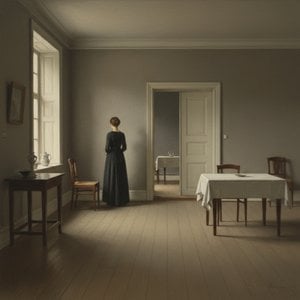
L'Architetto di Luce e Pietra: La Vita di Heinrich Hansen
Nel grande arazzo dell'arte danese del XIX secolo, pochi fili sono intrecciati con tanta precisione e tanta eleganza strutturale come quelli lasciati da Heinrich Hansen. Maestro capace di infondere vita nella pietra fredda e nelle sale silenziose, Hansen non fu semplicemente un pittore di edifici, ma un poeta della prospettiva. Nato nel 1arg21 a Haderslev, il suo percorso — dal figlio di un tintore di tessuti di Flensborg fino a diventare prestigioso Consigliere di Stato e professore presso la Reale Accademia Danese di Belle Arti — è la testimonianza di una vita dedicata all'osservazione meticolosa della forma e della luce. I suoi primi anni come pittore itinerante gli conferirono un rispetto fondamentale per l'artigianato: una comprensione tattile dei materiali che gli avrebbe permesso, in seguito, di rendere le trame del marmo, del legno e della muratura con un realismo senza pari.
L'arrivo di Hansen a Copenhagen nel 1842 segnò l'inizio di un'era trasformativa. Iscrivendosi alla Reale Accademia Danese di Belle Arti con l'intento di diventare un pittore decorativo, dimostrò rapidamente un'attitudine per commissioni prestigiose e di grande scala. La sua prima collaborazione alle opulente decorazioni del Museo Thorvaldsen segnalò la sua emergenza come talento vitale, capace di sostenere il peso di monumentali progetti artistici. Questo periodo fu caratterizzato da una ricerca incessante della maestria tecnica, come dimostrato dalla medaglia d'argento ricevuta nel 1846 per la pittura dal vivo, un traguardo che provò la sua capacità di catturare la vitalità organica della vita anche mentre si avvicinava alle discipline più rigide dell'architettura.
Un Viaggio Attraverso la Grandezza Europea
La traiettoria della carriera di Hansen fu profondamente alterata dai suoi viaggi, finanziati dal prestigioso Reiersenske Fund. Nel 1847, un viaggio in Germania gli permise di affinare la sua visione artistica e, soprattutto, di dedicarsi alla disciplina specializzata della pittura architettonica, diventando, in essenza, il primo vero esponente di questo genere in Danimarca. Attraversando l'Europa occidentale, inclusi i paesaggi baciati dal sole dell'Italia, Hansen assorbì le profonde eredità dei Grandi Maestri. Il drammatico chiaroscuro di Caravaggio e la profondità atmosferica di Rembrandt divennero i maestri silenziosi del suo pennello, insegnandogli come usare l'ombra per definire il volume e la luce per suggerire le infinite distese di una navata di una cattedrale.
I suoi viaggi non furono meramente osservativi ma produttivi, dando vita a opere che catturarono l'anima dei monumenti europei. Un risultato notevole di quest'epoca fu la sua raffigurazione della Chiesa della Nostra Beata Madonna del Sablon, un'opera così evocativa del suo ambiente da essere acquisita per la Collezione Reale. Questo periodo di erranza consolidò la sua capacità di tradurre la scala monumentale dell'architettura storica nell'esperienza intima di una tela, fondendo la precisionione di un disegnatore con l'anima di un romantico.
Eredità tra Prospettiva e Prestigio
Al suo ritorno in Danimarca, l'influenza di Hansen permeò le stesse istituzioni che modellarono l'identità artistica della nazione. Dopo la scomparsa di Gustav Friedrich Hetsch nel 1864, Hansen ascendette alla posizione di professore di prospettiva all'Accademia, un ruolo che ricoprì con distinzione per molti anni. Il suo impatto pedagogico assicurò che lo studio rigoroso dello spazio, della luce e dell'ornamento continuasse attraverso le generazioni successive di artisti danesi. Al di là dell'aula, il suo lavoro su importanti siti storici — come l'imponente compito di abbellire la cappella funeraria di Re Christian IV nella Cattedrale di Rosende insieme a Wilhelm Marstrand — cementò il suo status di custode del patrimonio architettonico della Danimarca.
Il significato di Heinrich Hansen risiede nella sua capacità unica di colmare il divario tra il decorativo e il profondo. La sua opera, che spazia dall'atmosferica Cappella Laterale alla vibrante energia del Mercato del Pesce, mostra una maestria versatile su diverse scale dell'esperienza umana. Attraverso i suoi occhi, non vediamo solo edifici; sentiamo il peso della storia, la quiete degli spazi sacri e la maestà duratura dell'ambiente costruito. Egli rimane una pietra miliare dell'Arte Accademica Danese, un artista che ci ha insegnato che anche la pietra più silenziosa custodisce una storia che attende di essere illuminata.