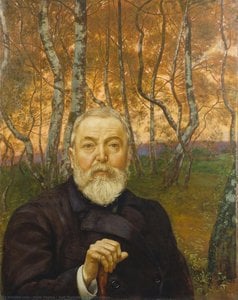
L'Anima della Foresta Nera: La Vita e la Visione di Hans Thoma
Hans Thoma si staglia come una figura singolare nella storia dell'arte tedesca, celebre per i suoi paesaggi evocativi e i ritratti che catturano l'essenza stessa della regione della Foresta Nera, un luogo profondamente radicato nella sua visione artistica. Nato a Bernau bei Berlin nel 1839, intraprese un percorso creativo segnato da una devozione incrollabile alle tradizioni e al folklore della sua terra d'origine. La sua vita fu un delicato equilibrio tra meticolosa osservazione e un profonda sensibilità verso l'idealismo romantico, dando vita a un corpus di opere che appaiono allo stesso tempo ancorate alla terra e elevate da una qualità onirica.
Gli anni formativi di Thoma furono plasmati dai semplici ritmi della vita rurale; il mestiere di orologiaio di suo padre gli trasmise una precisione e un'extraordinaria attenzione al dettaglio che avrebbero successivamente permeato ogni sua pennellata. Nel 1859, si iscrisse all'Accademia di Karlsruhe, dove fu guidato da maestri del calibro di Johann Wilhelm Schirmer e Ludwig Des Coulbres. Questo periodo consolidò la sua padronanza fondamentale nelle tecniche della pittura di paesaggio. Sebbene i suoi successivi viaggi attraverso Düsseldorf, Parigi, l'Italia, Monaco e Francoforte lo esponessero a un turbine di diverse correnti artistiche, questi incontri internazionali servirono solo a rafforzare il suo impegno nel catturare l'essenza della vita rurale tedesca e la bellezza senza tempo della natura.
Un Arazzo di Influenze e Tecnica
Lo stile distintivo di Thoma sfugge a facili categorizzazioni, eppure possiede inconfondibili affinità con il movimento Preraffaellita. Proprio come nelle opere di Dante Gabriel Rossetti o John Everett Millais, Thoma diede priorità alla resa delle condizioni atmosferiche e alla trasmissione di emozioni profonde attraverso sottili variazioni tonali e tavolozze cromatiche luminose. La sua fascinazione per i minimi dettagli del mondo naturale — la trama di una foglia, la luce che filtra tra le fronde o la presenza silenziosa di mucche al pascolo — riflette una dedizione al realismo che viene spesso temperata da una visione immaginativa, quasi mistica.
Anche la stirpe dei maestri tedeschi giocò un ruolo cruciale nel plasmare la sua estetica. Le opere di Albrecht Dürer e Lucas Cranach il Vecchio furono influenze profonde, informando le sue scelte compositive e la sua capacità di rendere contorni precisi e ombreggiature accuratissime. Questa fusione tra precisione classica e sentimento romantico gli permise di creare scene che risultavano storicamente radicate ed emotivamente immediate. Che si trattasse di un disegno in bianco e nero come il suo Ritratto di Giovinezza o di un paesaggio vibrante e intriso di colore come Albero Autunnale davanti a Wiesental, la maestria tecnica di Thoma rimase sempre centrata sulla ricerca della verità all'interno della natura.
Eredità e Significato Artistico
Nel corso della sua carriera, Thoma raggiunse un livello di riconoscimento che lo pose al centro della scena artistica tedesca. La sua capacità di evocare serenità attraverso il verde lussureggiante e i cieli soffici — come si vede in opere quali Paesaggio con Nuvola — dimostra una sensibilità quasi impressionista verso la luce e l'aria. Egli non si limitava a dipingere scenari; dipingeva l'atmosfera di una cultura e di un paesaggio, trasformando la Foresta Nera in un simbolo di pace duratura e bellezza pastorale.
Il significato storico di Hans Thoma risiede nella sua capacità di colmare il divario tra le rigorose tradizioni accademiche del XIX secolo e la nascente emotività dell'arte moderna. I suoi traguardi includono:
- Maestria del Paesaggio: La creazione di un linguaggio visivo definitivo per la campagna tedesca, fondendo realismo e Romanticismo.
- Versatilità Tecnica: La capacità di muoversi fluidamente tra disegni precisi e dettagliati e paesaggi pittorici ed evocativi.
- Preservazione Culturale: Il compito di documentare il folklore, le tradizioni e lo splendore naturale della regione della Foresta Nera durante un periodo di rapidi cambiamenti industriali.
Ancora oggi, l'opera di Thoma continua a risuonare negli spettatori che cercano conforto nell'idillio e nell'eterno. I suoi dipinti rimangono finestre aperte su un mondo in cui la natura e l'umanità coesistono in una danza armoniosa e meravigliosamente dettagliata.
Domande e risposte
Posso studiare l'uso del colore di Hans Thoma in tutte le sue opere?
Il profilo cromatico delle opere di Hans Thoma è consultabile nella pagina Profilo Cromatico dell'Artista dell'artista.
Dove si possono trovare le opere di Hans Thoma raggruppate per movimento artistico?
I movimenti di Hans Thoma sono consultabili nella pagina Tutti i movimenti, che raggruppa le opere per movimento.
In quale città e in quale paese è nato/a Hans Thoma?
Hans Thoma è nato a Bernau im Schwarzwald, in Deutschland.