Il Visionario del Rinascimento di Salisburgo
Nel cuore della Salisburgo del XVI secolo, immerso in un panorama di profonda transizione culturale, visse un artista il cui pennello seppe catturare l'essenza stessa del Rinascimento maturo e dell'emergente stile manierista. Hans il Vecchio Bocksberger, nato intorno al 1510, emerse da una stirpe di straordinario talento artistico, ereditando sia il rigore tecnico che un profondo spirito creativo dal padre, Ulrich Bocksberger. Sebbene la storia occasionally proietti un'ombra lunga sulla sua opera a causa della fama internazionale del fratello minore, Hans Holbein il Giovane, il Bocksberger anziano riuscì a forgiare un'eredità unicamente sua, profondamente radicata nei paesaggi aristocratici ed ecclesiastici della Baviera e dell'Austria.
Un Maestro del Dettaglio e dell'Espressione Umanista
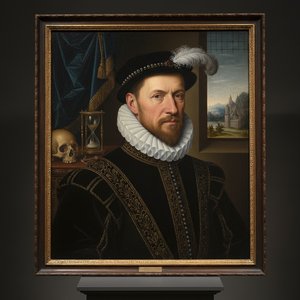
L'arte di Bocksberger era definita da un'esquisita attenzione al dettaglio e da una perfetta integrazione degli ideali umanistici nelle sue composizioni. La sua opera colmava spesso il divario tra l'eleganza strutturata del Rinascimento maturo e la grazia più espressiva e fluida del primo Manierismo. Questa maestria è forse evidente in modo più sorprendente nel suo ritratto dell'
Imperatore Ferdinando I, eseguito intorno al 1550-55. In quest'opera, Bocksberger utilizzò l'olio su carta montata su legno per ottenere un mozzafiato gioco di luci e ombre. La resa meticolosa dei lineamenti dell'Imperatore — la fronte corrugata e lo sguardo penetrante — dimostra una sofisticata padronanza del realismo psicologico, mentre le opulente trame delle vesti bordate di pelliccia e i copricapi piumati parlano della grandezza e dell'autorità del suo soggetto.
Grandiosità Architettonica e Influenza Duratura
Al di là dei singoli ritratti, Bocksberger era un maestro della pittura decorativa, possedendo una rara capacità di trasformare gli interni architettonici in esperienze spirituali e terrene immersive. Eccelleva nel creare spazi di maestosità, dove la sua mano poteva essere vista trasformare la pietra fredda in narrazioni vibranti. I suoi contributi più significativi includono:
- La Schlosskapelle Neuburg, dove i suoi affreschi catturarono l'essenza degli ideali umanistici attraverso figure idealizzate e composizioni armoniose;
- La Sala Grande del Castello di Goldegg vicino a Radstatt, uno spazio in cui la sua visione diede vita a un panorama mozzafiato di colori e texture;
- La Residenz di Landshut, dove collaborò con contemporanei come Ludwig Refinger e Hermann Posthumus per creare un impressionante insieme architettonico.
Attraverso queste prestigiose commissioni, Bocksberger fece molto più che limitarsi a decorare; egli contribuì a plasmare l'identità visiva della nobiltà austriaca e bavarese durante un periodo di intensi sconvolgimenti religiosi e sociali. Sebbene il dibattito accademico continui riguardo alla precisa attribuzione di alcune opere tra Hans il Vecchio e Melchior Bocksberger, il suo impatto sul panorama artistico di Salisburgo rimane innegabile. Egli si erge come una figura cruciale la cui dedizione all'esecuzione meticolosa e al movimento umanista ha lasciato un segno indelebile nel mosaico dell'arte rinascimentale europea.