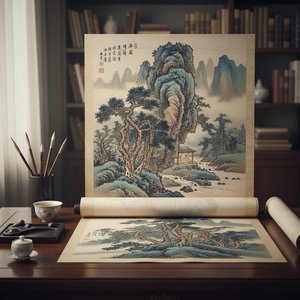
Gojo Tametaka: Echoes of Tranquility in the Muromachi Landscape
Gojo Tametaka (1471-1543) stands as a cornerstone figure within Japanese ink painting during the Muromachi period, a time marked by political fragmentation and artistic experimentation. Born in Tokyo – though precise details about his early life remain elusive – Tametaka emerged from a lineage steeped in calligraphy and artistic tradition, shaping his distinctive style and worldview. His oeuvre is primarily defined by breathtaking landscapes rendered with meticulous detail and imbued with profound spiritual resonance, most notably exemplified by “The Rainy Season,” a masterpiece that continues to captivate viewers centuries later.
Early Life and Artistic Training
Information regarding Tametaka’s formative years is scarce, reflecting the limitations of historical records during this era. However, scholarly consensus suggests he was educated in Kyoto, the imperial capital, where he honed his skills under prominent calligraphers and artists of the time. This exposure undoubtedly instilled within him a deep appreciation for Zen Buddhism – a dominant philosophical force shaping artistic sensibilities – and fostered an unwavering commitment to capturing the essence of nature through precise observation and expressive brushwork. The influence of Sesshu Toyokuni, considered one of Japan’s greatest landscape painters, is palpable in Tametaka's approach, prioritizing simplicity and conveying atmospheric conditions with remarkable subtlety. Sesshu’s emphasis on understated beauty and the contemplation of emptiness profoundly impacted Tametaka’s artistic vision.
The Artistry of “The Rainy Season”
“The Rainy Season,” housed at The Metropolitan Museum of Art (2015.500.9.63), represents the zenith of Tametaka’s artistic achievement. Executed in 1543, this hanging scroll depicts a serene vista overlooking Mount Yoshino – a location revered for its association with Buddhist pilgrimage and springtime blossoms. Tametaka's technique is characterized by *sumi-e*, or ink wash painting, where he utilizes varying shades of black ink to depict textures and contours with astonishing accuracy. The subtle gradations of tone convey the dampness of the rain-soaked foliage and create a palpable sense of depth, inviting contemplation on impermanence and beauty. Unlike more flamboyant styles prevalent during the Muromachi period, Tametaka’s work prioritizes restraint and spiritual contemplation—a hallmark of Zen aesthetics. He meticulously layered ink washes to capture the misty atmosphere and subtle nuances of light, mirroring the Buddhist concept of *mu*, or emptiness.
Technique and Style: Mastering Sumi-e
Tametaka's mastery of *sumi-e* is unparalleled. He achieved this remarkable feat through a deliberate process of layering ink washes – applying multiple thin coats of ink to build up tonal variations – combined with precise brushstrokes that capture the nuances of natural forms. The artist’s meticulous attention to detail extends beyond mere representation; he sought to convey not just what he saw but also how he felt—a core principle of Zen art. His compositions often feature asymmetrical arrangements and empty space (*ma*) which further enhance the sense of tranquility and invite viewers to engage in meditative reflection. This stylistic preference aligns perfectly with Zen Buddhist ideals, emphasizing emptiness and interconnectedness. The deliberate use of *ma* – negative space – is crucial to conveying a feeling of serenity and prompting introspection.
Historical Significance and Legacy
Gojo Tametaka’s contribution to Japanese art history transcends mere aesthetic beauty; he embodies the spirit of a pivotal period marked by intellectual ferment and artistic innovation. His unwavering dedication to capturing the sublime qualities of nature—particularly during times of political instability—served as an inspiration for subsequent generations of artists. “The Rainy Season,” in particular, remains a seminal work demonstrating the enduring power of Zen aesthetics and influencing landscape painting traditions for centuries afterward. Tametaka’s legacy continues to resonate today, reminding us that true artistic excellence lies not only in technical virtuosity but also in conveying profound spiritual truths—a testament to his enduring influence on Japanese art and culture. He is remembered as a symbol of quiet contemplation and masterful execution, securing his place among Japan's most revered landscape painters.