Museums on APS: Accademia delle Arti Visive di Vienna
Movements: baroque
Nationality: Svizzera
Born: 1677, Svizzera
Giuseppe Antonio Petrini: A Visionary Painter of Late Baroque Switzerland
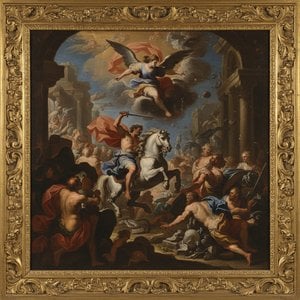
Giuseppe Antonio Petrini (1677 – 1759) stands as a prominent figure in the artistic landscape of late baroque Switzerland, particularly Lugano and its surrounding region. Born in Carona, Ticino, he navigated a career marked by meticulous craftsmanship and an imaginative approach to portraiture—a style that aligns closely with the broader currents of northern Italian Baroque painting. While definitive biographical details remain somewhat elusive, scholarly research suggests Petrini’s formative years were spent under the tutelage of Bartolomeo Guidobono around 1700, establishing a foundational connection to established artistic traditions.
His oeuvre predominantly comprises portraits commissioned by wealthy patrons and ecclesiastical institutions—a testament to his reputation for capturing likenesses with remarkable accuracy and conveying psychological depth. Notably, Petrini’s depiction of St. Peter emerging from the shadows to pinpoint some lines in the gospel exemplifies Caravaggio's dramatic chiaroscuro technique, demonstrating a profound understanding of artistic principles. This masterful use of light and shadow wasn’t merely stylistic ornamentation; it served as a vehicle for conveying spiritual contemplation—a characteristic deeply rooted in the baroque preoccupation with divine illumination and human emotion. Similarly, his portrayal of St. Peter for Dubino parish church underscores his commitment to portraying saints with solemn dignity and conveying spiritual contemplation. Pietro Ligari categorized Petrini as a “speculative painter,” recognizing that these portraits weren’t merely representations of individuals but explorations of philosophical concepts—a characteristic often found in artists striving to elevate their craft beyond mere visual imitation. He sought to imbue his subjects with moral significance, reflecting the humanist ideals prevalent during his time.
Petrini's artistic activity extended beyond Lugano, with works appearing in Como and Bergamo, reflecting the interconnectedness of baroque art across Lombardy. These commissions allowed him to hone his skills and experiment with diverse stylistic approaches—demonstrating a remarkable versatility that transcended regional boundaries. Furthermore, he served as fabbriciere (architectural overseer) for Madonna d’Onegro church from 1711 to 1753, showcasing his multifaceted talents and involvement in broader artistic endeavors. This role demanded not only technical expertise but also an understanding of architectural design and patronage—further enriching his artistic experience and solidifying his reputation as a respected cultural figure.
His stylistic evolution can be traced through a series of commissions that consistently prioritized expressive realism combined with masterful compositional planning—a hallmark of the baroque aesthetic. Petrini’s paintings are characterized by meticulous detail, vibrant color palettes, and an unwavering dedication to capturing the essence of his subjects—reflecting the influence of Lombard Baroque masters like Francesco Borroméo and Luca Giordano. His works stand as enduring monuments to artistic brilliance and intellectual curiosity—testaments to Petrini's profound engagement with both visual art and philosophical thought.
Notable Works: “Diogenes with his Lantern,” “A Philosopher,” “St Peter for Dubino Parish Church,” “St Peter Emerging from Shadows”
Influences: Bartolomeo Guidobono, Caravaggio
Style: Late Baroque Painting; Speculative Portraiture; Dramatic Chiaroscuro Technique
A cura del team editoriale di WahooArt.com
Quiz d'arte
Per ogni domanda è presente una sola risposta corretta.
Domanda 1:
Dove è nato Giuseppe Antonio Petrini?
Domanda 2:
Lo stile di Petrini è principalmente associato a quale movimento artistico?
Explore the breathtaking drama of the Baroque era. From the mastery of chiaroscuro to epic mythological narratives, discover a definitive guide to art's most powerful period of light, shadow, and emotion for the true classical art enthusiast.
Embark on a sophisticated journey through Italian Baroque art. Discover the dramatic interplay of light and emotion in Caravaggio’s masterpieces and explore how to bring this timeless grandeur into your collection with expert art insights.
Explore the breathtaking power of Baroque art. Delve into the dramatic interplay of light, shadow, and motion through the works of masters like Caravaggio. Discover how the era's intense emotional realism continues to inspire collectors and connoisseurs of classical grandeur.