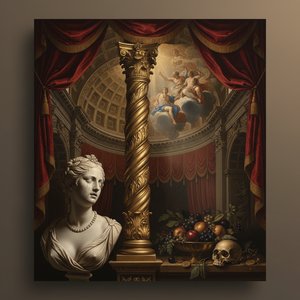
Giovanni da San Giovanni: A Florentine Baroque Visionary
Giovanni da San Giovanni (1592 – 1899), born in San Giovanni Valdarno, Italy, stands as a pivotal figure within the Florentine Baroque artistic landscape. Though overshadowed by contemporaries like Caravaggio and Artemisia Gentileschi, his contribution to the era’s expressive power and sensual exploration of mythological narratives remains significant. His life was marked by both artistic ambition and personal hardship, shaping the trajectory of his oeuvre and cementing his place in art history.
Giovanni’s formative years were steeped in humanist ideals and artistic tradition thanks to his father, Alessandro da San Giovanni Valdarno, who himself practiced painting. He received an exceptional education under Federico Zuccarelli, mastering techniques that would define his distinctive style—a style profoundly influenced by Caravaggio's masterful use of tenebrism. This dramatic chiaroscuro technique, characterized by stark contrasts between light and dark, became the hallmark of Giovanni’s artistic vision, elevating emotional impact and creating an illusionistic depth within his paintings.
Giovanni established himself as a respected painter and teacher primarily in Naples, where he cultivated relationships with aristocratic patrons—a testament to the vibrant cultural milieu of the Bourbon court. His workshop produced numerous commissions for churches throughout Campania, showcasing his unparalleled skill in fresco painting and compositional innovation. Notably, he collaborated on monumental frescoes adorning churches throughout Campania, demonstrating his mastery of fresco painting and dramatic composition. Among his most celebrated achievements is “Aurora and Tithonus,” a breathtaking fresco housed in the Museo Nazionale di Napoli—a masterpiece that encapsulates Giovanni’s stylistic prowess and captures the ethereal beauty of classical mythology while conveying profound contemplation.
Giovanni's artistic style resonated deeply with subsequent generations of artists, particularly those influenced by Neoclassicism. His meticulous observation of anatomy and his masterful use of chiaroscuro served as a benchmark for stylistic excellence. He was recognized as one of the foremost painters of his time—a figure whose legacy continues to inspire art historians and scholars today. Giovanni Baglione’s “Le Vite dei Pittori, Scultori et Architetti,” published in 1642, provides invaluable insight into the artistic environment of the era, capturing not only factual details but also personal impressions and stylistic debates—a testament to Giovanni da San Giovanni's enduring influence on art history.
Further research into Giovanni da San Giovanni’s artistic life and oeuvre can be found in scholarly publications focusing on Florentine Baroque painting and Neoclassical influences. Museums housing his works—particularly the Museo Nazionale di Napoli—offer opportunities to appreciate his masterful artistry firsthand.