Il Maestro Veneziano della Luce e del Dramma
Nello splendore vibrante e acquatico della Venezia del XVIII secolo, pochi artisti hanno saputo catturare l'essenza teatrale dei periodi tardo-barocco e rococò con la stessa fluidità di Giovanni Battista Pittoni. Nato il 6 giugno 1687, Pittoni emerse da una città che era essa stessa un palcoscenico di grandi spettacolazioni, portando sulla tela un senso di movimento e luminosità che avrebbe definito un'intera epoca. Sebbene la sua giovinezza fosse radicata nelle tradizioni della sua Venezia natale, la sua anima artistica fu plasmata da un profondo legame con i maestri che lo avevano preceduto. Formatosi sotto la guida dello zio Francesco Pittoni, ereditò una comprensione fondamentale della scuola veneziana, possedendo tuttavia una visione unica che gli permise di trascendere la semplice imitazione.
Lo sviluppo dello stile di Pittoni fu un'esquisita evoluzione di luce ed emozione. Trasse profonda ispirazione dal drammatico chiaroscuro di Caravaggio e dalla profondità materica di Rembrandt, filtrando tuttavia queste pesanti influenze attraverso una lente distintamente veneziana. Con il progredendo della sua carriera, la sua opera iniziò a riflettere le sensibilità più leggere e ariose del Rococò, caratterizzate da una tavolozza scintillante e da una grazia elegante, quasi priva di peso. La sua pennellata divenne sempre più fluida, capace di trasmettere sia la maestà divina di un'apparizione religiosa che la delicata intimità di un incontro mitologico. Questa capacità di muoversi tra il profondo e il giocoso lo rese una figura centrale nella transizione dal dramma intenso del Barocco alla raffinata eleganza del Rococò.
Un'Eredità di Teatralità e Grazia
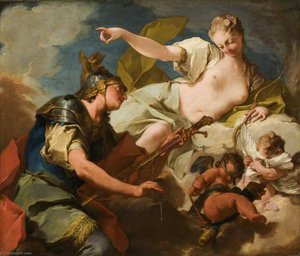
L'opera di Pittoni è una collezione mozzafiato di narrazioni religiose e mitologiche, ognuna progettata per affascinare lo spettatore attraverso composizioni dinamiche e figure espressive. I suoi dipinti sembrano spesso momenti congelati da una grande opera lirica, dove ogni gesto è intriso di significato e ogni ombra racconta una storia. Che rappresenti la serena santità della Natività o la tensione eroica di Venere che consegna l'armatura ad Enea, il suo lavoro possiede un'inconfondibile teatralità. Egli possedeva un talento straordinario nell'utilizzare la luce non solo come strumento di visibilità, ma come vero protagonista spirituale, immergendo i suoi soggetti in un bagliore etereo che suggerisce la presenza del divino.
Al di là dei confini delle singole tele, l'influenza di Pittoni si estese all'architettura stessa del prestigio veneziano. La sua maestria nelle composizioni su grande scala gli valse prestigiose commissioni per soffitti e pareti di grandi palazzi e chiese in tutta Italia. Il suo lavoro a Palazzo Labia e in varie residenze milanesi dimostrò la sua capacità di trasformare spazi strutturali in mondi mitologici immersivi. Questo periodo di creazione prolificante consolidò la sua reputazione di pittore leader della sua generazione, capace di decorare le più significative istituzioni civili e religiose con una raffinatezza senza pari.
Impatto Istituzionale e Significato Storico
L'importanza storica di Giovanni Battista Pittoni va ben oltre la bellezza estetica dei suoi dipinti; egli fu un pilastro della comunità artistica veneziana. Il suo impegno per la formalizzazione dell'educazione artistica lo portò a diventare uno dei membri fondatori dell'Accademia di Belle Arti di Venezia. La sua leadership all'interno di questa istituzione — arrivando a ricoprire la carica di secondo presidente dopo il leggendario Tiepolo — dimostra l'immenso rispetto che godeva tra i suoi pari e il perdurante impatto che ebbe sulla formazione delle future generazioni di artisti italiani.
Sebbene fosse noto per aver ricevuto importanti commissioni dall'estero, in particolare dalla Germania, Pittoni rimase profondamente legato al paesaggio veneziano. Fu un pittore che trovò la grandezza entro i confini della propria patria, arricchendo la cultura locale con uno stile che era allo stesso tempo di rilevanza internazionale e intimamente veneziano. Oggi, le sue opere fungono da finestre vitali sul XVIII secolo, incarnando la transizione dell'arte europea dall'intensa emotività del Barocco allo splendore luminoso e decorativo del Rococò. La sua eredità vive nei musei del mondo, dove le sue tele continuano ad incantare gli spettatori con la loro eleganza senza tempo e la loro drammatica brillantezza.
Domande e risposte
Esiste una linea del tempo delle opere di Giovanni Battista Pittoni?
La pagina Cronologia opere dell'artista presenta le opere di Giovanni Battista Pittoni ordinate per data, anno dopo anno.
È disponibile un tour virtuale 3D delle opere di Giovanni Battista Pittoni?
La Museo 3D di Giovanni Battista Pittoni è una pagina che presenta le opere dell'artista all'interno di una galleria virtuale tridimensionale.
Quali emozioni esprimono le opere di Giovanni Battista Pittoni?
La pagina Stanze d'atmosfera dell'artista mostra le opere di Giovanni Battista Pittoni suddivise per atmosfera.
Posso sfogliare le opere di Giovanni Battista Pittoni per tecnica?
Per trovare tutte le opere di Giovanni Battista Pittoni in una determinata tecnica, consulta la pagina Tutti i media dell'artista.
What aliases or alternate names does Giovanni Battista Pittoni have?
Giovanni Battista Pittoni is also known as Giambattista Pittoni.
Quali colori ha usato più spesso Giovanni Battista Pittoni?
L'uso del colore di Giovanni Battista Pittoni nelle opere elencate su questo sito può essere approfondito consultando la pagina Genoma della Palette dell'artista.
Dove si trovano le opere di Giovanni Battista Pittoni organizzate per colore?
La pagina Indice Spettrale organizza le opere di Giovanni Battista Pittoni per colore.
Dove si trovano le opere di Giovanni Battista Pittoni mappate per soggetto?
Le opere di Giovanni Battista Pittoni possono essere esplorate per soggetto nella pagina Atlante dei soggetti dell'artista.