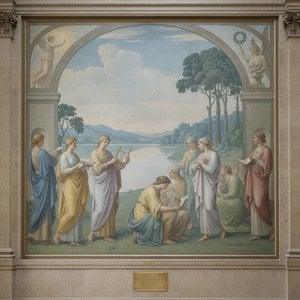
Il Maestro della Corte Milanese
Nell'atmosfera vibrante e intellettualmente carica della Milano rinascimentale, Giovanni Ambrogio de Predis emerse come una figura vitale il cui pennello catturò l'essenza stessa della dinastia Sforza. Nato in una distinta famiglia di artisti lombardi intorno al 1455, la sua giovinezza fu immersa nelle tradizioni dell'illuminazione e del fine design. Insieme ai suoi fratelli—Evangelista, Bernardino e Cristoforo—Ambrogio contribuì a plasmare l'identamente visiva di una città sulla soglia di una rivoluzione artistica. I suoi primi approcci al mondo dell'arte furono caratterizzati dalla delicata precisione di un miniaturista, producendo squisite miniature per i Libri d'Ore negli anni 1470. Queste opere primordiali, sebbene molte siano andate perdute nel tempo, stabilirono la sua reputazione per una meticolosità e una grazia che avrebbero successivamente definito la sua ritrattistica di più grande scala.
Con la maturazione della sua carriera, de Predis andò oltre la scala intima dei manoscritti per abbracciare le più grandi richieste della corte di Ludovico Sforza. Questo periodo segnò la sua ascesa nei più alti cerchi della società milanese, dove operava non solo come pittore, ma come versatile progettista di monete, arazzi e persino scenografie teatrali. La sua capacità di navigare le diverse esigenze della zecca e del palazzo ducale parla di un artista dall'immensa gamma tecnica, capace di tradurre il potere politico in uno splendore visivo duraturo.
Un'eredità intrecciata con Leonardo
Forse il capitolo più affascinante della vita di de Predis è il suo profondo legame con il genio Leonardo da Vinci. Quando Leonardo giunse a Milano, fu de Predis ad offrirgli ospitalità, creando un ponte tra due delle menti artistiche più significative dell'epoca. Questa relazione trascese la semplice amicizia, evolvendosi in una monumentale collaborazione artistica che avrebbe lasciato un segno indelebile nella storia dell'arte. Più celebremente, a de Predis e suo fratello Evangelista è attribuita l'esecuzione dei pannelli laterali della Vergine delle Rocce per la chiesa di San Francesco Grande. Mentre Leonardo infondeva vita alle figure centrali con la sua rivoluzionaria tecnica dello sfumato, i fratelli De Predis fornirono la struttura e l'atmosfera essenziali che completarono questo capolavoro sacro.
Oltre le pale d'altare collaborative, il lavoro di de Predis come ritrattista gli permise di documentare i volti delle figure più influenti dell'epoca. La sua abilità nel catturare la dignità e il carattere dei suoi soggetti lo rese il pittore preferito per la diplomazia ad alto livello. Un caso notevole avvenne durante le negoziazione matrimoniali tra l'imperatore Massimiliano I e Bianca Maria Sforza; de Predis fu incaricato di creare un ritratto della sposa, un'opera che l'avrebbe accompagnata a Innsbruck e sarebbe servita come ambasciatrice visiva dell'eleganza milanese.
Significato artistico e influenza duratura
L'arte di Giovanni Ambrogio de Predis è caratterizzata da una combinazione unica di precisione lombarda e dalle nascenti innovazioni atmosferiche del Rinascimento maturo. Sebbene gran parte della sua produzione documentata rimanga oggetto di dibattito accademico a causa della natura collaborativa della sua bottega, la sua influenza sulla scuola milanese è innegabile. I suoi contributi possono essere riassunti attraverso alcuni pilastri fondamentali della sua carriera:
- Versatilità del mezzo: Dalla precisione microscopica dell'illuminazione dei manoscritti alle grandi richieste del design di arazzi e dell'incisione di monete.
- Ritrattistica di corte: La capacità di fungere da cronista visivo per la famiglia Sforza, catturando sia il prestigio politico che la somiglianza personale.
- Eccellenza collaborativa: Il ruolo cruciale nell'esecuzione di importanti opere rinascimentali accanto a Leonardo da Vinci, aiutando a definire l'estetica della corte milanese.
- Maestria nel design: Il suo lavoro nella zecca locale e nella scenografia teatrale ha mostrato un artista capace di plasmare l'ambiente fisico e sensoriale della sua epoca.
Sebbene sia scomparso nel 1522, lasciando un'eredità spesso intrecciata nelle ombre di maestri più grandi, de Predis rimane una pietra miliare del Rinascimento lombardo. La sua vita funge da testimonianza dell'interconnessione tra arte, politica e scienza durante uno dei periodi più luminosi della storia.
Domande e risposte
A quali movimenti appartiene l'opera di Giovanni Ambrogio De Predis?
Le opere di Giovanni Ambrogio De Predis possono essere consultate per movimento nella pagina Tutti i movimenti dell'artista.
Di dove è Giovanni Ambrogio De Predis?
Giovanni Ambrogio De Predis è nato/a in Italia.
A quale periodo storico appartiene l'opera di Giovanni Ambrogio De Predis?
Giovanni Ambrogio De Predis ha operato nel periodo Rinascimento, collocando storicamente la sua attività.