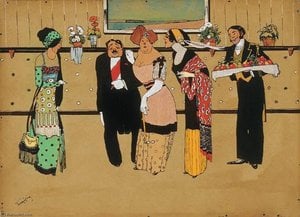
Geza Farago: A Hungarian Symbolist Visionary
Geza Farago (1877 – Present) stands as one of Hungary’s most prominent figures in early 20th-century art, particularly celebrated for his distinctive contribution to the Symbolist movement and his mastery of the Hungarian poster tradition. His artistic legacy continues to resonate with collectors and scholars alike, offering a glimpse into a period marked by intellectual ferment and aesthetic experimentation.
Early Life and Artistic Training
Born in Budapest, Farago’s formative years were shaped by instruction under Ferenc Újházy, a respected Hungarian painter who instilled in him foundational drawing skills. Recognizing his talent, Újházy encouraged Farago's pursuit of artistic excellence. Subsequently, he gained practical experience working at a textile factory, providing valuable insight into the industrial landscape of his time. However, it was his relocation to Paris in 1898 that truly propelled his artistic journey forward. He enrolled in evening classes at Colorossi’s Academy and honed his skills further at Atelier Artistique Delaye, immersing himself in the vibrant Parisian art scene.
Influence of Mucha and Artistic Exploration
A pivotal moment arrived with his association with Alphonse Mucha's workshop for two years – an encounter that profoundly impacted Farago’s artistic sensibilities. Mucha’s decorative Art Nouveau style served as a significant catalyst, fostering Farago’s fascination with stylized forms, ornamental patterns, and the expressive potential of color. He participated in exhibitions at the Salon in Paris, showcasing his evolving artistic vision to discerning audiences.
Return to Hungary and Artistic Collaborations
Returning to Budapest in 1902, Farago established himself as a studio artist alongside Adolf Fényes (Szolnok), benefiting from collaborative mentorship that enriched his creative process. He joined the Kecskemét artists colony, fostering connections with fellow creatives and broadening his artistic horizons. Throughout his life, he pursued diverse artistic endeavors – designing posters, creating caricatures, and staging theatrical productions—demonstrating versatility and a commitment to engaging audiences on multiple levels. Notably, he served as stage designer for the Operetta Theatre for fifteen years, cementing his reputation as a multifaceted artist.
Style and Artistic Characteristics
Farago’s artistic style is characterized by a harmonious blend of influences: the grandeur of Art Nouveau, the precision of Japanese woodcuts, and the expressive dynamism of the Nabis movement. He skillfully employed bold contour lines and vibrant color palettes to construct visually arresting compositions—a technique that distinguishes his work from many contemporaries. Like Mucha, Farago favored depictions of female figures, imbuing them with grace and elegance while simultaneously injecting humor through caricature. His posters – particularly those featuring memorable characters like Bishop Kerpel, Dandy Törley, and Girl Janina – became iconic representations of Hungarian urban society during the Belle Époque. These designs exemplify his ability to combine decorative artistry with narrative storytelling—a hallmark of his artistic achievement.
Notable Works and Legacy
Among Farago’s celebrated paintings are “Nakiri,” “Slim Woman with a Cat,” and “Paradise Lost”—each piece embodying the Symbolist aesthetic's preoccupation with psychological depth and evocative imagery. His masterpiece, "Slim Woman with a Cat," exemplifies his masterful use of color and form to convey emotion and atmosphere. Furthermore, Farago’s contribution to Hungarian poster art is unparalleled; he established a distinctive stylistic tradition that prioritized visual impact alongside intellectual engagement. His paintings are housed in the collection of the Hungarian National Gallery, ensuring that his artistic legacy continues to inspire future generations. Geza Farago remains an enduring symbol of Hungarian artistic innovation and a testament to the transformative power of artistic vision.