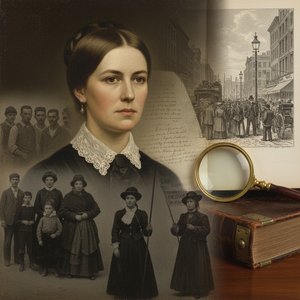
George H. Johnson (c. 1823 – 1879): Pioneer of California Photography
George H. Johnson stands as a remarkable figure in the annals of American photography, particularly during the transformative era of the California Gold Rush. Born around 1823 in Sacramento, California—a city indelibly shaped by the influx of prospectors seeking fortune—Johnson’s life coincided with one of the most dramatic periods of westward expansion and artistic innovation. While biographical details remain scarce, his contribution to documenting this pivotal moment is undeniable, securing him a place among the earliest practitioners of visual storytelling in the American West.
Early Life and Artistic Beginnings
Information regarding Johnson's formative years is fragmentary, yet he emerged from New York State with a keen interest in capturing the world around him—a passion that would ultimately define his photographic career. Precise details about his formal training are elusive, suggesting that he honed his skills through self-education and experimentation, mirroring the spirit of independent exploration prevalent during the Victorian age. His arrival in San Francisco in 1849 marked a decisive turning point, propelling him into the epicenter of California’s burgeoning artistic landscape. He possessed an innate curiosity for observation and representation—qualities that would prove invaluable to his subsequent endeavors as a photographer.
The Daguerreotype Process and California Landscapes
Johnson swiftly embraced the daguerreotype process—a revolutionary photographic technique that offered unparalleled detail and luminosity—establishing his studio and rapidly gaining renown for his portraits and landscapes. He skillfully utilized lighting and composition to convey not merely visual representations but also emotional resonance, capturing the rugged beauty of the Sierra Nevada mountains and the bustling energy of San Francisco’s waterfront. His images served as invaluable records of daily life during the Gold Rush, documenting miners, merchants, and ordinary citizens alike—providing a tangible connection to this extraordinary period. Notably, he produced striking depictions of Reuel Colt Gridley, a prominent Sacramento businessman and philanthropist, showcasing his ability to portray subjects with sensitivity and nuance. The daguerreotype’s ability to reproduce images with remarkable clarity captivated the public imagination and cemented Johnson's reputation as a visionary artist.
Notable Works: Capturing California’s Spirit
Johnson's artistic output encompassed a diverse range of subjects, reflecting the multifaceted character of Californian society. Among his most celebrated achievements is undoubtedly his portrait of Domingo Ghirardelli—a wealthy chocolatier who played a crucial role in shaping San Francisco’s economic landscape. This meticulously crafted image exemplifies Johnson’s mastery of daguerreotype technique and his talent for conveying Ghirardelli's dignified presence and entrepreneurial spirit. Furthermore, he documented mining operations on the American River, offering viewers an evocative glimpse into the arduous labor and transformative impact of the Gold Rush on California’s environment and economy. His photographs are housed in prestigious institutions like the Art Institute of Chicago and the Nelson-Atkins Museum of Art, cementing his legacy as a pioneer of Californian art history.
Influences and Legacy
Johnson's photographic style was influenced by contemporaries such as John William Hill and James Abbott McNeill Whistler—artists who championed tonal harmonies and expressive landscapes. Like these masters, Johnson sought to elevate photography beyond mere documentation, aiming instead for artistic contemplation and emotional impact. His work stands as a testament to the transformative power of visual media in shaping perceptions of history and culture. George H. Johnson’s contribution to California's photographic heritage continues to inspire artists and scholars alike, ensuring that his images—and his pioneering spirit—remain vividly present in the collective memory of American art. He is remembered not only for his technical prowess but also for his profound understanding of how visual representations could communicate complex ideas and emotions—a legacy that resonates powerfully within the context of 19th-century artistic discourse.