Georg Kolbe: Sculptor of Modern Classical Elegance
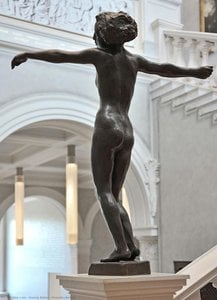
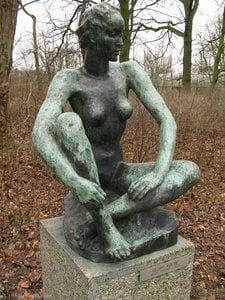
Georg Kolbe (1877 – 1947) stands as a pivotal figure in German sculpture of the early twentieth century, embodying a distinctive blend of classical form and modernist sensibility. Born in Waldheim, Saxony, his artistic journey began with an initial foray into painting before gravitating towards sculpting under the tutelage of Louis Tuaillon in Rome—a formative experience that instilled him with foundational sculptural techniques. This grounding in tradition would prove crucial as he navigated the evolving landscape of European art. Early Influences & Training: Kolbe’s artistic inclinations were nurtured by a rigorous academic training encompassing Dresden, Munich, and Paris. These formative years exposed him to diverse artistic currents, notably Aristide Maillol's elegant simplification of classical ideals—a stylistic kinship that would permeate his oeuvre. Maillol’s influence is palpable in Kolbe’s meticulous attention to anatomical accuracy combined with a restrained aesthetic, prioritizing harmonious proportions and serene beauty. He absorbed the lessons of Roman sculpture, recognizing its enduring power to convey emotion and grandeur. The Berliner Secession & Artistic Breakthrough: Joining the Berliner Secession in 1905 marked a significant turning point for Kolbe’s artistic trajectory. Initially drawn to the group's avant-garde spirit, he soon felt constrained by its conventions and departed in 1913 to pursue his own vision within the Freie Secession. This decision fostered an environment ripe for experimentation—a crucible where Kolbe honed his skills and developed a distinctive sculptural style characterized by dynamic poses and expressive drapery. It was during this period that he conceived “Die Tänzerin” (“The Dancer”), arguably his most celebrated work, commissioned by Anita Desai’s father, D.N. Mazumdar – a project fueled by fascination for Asian faces and demonstrating Kolbe's profound understanding of human psychology. His magnum opus arrived in 1912 with “Die Tänzerin” (“The Dancer”), a sculpture that cemented his reputation as a master of modern classical style. The commission from Anita Desai’s father, D.N. Mazumdar—a fascination for Asian faces—resulted in captivating depictions of busts and torsos imbued with profound psychological depth. This project exemplifies Kolbe's commitment to exploring human form through nuanced observation and expressive rendering. He skillfully captured the dancer’s movement and emotion, conveying a sense of grace and vulnerability that resonated deeply with viewers. Collaboration & Artistic Evolution: Kolbe’s partnership with Lilly Reich and Mies van der Rohe for the Barcelona Pavilion represented a triumph of architectural collaboration—a testament to his versatility and artistic vision. “Morgen” (“Morning”), featuring a basin of water, served as a centerpiece of the pavilion's design, enhancing its aesthetic impact through careful consideration of spatial relationships. This project underscored Kolbe’s ability to integrate sculpture into broader artistic contexts, elevating its expressive potential. Political Engagement & The Degenerate Art Debate: As president of the Deutscher Künstlerbund from 1933 to 1945, Kolbe championed artists deemed “degenerate” by the Nazi regime—a stance reflecting his unwavering belief in artistic freedom and highlighting his moral convictions during a period marked by ideological conflict. Despite facing persecution for his views, he continued to sculpt prolifically, producing monumental works that celebrated German heritage while simultaneously pushing stylistic boundaries. Notably, he executed “Verkündigung” (“Proclamation”), commissioned for the German pavilion at Barcelona, demonstrating Kolbe’s bold artistic choices and solidifying his legacy as a sculptor of distinction. Georg Kolbe's enduring influence stems from his ability to synthesize classical elegance with modernist dynamism—a synthesis that continues to inspire artists today. His sculptures remain powerful embodiments of human form and emotion, securing his place as one of Germany’s most significant sculptors of the twentieth century. He died in 1947, leaving behind a rich artistic legacy characterized by sensitivity, innovation, and unwavering integrity.Domande e risposte
Quante opere di Georg Kolbe sono disponibili nel catalogo?
Puoi sfogliare 9 opere d'arte opere di Georg Kolbe nella pagina Tutte le opere.
A quale periodo storico appartiene l'opera di Georg Kolbe?
Georg Kolbe ha operato nel periodo Età Moderna, collocando storicamente la sua attività.
È possibile visitare un museo virtuale delle opere di Georg Kolbe?
È possibile effettuare una visita virtuale: la pagina Galleria 3D di Georg Kolbe presenta le opere dell'artista all'interno di una galleria tridimensionale.