Frants Michael Regenfuss: Bridging Art and Natural History
Franz Michael Regenfuss (1712-1780), a German artist, engraver, and naturalist hailing from Nuremberg, stands as an intriguing figure in the annals of eighteenth-century art history. He wasn’t merely a painter; he was a pioneer who sought to synthesize artistic skill with scientific observation—a rare ambition that resulted in groundbreaking contributions to both disciplines. His work represents a remarkable fusion of aesthetic beauty and precise scientific documentation, marking him as one of his era's most innovative thinkers.Born into a family deeply rooted in artistic tradition, Regenfuss’s early life instilled within him an appreciation for craftsmanship and visual representation. Initially focused on painting and engraving, he honed his skills under the tutelage of esteemed Nuremberg artists—a formative experience that ensured mastery of technique and established a foundation for his future endeavors.
However, Regenfuss possessed an intellectual curiosity that transcended conventional artistic pursuits. Driven by an unwavering fascination with the natural world, particularly mollusks and crustaceans, he embarked on a lifelong quest for knowledge—a passion that would profoundly shape his artistic output and ultimately define his legacy. This dedication to observation and meticulous recording distinguishes him from many of his contemporaries.
- Early Life & Artistic Training: Regenfuss’s formative years were marked by rigorous artistic training, equipping him with the technical prowess necessary for his ambitious endeavors. His unwavering commitment to mastering engraving techniques ensured the precision and detail characteristic of his later works—a hallmark of his distinctive style.
- The Pursuit of Conchology: Recognizing the burgeoning field of natural history during his time, Regenfuss swiftly transitioned from painting to meticulously documenting marine invertebrates. This decision wasn’t simply driven by personal interest; it reflected a broader intellectual movement prioritizing empirical observation alongside artistic representation—a testament to his visionary approach.
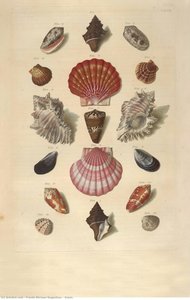
Regenfuss's magnum opus, “Choix de Coquillages et de Crustacés” ("Selection of Shells and Crustaceans"), stands as an unparalleled achievement in scientific illustration. Beginning as early as 1748, he conceived of a comprehensive treatise featuring twelve copper plates depicting an astonishing array of mollusks and crustaceans—a project that consumed him for decades. The undertaking demanded immense patience and dedication, yet it yielded results of extraordinary beauty and accuracy.
The meticulous detail evident in each plate showcases Regenfuss’s artistic skill alongside his scientific acumen. He painstakingly recreated the specimens before him, capturing their textures, colors, and anatomical features with breathtaking precision—a feat that captivated audiences and established him as a leader in his field.
- “Choix de Coquillages et de Crustacés” – A Monumental Achievement: Regenfuss’s magnum opus, “Choix de Coquillages et de Crustacés,” represents a singular accomplishment in scientific illustration. Beginning as early as 1748, he conceived of a comprehensive treatise featuring twelve copper plates depicting an astonishing array of mollusks and crustaceans—a project that would occupy him for decades.
Despite receiving substantial governmental funding from the Danish Crown – specifically aimed at furthering his research on conchology – Regenfuss’s progress was hampered by recurring health issues and logistical difficulties. Furthermore, he faced considerable economic hardships stemming from his acquisition of Jægergården estate in Lyngby, where he resided from 1755-63—a period marked by significant personal investment alongside artistic pursuits.
Nevertheless, Regenfuss persevered, securing the publication of “Choix de Coquillages et de Crustacés” in 1758 thanks to public patronage. Though he passed away before completing it entirely, his contribution to conchology and artistic illustration cemented his place as a pivotal figure in European art history—a testament to the transformative potential of blending scientific inquiry with artistic creativity.
The Metropolitan Museum of Art houses one of Regenfuss’s prints, Plate V from “Choix de Coquillages et de Crustacés,” demonstrating his unwavering commitment to capturing the essence of natural beauty through masterful engraving technique. His legacy continues to inspire artists and scientists alike, reminding us that true innovation arises from embracing diverse intellectual passions.