Frans Vervloet: A Venetian Visionary
Frans Vervloet (b. 1795, Mechelen, d. 1872, Venezia) stands as a prominent figure in Belgian Romantic painting and printmaking, renowned for his meticulous depictions of Venetian landscapes and architectural grandeur. Born into a family steeped in artistic tradition, Vervloet’s formative years were marked by exposure to the burgeoning neoclassical movement, which instilled in him an appreciation for classical ideals of beauty and proportion – influences that would subtly shape his distinctive style.
Early Life & Artistic Training
Vervloet received his initial artistic education at Saint John's College in Leuven, where he honed his skills in drawing and painting under the tutelage of Jean-Baptiste Oudry. This early training fostered a keen observational eye and established a foundation for Vervloet’s later explorations into tonal realism and atmospheric perspective. Recognizing his talent, Oudry encouraged Vervloet to pursue independent study and experimentation, propelling him toward a path of artistic self-discovery. He diligently studied the works of Rembrandt and Caravaggio, absorbing their mastery of chiaroscuro—the dramatic interplay of light and shadow—a technique that would become integral to Vervloet’s artistic vocabulary.
Venetian Landscapes: Capturing Light & Atmosphere
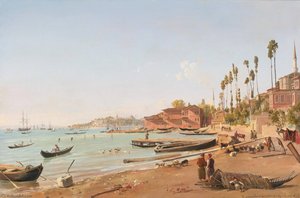
Vervloet's artistic breakthrough arrived during his extended sojourn in Venice between 1820 and 1830. Drawn to the city’s captivating beauty—particularly Saint Mark’s Square and Riva degli Schiavoni—he embarked on a prolific series of paintings that exemplify the Romantic preoccupation with capturing fleeting moments of sublime grandeur. His canvases are characterized by masterful use of light and color, skillfully conveying the ethereal quality of Venetian air and reflecting the shimmering surfaces of water. Vervloet meticulously recreated Saint Mark’s Square, capturing the bustling activity of merchants and pilgrims alike, while his depictions of the Palazzo Ducale showcased its opulent interiors bathed in golden sunlight. He achieved unparalleled accuracy in portraying Venetian vistas through a technique rooted in tonal realism combined with atmospheric perspective—a deliberate effort to emulate Rembrandt's groundbreaking approach to illumination.
Notable Works
- “A Girl at a Window”: This serene portrait exemplifies Vervloet’s ability to convey emotion and psychological depth within a carefully constructed composition.
- “View of Piazza San Marco, Venice”: A panoramic vista capturing the grandeur of Saint Mark's Square, demonstrating Vervloet’s mastery of perspective and color harmony.
- “Venice, a view of Saint Mark’s Square Venice, a view of the Palazzo Ducale and the Riva degli Schiavoni”: Considered Vervloet’s magnum opus, this monumental canvas embodies the Romantic ideal—a sublime celebration of beauty and grandeur—and remains a testament to his artistic genius.
Symbolism & Artistic Legacy
Vervloet's paintings transcend mere visual representation; they embody Romantic ideals—beauty, melancholy, and contemplation—reflecting a profound engagement with the human condition. His unwavering dedication to observation and his masterful technique served as an inspiration for painters striving to capture the essence of natural beauty with uncompromising fidelity. Vervloet’s legacy continues to endure—his artworks remain treasured examples of Romantic idealism and artistic excellence, securing his place among Belgium's most celebrated artists. He is remembered not only for his technical prowess but also for his ability to infuse his canvases with a spirit of wonder and awe—a characteristic that distinguishes him from many of his contemporaries.