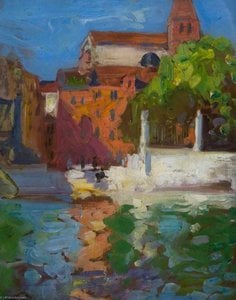
L'Eredità Vibrante di Francis Campbell Cadell
Nato nella raffinata atmosfera di Edimburgo nel 1883, Francis Campbell Cadell era destinato a una vita profondamente toccata dalle arti. Figlio dell'estimato chirurgo Dr. Francis Cadell e di Mary Hamilton Boileau, la sua infanzia al numero 22 di Ainslie Place, all'interno del prestigioso Moray Estate, gli fornì uno sfondo di grande sofisticatezza culturale. Questo ambiente, arricchito dalla presenza teatrale della sorella, la celebre attrice Jean Cadell, nutrì una sensibilità che avrebbe successivamente definito il suo approccio alla tela. Fin dalla tenera età di sedici anni, Cadell cercò il battito pulsante del mondo dell'arte moderna, viaggiando a Parigi per studiare presso l'Académie Julian. Fu proprio all'interno dell'atmosfera vibrante ed sperimentale della capitale francese che la sua identità artistica iniziò a consolidarsi, allontanandosi dal rigido accademismo verso un'espressione più libera di luce e colore.
L'evoluzione della tecnica di Cadell fu profondamente plasmata dall'avvento del Fauvismo. Ispirandosi alle radicali tavolozze cromatiche di maestri come Matisse, Cadell abbracciò uno stile che privilegiava la risonanza emotiva rispetto alla mera accuratezza fotografica. Divenne una figura chiave tra gli Scottish Colourists, un gruppo celebrato per la capacità di infondere nei paesaggi e negli interni un uso ritmico, quasi musicale, del pigmento. La sua pennellata, spesso audace e decisa, cercava di catturare l'essenza fuggevole della luce che colpisce una superficie, che si trattasse delle aspre coste di Iona o dell'elegante lucentezza di un salotto di Edimburgo. Questa maestria nel colore gli permise di trasformare scene ordinarie in straordinari studi di atmosfera e suggestione.
Un Maestro della Luce e dell'Interiorità
L'opera di Cadell è celebrata forse soprattutto per la sua squisita rappresentazione degli interni dell'alta società e della quieta dignità della vita domestica. Egli possedeva un'abilità singolare nel rendere le trame della seta, la lucentezza della porcellana e il morbido bagliore della luce pomeridiana che filtra attraverso una finestra. Queste opere non sono semplici ritratti di stanze, ma piuttosto paesaggi psicologici che riflettono l'eleganza e le sfumature sociali della Scozia del primo Novecento. Le sue composizioni presentano spesso un sofisticato intreccio tra forma strutturata e colore fluido, creando un senso di vitalità moderna all'interno di contesti tradizionali.
Al di fuori dei confini del salotto, Cadell trovò una profonda ispirazione nel mondo naturale. I suoi paesaggi, in particolare quelli che catturano la bellezza selvaggia delle isole Ebridi, dimostrano un'altra sfaccettatura del suo genio. In queste opere, l'influenza dell'Impressionismo francese e del Fauvismo si fonde con un profondo e localizzato apprezzamento per il territorio scozzese. I seguenti elementi caratterizzano i suoi più significativi contributi artistici:
- Audacia Cromatica: Un uso impavido del colore puro e incontaminato per definire forma e profondità.
- Maestria Materica: Un comando esperto delle proprietà fisiche della pittura per simulare luce e tessuti.
- Spirito Modernista: Il rifiuto del sentimentalismo vittoriano a favore di un'esperienza sensoriale più diretta.
Uno Spirito Non Convenzionale e una Significatività Duratura
La personalità di Francis Campbell Cadell era tanto sorprendente quanto la sua tavolozza. Noto per il suo spirito e per un certo intelletto ribelle, egli abbracciò con orgoglio la sua identità di pittore mancino. Quando si trovava di fronte allo scetticismo dei tradizionalisti che mettevano in dubbio i suoi metodi non convenzionali, invocava con ironia la grandezza di Michelangelo, usando il precedente storico per mettere a tacere i critici. Questa caratteristica sfida alle convenzioni rispecchiava la sua missione artistica: liberarsi dalla morsa soffocante della tradizione accademica per perseguire una realtà più autentica e colorata.
Sebbene la sua vita sia stata relativamente breve, concludendosi nel 1937, l'impatto di Cadell sulla storia dell'arte britannica rimane indelebile. Egli contribuì a colmare il divario tra la tradizionale scuola paesaggistica scozzese e le radicali innovazioni dell'avanguardia europea. Oggi, le sue opere sono amate non solo per la loro bellezza estetica, ma come documenti storici vitali di un periodo di immensa transizione culturale. Attraverso i suoi ritratti vibranti e i suoi vasti paesaggi, Cadell continua a invitare gli spettatori in un mondo dove il colore è il linguaggio primario dell'emozione e la luce è l'architetto supremo della forma.
Domande e risposte
Dove si trovano le opere di Francis Campbell Cadell organizzate per colore?
La pagina Indice Spettrale organizza le opere di Francis Campbell Cadell per colore.
In quale periodo storico ha operato Francis Campbell Cadell?
Francis Campbell Cadell ha operato nel periodo Età Moderna. Tale epoca colloca storicamente l'attività dell'artista.
Dove si trovano le opere di Francis Campbell Cadell raggruppate per parole chiave?
La pagina Per parole chiave di Francis Campbell Cadell raggruppa le opere dell'artista in base alle loro parole chiave.