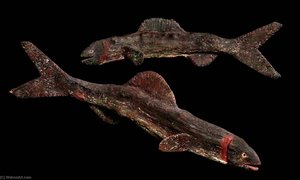
Felipe Archuleta: A Sculptor Rooted in Faith and Fierce Observation
Born in Santa Cruz, New Mexico (1910), Felipe Archuleta’s life was profoundly shaped by poverty from an early age—a circumstance that instilled resilience and fundamentally influenced his artistic worldview. Abandoning formal schooling, he embraced labor – initially as a field hand, followed by stints as a stonemason, cook, and for decades as a carpenter—experiences that instilled a deep understanding of rural New Mexico culture and traditions, particularly the veneration of religious imagery. This formative background became the bedrock upon which his distinctive sculptural style would emerge.
Crucially, Archuleta’s heritage exposed him to “bulto” making – the meticulous art of shaping wooden religious figures – a technique that transcended mere craftsmanship; it represented a conduit for spiritual expression. The painstaking process demanded reverence and skill, mirroring the artist's own inner convictions. He sought to capture not just form but essence—the primal energy inherent in his subjects.
A pivotal moment arrived in 1967 when facing unemployment and despair, Archuleta turned to prayer seeking divine guidance. This transformative spiritual journey ignited his passion for carving animals – a pursuit driven by both artistic impulse and profound faith. He began experimenting with animal sculptures characterized by an arresting blend of raw emotion and meticulous detail. Rejecting polished surfaces, he favored rough textures achieved through hand tools—primarily chisels and hammers—to convey the untamed spirit of his subjects. As he eloquently stated, “I sought to capture ‘the ferocious nature’ of animals” – a deliberate stylistic choice that honored the traditions of bulto carving.
Archuleta's artistic breakthrough came with depictions of animals imbued with palpable emotion. He skillfully utilized chisels and hammers to sculpt figures like giraffes, elephants, monkeys, and others based on images found in children's books and natural history magazines. His approach wasn’t merely technical; it was infused with a spiritual sensibility—a desire to honor the sacred through artistic representation. The Smithsonian American Art Museum recognizes Archuleta’s contribution to contemporary sculpture, highlighting his enduring legacy as a New Mexico artist who transformed humble materials into powerful expressions of animal spirit and spiritual contemplation.
His final major work in 1987 exemplifies his unwavering dedication to craft and artistic vision—a testament to Felipe Archuleta's pioneering approach and his belief in the transformative potential of artistic creation. Despite suffering from arthritis, he continued to produce sculptures that captivated audiences with their expressive power and masterful technique. He is remembered as one of New Mexico’s most respected sculptors, whose legacy continues to inspire admiration for his ability to imbue wooden figures with spiritual essence—a remarkable achievement rooted in a life dedicated to both labor and faith.