Il Visionario Silenzioso: La Vita e l'Eredità di Eugène Laermans
Negli angoli silenziosi e ombrosi della storia dell'arte belga, poche figure incutono un rispetto così profondo e un'intrigo così inquietante come Eugène Jules Joseph Baron Laermans. Nato nel 1864 a Molenbeek-Saint-Jean, Bruxelles, la sua vita fu definita da una lotta contro l'avanzare dell'oscurità e del silenzio causati dall'infelicità fisica. Alla tenera età di undici anni, una devastante meningite lo privò dell'udito e lo lasciò quasi muto. Eppure, invece di permettere a questa tragedia di recidere il suo legazione con il mondo, Laermans trasformò la sua deprivazione sensoriale in un'acuità visiva senza pari. Privato del suono, rivolse tutto il suo essere verso il potere della vista, sviluppando un'intensità osservativa che gli avrebbe infine permesso di catturare l'anima stessa degli emarginati e degli oppressi.
Il suo viaggio attraverso il panorama artistico fu caratterizzato da una straordinaria metamorfosi stilistica. Iscrivendosi all'Académie Royale des Beaux-Arts nel 1887, studiò sotto la guida di Jean-François Portaels, un'esperienza che gli fornì una rigorosa base accademica. Durante i suoi primi anni, Laermans si lasciò attrarre dal provocatorio e dal decadente. Influenzato dalle evocative scritture di Charles Baudelaire, partecipò attivamente al movimento Decadente del 1890, prestando persino il suo pennello per illustrare la controversa opera Les Fleurs du Mal. Questo periodo della sua vita fu segnato dall'esplorazione di verità scomode e dalla volontà di confrontarsi con le sfaccettature più oscure e complesse della natura umana, utilizzando spesso un'estetica espressiva e talvolta inquietante.
Dal Decadentismo al Realismo Sociale
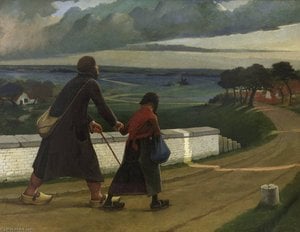
Con la maturazione della sua carriera, Laermans visse un cambiamento profondo che avrebbe in definitiva definito la sua importanza storica. Verso il 1893, iniziò ad allontanarsi dalla decadenza stilizzata della sua giovinezza, gravitando invece verso un realismo aspro e terreno che ricordava il grande Pieter Bruegel. Questa transizione lo vide abbandonare i vezzi ornamentali in favore di un approccio più sobrio e monumentale ai suoi soggetti. Divenne un cronista della condizione umana, concentrando lo sguardo sui lavoratori gravati dal peso del lavoro e sui contadini impoveriti della campagna belga. La sua opera in quest'epoca non era meramente osservativa; era un ritratto empatico, spesso viscerale, della dignità che si trova nella sofferenza.
La sua maestria nella composizione e nel tono raggiunse nuovi vertici in opere come il suo celebre trittico, Landverhuisers (Emigranti), ispirato al romanzo La Nouvelle Carthage di Georges Eekhoud. In questi pezzi, Laermans utilizzò una tavolozza smorzata e una profondità atmosferica per trasmettere il peso dello spostamento forzato e la lotta per la sopravvivenza. Sebbene alcuni critici contemporanei liquidassero le sue rappresentazioni come "caricature disturbanti", è proprio questa onestà cruda e senza filtri che ha assicurato il suo posto nel canone del realismo sociale. Egli possedeva un'abilità unica nell'infondere anche alle scene più desolate un senso di gravità monumentale, trasformando le lotte quotidiane della classe operaia in epiche narrazioni di resistenza.
La Luce che Svanisce e l'Impressione Eterna
La traiettoria della vita di Laermans prese una svolta finale e tragica nel 1924, quando la sua vista iniziò a vacillare. Per un artista la cui intera identità era stata forgiata attraverso la lente della percezione visiva, questa perdita fu catastrofica. Dichiarò celebremente: "Non sono più Laermans", mentre smetteva di dipingere, ritirandosi in un'esistenza solitaria. Nonostante fosse stato elevato al rango di Barone nel 1927 dal Re Alberto, i suoi ultimi anni furono segnati dalla profonda isolazione della cecità totale. Morì nel 1940, lasciando dietro di sé un corpus di opere che funge da testimonianza della resilienza dello spirito umano.
Oggi, l'eredità di Eugène Laermans perdura attraverso dipinti che continuano a perseguitare e ispirare. La sua capacità di trovare la bellezza nel cupo e la forza nel silenzio rimane il suo più grande traguardo. Osservare una tela di Laermans significa testimoniare:
- Un'esperienza sensoriale amplificata: dove l'assenza di suono crea una profonda quiete visiva.
- Empatia sociale: una connessione profonda e rispettosa con le vite di coloro che sono stati spesso ignorati dalla storia.
- Evoluzione tecnica: un viaggio dalla complessa decadenza della fine del XIX secolo al realismo potente e essenziale dell'inizio del XX secolo.
La sua opera rimane un pilastro vitale dell'arte belga, ricordandoci che anche quando il mondo si fa buio e silenzioso, gli occhi dell'anima possono ancora percepire le verità profonde dell'esistenza.
Domande e risposte
Posso sfogliare le opere di Eugène Laermans in base alla palette di colori?
Le opere di Eugène Laermans possono essere consultate per palette cromatica nella pagina Per palette dell'artista.
In quale città e in quale paese è nato/a Eugène Laermans?
Eugène Laermans è nato a Saint-jans-molenbeek, in Belgio.
Quanto sono popolari le opere di Eugène Laermans?
La pagina Statistiche di Eugène Laermans presenta statistiche calcolate a partire dalle opere dell'artista elencate su questo sito.