Kaiser Wilhelm I, Count of Bismarck, Moltke, Minister von Roon, Leopold of Hohenzollern and Uhlans
Horse in the Stable
A Horse
Copyright status: Under copyright
Emil Volkers: A Master of Equestrian Portraiture and German Realism
Emil Volkers (dates unknown) emerged as a prominent figure in late 19th-century German art, specializing in meticulously rendered animal portraits—particularly horses—and historical depictions that captured the spirit of his era. While biographical details remain scarce, his artistic legacy speaks volumes about his dedication to capturing both physical likeness and psychological nuance within his canvases. Primarily active in Schweinfurt, Bavaria, Volkers established himself as a respected artist recognized for his unwavering commitment to realism and his ability to convey emotion through precise observation.
Early Life and Artistic Training
Information regarding Volkers’s formative years is limited; however, he pursued formal artistic training at the Dresden Academy of Art, where he honed his skills in drawing and painting under influential instructors. This academic foundation instilled within him a disciplined approach to technique—a cornerstone of his distinctive style—characterized by painstaking detail and an unwavering pursuit of accuracy. The academy’s emphasis on classical realism undoubtedly shaped Volkers's artistic sensibilities, informing his subsequent oeuvre.
Distinctive Style and Technique
Volkers’s artistic hallmark was undeniably his masterful portrayal of horses. He achieved this remarkable feat through a combination of meticulous anatomical study and skillful blending techniques—often utilizing thin glazes to build up color gradually, resulting in luminous surfaces that conveyed the texture and sheen of equine coats. Beyond equine subjects, Volkers excelled at capturing historical figures with similar precision, meticulously recreating costumes, postures, and facial expressions to convey not merely appearance but also character and emotion. His canvases pulsated with life, reflecting a profound understanding of both form and feeling. He absorbed lessons from artists like Émile Bernard and Emile Nolde, integrating elements of expressive color palettes and emotive brushwork into his compositions.
Notable Works and Influences
Among Volkers’s most celebrated paintings is “Kaiser Wilhelm I, Count of Bismarck, Moltke, Minister von Roon, Leopold of Hohenzollern and Uhlans,” a monumental equestrian portrait that exemplifies his technical prowess and artistic vision. The painting showcases Wilhelm I in regal splendor atop a horse, surrounded by prominent statesmen—a testament to Volkers’s ability to convey grandeur and authority through visual representation. Furthermore, Volkers's work demonstrates an influence from Impressionism, particularly the exploration of light and atmosphere evident in landscapes alongside his portraits. He meticulously recreated costumes, postures, and facial expressions to convey not merely appearance but also character and emotion. His canvases pulsated with life, reflecting a profound understanding of both form and feeling.
Legacy and Recognition
Emil Volkers’s contribution to German art history resides primarily in his unwavering dedication to realism—a stylistic choice that distinguished him from many contemporaries. His canvases continue to be admired for their technical brilliance and emotional depth, securing a place within the collections of museums like Schweinfurt Art Museum. Volkers's enduring reputation as a master of equestrian portraiture ensures that his work remains relevant to scholars and enthusiasts alike, serving as an exemplar of 19th-century German artistic achievement.
A cura del team editoriale di WahooArt.com
Quiz d'arte
Per ogni domanda è presente una sola risposta corretta.
Domanda 1:
Qual è lo stile artistico caratteristico di Emil Volkers?
Domanda 2:
Dove Volkers svolse principalmente la sua attività artistica?
Domanda 3:
Quale artista influenzò lo stile di Volkers?
Domanda 4:
Volkers eccelleva nella rappresentazione di soggetti quali?
Domanda 5:
Quale opera importante è stata realizzata da Emil Volkers?
Trasforma i tuoi selfie in iconici capolavori anime con l'innovativa IA di WahooArt. Uniamo tecnologia d'avanguardia e la maestria della pittura a olio fatta a mano per creare ritratti unici, eterni e pronti da appendere. Scopri l'arte che celebra la tua storia.
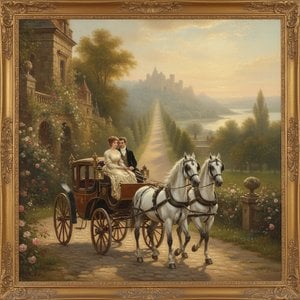
Embark on a visual journey through the romantic world of horse carriage art. Discover the mastery of equestrian oil paintings, from Impressionist textures to classical realism, and learn how to bring timeless elegance into your home with museum-quality reproductions.
Scopri l'innovazione di WahooArt: trasforma le tue foto in epici capolavori in stile Anime grazie all'AI e alla maestria della pittura a olio fatta a mano. Un ponte unico tra tecnologia moderna e tradizione classica per creare un'eredità artistica senza tempo nella tua casa.