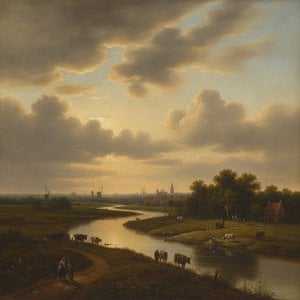
L'Occhio Dorato: La Vita e l'Arte di Dirck van Rijswijck
Entrare nel mondo di Dirck van Rijswijck significa varcare la soglia di un regno dove il quotidiano viene elevato al magnifico. Maestro dell'Età dell'Oro olandese, Rijswijck possedeva una rara capacità di scorgere una bellezza profonda negli angoli più silenziosi della domesticità. Mentre molti dei suoi contemporanei cercavano la grandezza delle battaglie epiche o il dramma delle divinità mitologiche, Rijswijck rivolse il suo sguardo verso l'interno, verso la luce morbida che filtra da una finestra di cucina o la meticolosa disposizione di un compito domestico. La sua opera funge da finestra luminosa sull'anima olandese del XVII secolo, catturando i ritmi della vita quotidiana con un'intimità che appare allo stesso tempo senza tempo e profondamente personale.
Nato nel 1596 a Kleve, in Germania — una regione allora sotto l'influenza dei Paesi Bassi spagnoli — i primi anni di Rijswijck furono immersi nelle ricche tradizioni del Manierismo fiammingo. Questo periodo formativo gli fornì una comprensione fondamentale del dettaglio intricato e della composizione strutturata. Figlio di un pittore e incisore, il suo apprendistato era quasi predestinato, permettendogli di assorbire i rigori tecnici del mestiere fin dalla giovane età. Quando si spostò verso l'epicentro artistico di Haarlem intorno al 1620, iniziò a sintetizzare queste prime influenze con il nascente stile olandese, stabilendosi infine ad Amsterdam, dove avrebbe trascorso gran parte della sua prolifica vita.
Una Maestria tra Materia e Luce
L'arte di Rijswijck fu plasmata in modo unico da una doppia identità: era sia un pittore che un abile orafo. Questa rara intersezione di discipline gli permise di approcciare la tela — e altri media — con la precisione di un gioielliere. Fu celebrato in vita per la sua straordinaria capacità di eseguire delicati intarsi, utilizzando spesso la madreperla incastonata su ebano profondo o marmo nero lucido. Questa tecnica, che sfumava il confine tra belle arti e artigianato decorativo, diede vita a oggetti mozzafiato come i suoi famosi tavoli, dove motivi floreali organici sembravano sbocciare da superfici scure e lucenti.
Nei suoi dipinti, questa stessa ossessione per la consistenza e la luce si manifesta attraverso un realismo straordinario. Che stesse ritraendo il riflesso di un piatto di peltro o la morbida traslucenza di un ortaggio, la sua pennellata trasmetteva una realtà tattile che invitava lo spettatore ad allungare la mano per toccare la scena. Il suo stile fu fortemente influenzato dall'energia dinamica di Peter Paul Rubens, eppure Rijswijck temperò questa esuberanza fiamminga con una compostezza unicamente olandese. Utilizzava palette cromatiche ricche e calde e composizioni accuratamente orchestrate per guidare l'occhio attraverso le sue scene di genere, assicurando che anche il più piccolo dettaglio contribuisse alla narrazione complessiva di prosperità domestica.
L'Eredità dell'Osservatore Silenzioso
Il significato storico di Dirck van Rijswijck risiede nel suo ruolo di cronista dell'ordinario. La sua opera, composta da circa 150 opere note, rimane una testimonianza vitale della cultura sociale e materiale dell'Età dell'Oro olandese. Attraverso capolavori come “La cameriera” e “Scena di cucina con l'Ultima Cena di Emmaus”, egli documentò i rituali di una classe mercantile in ascesa, celebrando la dignità del lavoro e il lusso discreto di una casa ben ordinata.
I suoi contributi alla storia dell'arte possono essere riassunti attraverso diversi impatti duraturi:
- Elevazione della pittura di genere: contribuì a spostare il focus dell'arte europea dalle grandi narrazioni storiche verso la profondità psicologica della vita quotidiana.
- Integrazione tra artigianato e belle arti: il suo lavoro come orafo portò un livello di sofisticatezza materica alle arti decorative che pochi pittori potevano replicare.
- Precisione tecnica: la sua maestria nella luce, nell'ombra e nella trama stabilì uno standard per il realismo che avrebbe definito gran parte della pittura olandese del XVII secolo.
In definitiva, l'eredità di Rijswijck è un'eredità di empatia. Egli non si limitava a osservare i suoi soggetti; li comprendeva. Infondendo negli interni domestici una cura così profonda e uno splendore estetico tale, ricordò al mondo che esiste una sacralità da trovare nei più semplici momenti umani.
Domande e risposte
È possibile visitare un museo virtuale delle opere di Dirck Van Rijswijck?
Le opere di Dirck Van Rijswijck sono visibili in una galleria 3D nella pagina Galleria 3D dell'artista.
Dove posso vedere le opere di Dirck Van Rijswijck in ordine cronologico?
È disponibile una cronologia delle opere di Dirck Van Rijswijck: la pagina Cronologia delle opere dell'artista presenta le opere in ordine cronologico.
Quante opere di Dirck Van Rijswijck sono disponibili nel catalogo?
Puoi sfogliare 3 opere d'arte opere di Dirck Van Rijswijck nella pagina Tutte le opere.