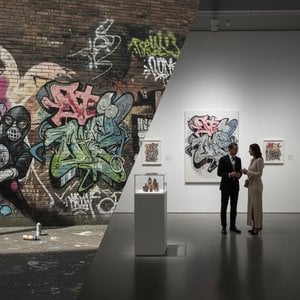
Conor Harrington: Un Ponte tra Graffiti e Tradizione
Conor Harrington emerge dalle vibranti strade di Cork, in Irlanda, nel 1980, portando una prospettiva unica nell'arte contemporanea: un approccio che fonde senza soluzione di continuità l'energia ribelle dei graffiti con la meticolosa disciplina della pittura a olio classica.
- Prime Influenze: Il percorso artistico di Harrington ha avuto inizio presso la Limerick School of Art and Design, dove ha affinato le sue abitudini nelle tecniche tradizionali prima di scoprire il potere trasformativo della street art. Questa esperienza formativa ha instillato in lui una fascinazione sia per la narrazione visiva che per la sfida alle norme sociali.
- La Tecnica della Fusione: Lo stile distintivo di Harrington è caratterizzato dalla stratificazione di elementi graffiti su ampie tele a olio. Egli non si limita ad applicare la vernice spray sulla tela; piuttosto, costruisce meticolosamente texture e colori, rispecchiando le tecniche dei Grandi Maestri come Rembrandt e Caravaggio. Questa deliberata giustapposizione crea un dialogo avvincente tra la spontaneità pura e l'artigianato raffinato.
- Temi di Potere e Resistenza: L'opera di Harrington affronta costantemente soggetti di grande peso, esplorando spesso l'iconografia militare insieme alle narrazioni della lotta sociale. I suoi murales e le sue tele ritraggono figure che affrontano l'autorità, incarnando temi di resilienza e di messa in discussione delle gerarchie stabilite. Queste immagini risuonano con forza nel pubblico che si confronta con questioni di identità e impegno politico.
Mostre Notevoli e Riconoscimenti
Il lavoro di Harrington ha ottenuto un considerevole successo internazionale. Mostre personali presso il Lazarides Pop-Up a New York, The Outsiders a Londra e Lazarides Rathbone hanno cementato la sua reputazione di stella nascente all'interno della comunità della street art.
- Jonathan Levine Gallery (NYC): La sua inclusione in mostre collettive presso la Jonathan Levine Gallery ha messo in mostra la sua versatilità e ha consolidato la sua posizione tra gli artisti più influenti.
- Mead Carney Fine Art (Londra): Le collaborazioni con Mead Carney Fine Art hanno ampliato i suoi orizzonti artistici e lo hanno esposto a un pubblico più vasto, interessato al realismo contemporaneo.
- Daelim Museum of Contemporary Art (Seul): Una presentazione personale presso il Daelim Museum of Contemporary Art ha riconosciuto il contributo di Harrington al dialogo globale riguardante l'arte e la critica sociale.
Un Dialogo Continuo con la Tradizione
Nonostante il suo coinvolgimento nella street art, Harrington rimane profondamente radicato nell'eredità artistica. Egli si confronta attivamente con le tradizioni della pittura classica, dimostrando una profonda comprensione della teoria del colore, della composizione e del chiaroscuro: elementi che elevano la sua opera oltre il semplice impatto visivo.
“Il mio obiettivo è creare immagini che provocano il pensiero,” ha dichiarato ripetutamente Harrington. “Confrontare gli spettatori con verità scomode, onorando allo stesso tempo l'eredità dei maestri dell'arte.” Questo impegno verso il rigore intellettuale sottolinea la sua importanza duratura come artista capace di trascendere i confini stilistici e di parlare direttamente alle complessità del nostro tempo.Domande e risposte
Esiste una panoramica di tutti i soggetti dipinti da Conor Harrington?
Le opere di Conor Harrington possono essere esplorate per soggetto nella pagina Atlante dei soggetti dell'artista.
Quali sono il luogo e l'anno di nascita di Conor Harrington?
Conor Harrington è nato a Cork nel 1980.
Dove posso vedere le opere di Conor Harrington in ordine cronologico?
Esiste una cronologia delle opere di Conor Harrington: la pagina Cronologia opere dell'artista ordina le opere per data di creazione.