A Luminosity Rooted in Tradition: The Art of Claudio Torcigliani
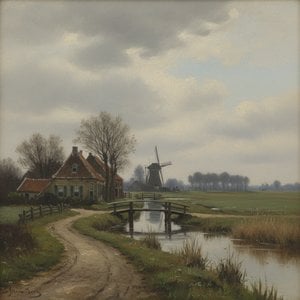
Claudio Torcigliani, born in Naples, Italy, in 1954, represents a compelling synthesis of artistic heritage and contemporary vision. His journey began with an early fascination for drawing and painting—a passion momentarily sidelined by familial obligations until 1979 rekindled his creative spirit. This formative period instilled within him a foundational understanding of artistic discipline and observation that would prove invaluable throughout his subsequent career. A pivotal moment arrived in 1981 when Torcigliani embarked on studies at the École Supérieure des Beaux-Arts in Paris, immersing himself in the vibrant intellectual milieu of Parisian art circles for four transformative years. The influence of Impressionism and Post-Impressionism undoubtedly broadened his artistic horizons, fostering a sensitivity to light and color that would become characteristic of his oeuvre. However, it was Holland—specifically a profound encounter with the monumental works of Rembrandt and Vermeer—that cemented his stylistic trajectory. These masters captivated Torcigliani’s imagination, shaping his aesthetic sensibilities and establishing a bedrock of academic realism. He meticulously studied their compositional techniques and masterful use of chiaroscuro, recognizing the power of light to convey emotion and depth – principles he would carry forward into his own artistic practice. Following this Parisian immersion, Torcigliani traveled extensively across Europe, honing his craft in diverse environments and absorbing influences from various artistic traditions. He sought inspiration from both classical sculpture and Renaissance painting, broadening his visual vocabulary and deepening his understanding of artistic history. This exploration fueled a desire to revisit the foundational principles of Western art—a commitment that would define his artistic approach for decades to come. He ultimately settled in Mallorca in 1988, finding solace and creative impetus in the serene landscapes of the Balearic Islands. Valldemossa became his home base, providing a tranquil setting for continued artistic exploration. The rugged mountainsides and crystalline waters of Mallorca served as recurring subjects in his paintings—a deliberate choice reflecting his appreciation for natural beauty and his desire to capture its essence with unwavering accuracy. Torcigliani’s paintings are marked by meticulous technique—a hallmark of academic painting—yet infused with an unmistakable spirit of personal expression. He skillfully captures the ethereal beauty of island vistas using layering and glazing techniques, mirroring the luminous quality championed by Dutch Masters. His subjects encompass a rich tapestry of genre: portraits conveying nuanced psychological insight; evocative seascapes reflecting the grandeur of the Mediterranean; intimate still lifes celebrating the subtleties of form and texture; and expansive landscapes imbued with atmospheric depth. He employs a palette rooted in tonal harmony—often favoring muted earth tones—to create compositions that prioritize clarity and emotional resonance. Throughout his prolific career, Torcigliani has achieved considerable recognition for his dedication to artistic excellence. His works are held in private collections worldwide and have been exhibited in numerous galleries across Europe. More importantly, he embodies a continuing commitment to preserving and reimagining classical artistic principles—a legacy that ensures his contribution to the art world remains relevant and inspiring.- Notable Achievements: Extensive exhibitions throughout Europe showcasing his mastery of academic realism.
- Influences: Rembrandt, Vermeer, Impressionism, Post-Impressionism – Masters who instilled a deep appreciation for light and color.