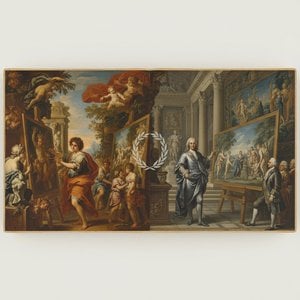
Claude Deruet: Un Maestro del Barocco Nanciesino
Claude Deruet (1588 – 1660) si erge come una figura di spicco nel panorama artistico della Francia del XVII secolo, in particolare all'interno della vibrante tradizione barocca che scaturiva da Nancy. Nato in una famiglia nobile, i suoi anni formativi furono immersi nel mecenatismo artistico e coltivati da un apprendistato sotto Jacques Bellange, il pittore di corte di Carlo III, Duca di Lorena—un legame che plasmò profondamente la sua traiettoria professionale. Questa influenza precoce gli instillò una meticolosa attenzione al dettaglio e un dominio magistrale della tecnica, caratteristiche che avrebbero definito la sua eredità duratura.- Giovinezza e Formazione: Il viaggio artistico di Deruet ebbe inizio con una formazione formale sotto la guida di Bellange, permettendogli l'accesso ai più alti livelli dei circoli artistici e dotandolo di inestimabili abilità nel ritratto e nella pittura decorativa.
- Periodo Romano (ca. 1612 – 1619): Alla ricerca di ulteriore perfezionamento e ispirazione, Deruet viaggiò a Roma intorno al 1612, dove studiò con dedizione accanto ad Antonio Tempesta—un rinomato incisore e pittore le cui innovazioni stilistiche risuonarono profondamente con la sensibilità di Deruet. Questo periodo vide la creazione del suo primo affresco significativo a Villa Borghese, mettendo in mostra un talento emergente per la composizione drammatica e palette cromatiche sfumate.
- Dipinti Notevoli: Tra le opere celebrate di Deruet figurano "La partenza delle Amazzoni" (1620) e "La Via del Calvario" (1620)—scene intrise di dinamismo e intensità emotiva—vere testimonianze della sua maestria artistica.
- Mecenatismo Reale e Riconoscimenti: Riconoscendo l'eccezionale talento di Deruet, Carlo III gli conferì la nobiltà nel 1621, seguita dal titolo di cavaliere dell'Ordine di San Michele nel 1645 da parte di Luigi XIII—una prova del suo contributo al prestigio culturale della Lorena.
Eredità e Significato Storico
L'eredità artistica di Claude Deruet si estende oltre i suoi singoli capolavori—egli ha stabilito una tradizione di narrazione drammatica e tecnica raffinata che ha influenzato profondamente le generazioni successive di pittori. La sua opera continua a ispirare ammirazione per la sua potenza espressiva e sofisticatezza stilistica, assicurandogli un posto tra gli artisti più importanti dell'era barocca in Francia. Il perdurante fascino per le sue raffigurazioni di samurai sottolinea il più ampio scambio culturale tra Europa e Asia durante questo periodo—una testimonianza della visione artistica e della curiosità intellettuale di Deruet.Domande e risposte
Dove posso trovare statistiche relative alle opere di Claude Deruet?
La pagina Statistiche di Claude Deruet presenta statistiche calcolate a partire dalle opere dell'artista elencate su questo sito web.
Quali colori ha usato più spesso Claude Deruet?
Il profilo cromatico delle opere di Claude Deruet è consultabile nella pagina Profilo Cromatico dell'Artista dell'artista.
Posso sfogliare le opere di Claude Deruet per movimento artistico?
Le opere di Claude Deruet possono essere consultate per movimento nella pagina Tutti i movimenti dell'artista.