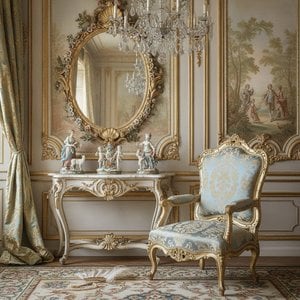
A Parisian Legacy: The Life and Art of Charles-Nicolas Cochin
Born into a family deeply entrenched in the artistic fabric of 18th-century Paris, Charles-Nicolas Cochin – often distinguished as Cochin le Jeune (the Younger) to avoid confusion with his father, Charles-Nicolas Cochin the Elder – emerged as a pivotal figure in French art. His birth on February 22nd, 1715, marked not just the arrival of another talented engraver, but the continuation of a dynasty. Both his father, Charles-Nicolas Cochin the Elder, and his mother, Louise-Magdeleine Horthemels, were accomplished engravers, providing young Charles with an immersive artistic education from his earliest years. This familial foundation was further enriched by connections to other prominent engraving families like the Tardieus and Belles, creating a network of expertise that nurtured his developing talent. Beyond technical skill, Cochin received a broad education, mastering Latin, English, and Italian, and engaging with philosophical thought – particularly the works of John Locke – which would subtly inform his later critical perspectives on art.From Royal Commissions to Shaping Neoclassical Taste
Cochin’s ascent within the French artistic establishment was remarkably swift. By 1737, he had already secured commissions from Louis XV to document significant royal events through engravings – births, marriages, and funerals at court. This appointment as designer and engraver to the *Menus-Plaisirs du Roi* solidified his position and provided a steady stream of work celebrating the grandeur of the monarchy. He wasn’t merely an executor of royal decrees; he possessed a multifaceted talent, excelling not only in engraving but also in design and portraiture. A turning point came with his participation in a study tour to Italy in 1749, accompanied by the Marquis de Marigny (brother of Madame de Pompadour), architect Jacques-Germain Soufflot, and art critic Jean-Bernard Le Blanc. This journey proved transformative, exposing Cochin to classical antiquity and fostering a growing appreciation for its principles of order and clarity. Upon his return, he became a driving force in promoting Neoclassical ideals within French art, challenging the prevailing Rococo style with its emphasis on ornamentation and frivolity. He championed artists who embraced classical forms and themes, subtly shifting the artistic landscape away from excess towards refined elegance.Engravings, Paintings, and a Lasting Influence
While celebrated primarily as an engraver, Cochin’s artistic output was remarkably diverse. His engravings of La Fontaine’s *Fables* stand as enduring examples of his skill in narrative illustration, capturing the wit and moral lessons of the stories with delicate precision. These prints exemplify his mastery of technique—precise hatching, subtle shading, and meticulous attention to detail—reflecting a commitment to classical ideals of clarity and restraint. He also produced numerous portraits, showcasing his ability to convey character and social standing through subtle details of pose and expression. His work can be found in prominent collections such as the Musée des Beaux-Arts de Carcassonne, ensuring its accessibility for future generations. Beyond engraving, Cochin demonstrated his versatility as a painter, notably with *Voyage d'Italie* (1758), a testament to his artistic exploration during his Italian sojourn. This ambitious project showcased his ambition and willingness to experiment with new styles—a departure from the Rococo conventions of his time—demonstrating a broader engagement with artistic innovation. Cochin’s influence extended beyond his individual artworks; he played a crucial role in shaping the aesthetic landscape of 18th-century France, bridging the gap between Rococo and Neoclassicism and leaving an indelible mark on the development of French art.A Voice Within the Academy and Beyond
Cochin’s admission to the Académie Royale de Peinture et de Sculpture in 1751, followed by his appointment as Keeper of the King's Drawings in 1752 – succeeding Charles-Antoine Coypel – placed him at the heart of French art administration. This role granted him considerable power in shaping artistic taste and commissioning works for royal residences. He wasn’t merely an administrator; he actively fostered a new aesthetic, championing artists who embraced classical forms and themes. His position allowed him to guide the direction of French art, subtly shifting it away from the ornate Rococo towards the more restrained elegance of Neoclassicism. Cochin also engaged in critical writing on art, offering insightful commentary that reflected his evolving artistic philosophy. He wasn’t afraid to challenge conventions and advocate for a return to what he perceived as the timeless principles of classical beauty—a stance that resonated with fellow artists and intellectuals alike. His legacy continues to inspire admiration for his dedication to artistic excellence and intellectual rigor. ##A Lasting Impression: Cochin's Contribution to Neoclassicism Charles-Nicolas Cochin’s contribution to the burgeoning Neoclassical movement cannot be overstated. He served as a vital conduit between the stylistic fervor of Rococo and the austere grandeur championed by Soufflot and Marigny, ensuring that French art retained its connection to antiquity while embracing a new vision of artistic harmony. His unwavering belief in classical ideals—order, proportion, and restraint—influenced countless artists and solidified his place among the foremost figures of his era. Cochin’s enduring influence is palpable not only in his own artworks but also in the broader cultural context of 18th-century France – a testament to a life devoted to artistic innovation and intellectual pursuit.Domande e risposte
Dove posso vedere il profilo cromatico delle opere di Charles Nicolas Cochin?
L'uso del colore di Charles Nicolas Cochin nelle opere elencate su questo sito può essere approfondito consultando la pagina Genoma della Palette dell'artista.
Dove posso vedere le opere di Charles Nicolas Cochin suddivise per atmosfera?
La Stanze d'atmosfera di Charles Nicolas Cochin è una pagina che organizza le opere dell'artista in base all'umore.
Dove posso vedere le opere di Charles Nicolas Cochin in una galleria 3D?
Le opere di Charles Nicolas Cochin sono visibili in una galleria 3D nella pagina Museo 3D dell'artista.