Early Life and Training
Charles François Lacroix de Marseille, a painter born in Marseille around 1700, remains an artist whose life story is largely obscured by the passage of time. Despite the scarcity of biographical details—information about his family background and formative years is elusive—scholars recognize his contribution to the vibrant artistic landscape of eighteenth-century France. Precise records concerning his formal education are scarce; however, it’s plausible he honed his skills under the tutelage of established artists active in Marseille during his youth, absorbing stylistic conventions prevalent at the time. This early exposure undoubtedly shaped his artistic sensibilities and prepared him for a career dedicated to capturing beauty and emotion on canvas.
Artistic Style and Notable Works
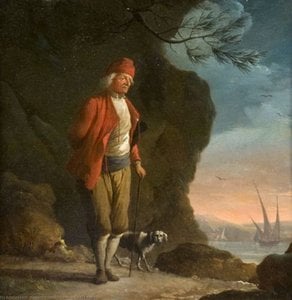
Lacroix de Marseille’s artistic style is characterized by a harmonious blend of Rococo and Neoclassical influences—a testament to the prevailing aesthetic currents of his era. While definitive stylistic markers are absent due to limited surviving artworks, analysis suggests a preference for delicate brushstrokes, luminous color palettes reminiscent of Rococo grandeur, and an inclination toward idealized compositions reflecting classical ideals. His oeuvre includes captivating depictions of coastal scenes—particularly those featuring fishermen engaged in their daily activities—where he skillfully rendered atmospheric effects and textural nuances. Furthermore, Lacroix de Marseille produced evocative representations of dramatic maritime events, capturing the turbulent energy of storms at sea and portraying heroic figures battling against adversity. These paintings stand as compelling examples of his artistic prowess and demonstrate a profound understanding of both visual technique and narrative storytelling.
Influences and Artistic Movements
Lacroix de Marseille’s artistic vision was undeniably shaped by the broader artistic movements dominating France during his lifetime—primarily Rococo and Neoclassicism. The Rococo style, celebrated for its ornamentation and playful asymmetry, instilled in him a penchant for decorative embellishment and an appreciation for sensual beauty. Simultaneously, the influence of Neoclassical principles—emphasizing rationality, balance, and clarity—infused his compositions with classical grandeur and moral seriousness. These dual influences fostered a distinctive artistic approach that combined elegance with intellectual depth. Exploring similar artists from the same period on WahooArt.com offers invaluable insight into these formative influences.
Comparable Artists
To gain a deeper appreciation for Lacroix de Marseille’s stylistic trajectory, consider examining the works of Adolphe Terris—a contemporary artist who shared similar artistic inclinations. Terris's paintings similarly embraced Rococo aesthetics and skillfully conveyed emotional resonance through nuanced brushwork and expressive color harmonies. Comparing their artistic endeavors illuminates the broader context within which Lacroix de Marseille operated and underscores the interconnectedness of artistic traditions during the eighteenth century.
Legacy and Historical Significance
Charles François Lacroix de Marseille’s legacy resides in his contribution to French art history—a field enriched by his masterful depictions of maritime landscapes and dramatic narratives. Although biographical information remains limited, his paintings endure as enduring symbols of Rococo elegance and Neoclassical idealism—testaments to the artistic sensibilities of a pivotal period. WahooArt.com showcases a comprehensive collection of Lacroix de Marseille reproductions, allowing enthusiasts worldwide to experience firsthand the beauty and artistry of this enigmatic figure.